Can I brush my teeth with tap water in Bali?
Bali Villa Hub
2/19/2026
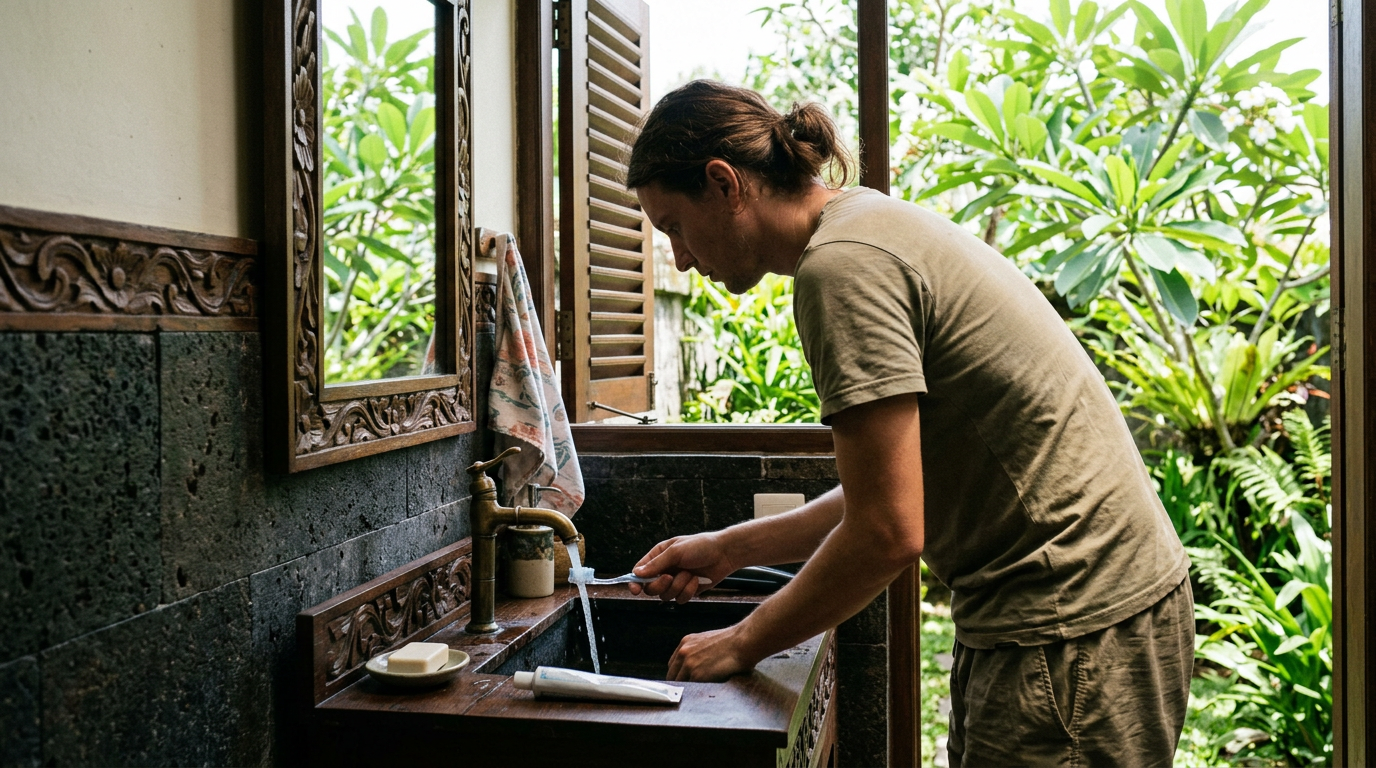
Can I brush my teeth with tap water in Bali?
Traveling to Bali is a highlight for many, but water safety is one practical detail that can affect your comfort more than you might expect. This article explains why tap water quality varies on the island, whether it’s safe to brush or rinse with local tap water, how illnesses like Bali Belly can arise, and practical steps you and your accommodation can take to reduce risk so you can enjoy your trip with fewer worries.
Why Bali tap water may be unsafe
Bali’s water supply comes from a mix of treated municipal sources, wells and surface water, but several practical problems can make that water unsafe by the time it reaches a bathroom tap. Central treatment may include chlorination, yet a patchy and aging distribution network allows contaminants to enter through cracks or illegal connections. Intermittent supply leads many homes and small businesses to store water in rooftop tanks that are rarely cleaned, providing ideal conditions for bacterial growth and biofilm inside pipes. Coastal groundwater may suffer seawater intrusion, increasing salts and minerals that corrode metal pipes and introduce traces of iron, manganese or other contaminants. Agricultural runoff and inadequate sewage handling compound the risk when surface water is used or when storage tanks are refilled from mixed sources. Some pathogens, including certain protozoa, resist low-level chlorination and can survive without adequate filtration. Local practices vary widely, so a modern hotel with documented treatment may supply safe water while a nearby guesthouse relies on an untreated well. For visitors this variability matters because travelers lack local immunity to common intestinal bugs and even a small accidental swallow when rinsing or brushing can cause illness.
Given these infrastructure and environmental challenges, the next question is how this affects routine activities like brushing, rinsing and gargling.
Is it safe to brush, rinse, or gargle with tap water in Bali?
Short answer: it is generally safer to avoid untreated tap water for rinsing or gargling. Many visitors brush and spit without problems, but microbes can be present in distribution pipes and storage tanks; swallowing even a small amount can increase the chance of stomach upset for someone without local immunity.
If your accommodation confirms RO (reverse osmosis) or UV (ultraviolet) point‑of‑use treatment and can describe maintenance and testing frequency, the risk at that tap is low. Otherwise use sealed bottled water or water brought to a rolling boil for at least one minute and then cooled. Portable filters with pore sizes around 0.1 to 0.3 micron remove most bacteria and protozoa and are useful for day trips and rural areas. Avoid ice from street vendors unless you can verify it was made from safe water, and minimize mouth contact with washing water in places where the supply seems uncertain.
Who should be extra cautious includes young children, older adults and anyone with a weakened immune system. For these groups avoid practices that might lead to swallowing and use only bottled or certified treated water even for brushing. For most other travelers the safest routine is to brush with safe water and spit thoroughly rather than rinse repeatedly and swallow. If you do accidentally swallow tap water, stay calm, monitor for symptoms and seek medical care if necessary; the next section explains common illnesses and what to watch for.
Can Bali tap water cause Bali Belly or other stomach illnesses?
Yes—contaminated tap water is a known source of traveller stomach illness often referred to as Bali Belly. Even when water leaves a treatment plant in acceptable condition, contamination can occur during distribution or storage, allowing bacteria, protozoa and viruses to reach the tap.
Typical culprits include bacteria such as E. coli (Escherichia coli) and campylobacter and protozoa such as giardia. Ice made from unverified tap water, raw salads rinsed in local water and street food washed with the same supply can all increase risk. Local residents may have partial immunity from long-term exposure, but short-term visitors are more susceptible to these microbes and the symptoms that follow.
Prevention is straightforward: use sealed bottled water, boiled water (brought to a rolling boil for at least one minute) or water treated with certified filtration or UV systems for drinking and for brushing. Avoid ice from roadside vendors unless you can confirm it was produced from safe water. Peel fruit or choose thoroughly cooked food. If your villa or hotel confirms RO or UV treatment at the point of use, the risk is much lower; when in doubt, choose bottled or boiled water.
If you develop symptoms watch for watery diarrhea, cramps, nausea or fever within 24 to 72 hours and keep hydrated. ORS (oral rehydration solution) is useful to maintain hydration; seek local medical care if symptoms are severe, persist beyond two days, include high fever, or present blood in the stool. With sensible precautions most visitors avoid serious illness and continue to enjoy their stay.
Does boiling or treating Bali tap water make it safe?
Boiling is a reliable and simple method to make water microbiologically safe when done correctly: bring water to a full rolling boil and keep it there for at least one minute at sea level, then cool and store in a clean container. This inactivates bacteria, viruses and protozoan cysts that commonly cause stomach illnesses. Note that boiling does not remove chemical contaminants or heavy metals, so if you suspect salt intrusion, agricultural runoff or corrosion-related contaminants, bottled or properly filtered water is preferable.
Treatment devices also work when selected and maintained correctly. Mechanical filters with pore sizes around 0.1 to 0.3 micron remove most bacteria and protozoa but not all viruses, so pairing a filter with a disinfection step such as UV or RO gives broader protection. UV units are effective when the water is clear and the lamp is serviced on schedule. Chlorination controls many bacteria and viruses but may be less reliable against hardy protozoa without correct dosing and contact time. The key is maintenance and verification: a point‑of‑use system that is installed but never tested can fail. For everyday brushing and rinsing choose boiled water, sealed bottled water or water from a documented treatment system; travelers with weakened immune systems, young children or older adults should stick to bottled or certified treated water exclusively.
How locals and hotels obtain safe drinking water in Bali
Locals and accommodation providers use a mix of practical methods based on property size, mains reliability and testing frequency. Below are the common approaches and why each is effective when properly implemented.
- Point‑of‑use treatment at properties: Many hotels and professionally managed villas install RO or UV units at taps to remove microbes and improve taste when systems are regularly serviced.
- Sealed bottled water delivery: Commercially sealed large bottles are widely used by households and businesses for daily drinking and for brushing when staff ensure bottles are not refilled.
- Boiling and household filtration: Some families rely on boiling or use ceramic and carbon filters for particle and taste removal before storing water safely.
- Refill stations with verified treatment: Refill services that document filtration and disinfection supply many small shops and guesthouses with affordable treated water in larger containers.
- Mixed source management: In rural areas wells and springs may be combined with simple chlorination or settling tanks to reduce visible contamination before further treatment.
Each method is effective when paired with good hygiene and routine verification. Ask about treatment type and maintenance when you check in, and look for intact seals on bottled supplies. The next section offers practical tips you can apply right away.
Practical water safety tips for tourists visiting Bali
Simple habits make a big difference. Focus on preventing accidental ingestion and selecting reliable water sources for drinking and oral care to reduce the chance of stomach upset during your trip.
Choose and verify your drinking water
Prefer sealed bottled water or boiled water stored in a clean container. If your accommodation claims RO or UV treatment ask staff how often the system is serviced. Portable filters rated around 0.1 micron are useful for day trips and remove most bacteria and protozoa.
Brushing and mouth care practices
Use sealed bottled water or boiled water for brushing; rinse once and spit thoroughly. Avoid deliberate gargling with uncertain tap water and never swallow when rinsing. For infants and people with weakened immune systems, use only bottled or certified treated water for oral care and bottle preparation.
Food, ice and eating out safely
Ask whether ice is made from treated water and avoid roadside drinks with visible ice unless you are certain of the source. Prefer cooked meals and peeled fruit or fruit washed with safe water. Dishes washed in hot soapy water or a dishwasher are generally safe, but be cautious with salads and cold prepared foods that may have been rinsed in tap water.
By combining these practical choices with a little vigilance you can greatly reduce water‑related risks and enjoy Bali without health worries. If you prefer accommodations that clearly document water treatment and testing, consider checking https://www.balivillahub.com/en for villas and hotels that provide detailed information about onsite systems and guest services to help you stay safe and comfortable.
When in doubt, choose bottled or boiled water and verify treatment practices with your accommodation. These mindful steps help keep your trip trouble‑free and let you focus on the experience rather than the water.