Do hotels in Bali have cameras in rooms?
Bali Villa Hub
2/19/2026
Do hotels in Bali have cameras in rooms?
Worried about hidden cameras while travelling in Bali? Privacy is a common concern, and knowing what to expect—and what to do—can make your stay more comfortable. This article clarifies where cameras are typically used, explains local legal protections, shows how to check your room, and outlines the steps to take if you find a recording device.
Reality check on cameras inside hotel rooms in Bali
Most established hotels and upscale villas in Bali do not place surveillance inside private guest rooms. Cameras are commonly used for safety in public zones such as lobbies, parking areas, entrances and pool decks. Installing cameras in bedrooms or bathrooms without explicit consent is a serious privacy violation and is not standard practice among reputable operators.
Visible cameras usually monitor communal spaces and external grounds. Budget guesthouses or informal rentals may have basic security cameras only on exterior walls or in hallways. Some properties use smart devices for convenience, but it is uncommon for smart televisions or media players in Bali to include active inward-facing cameras. If a property needs indoor monitoring for staff safety or similar reasons they should disclose this clearly before booking.
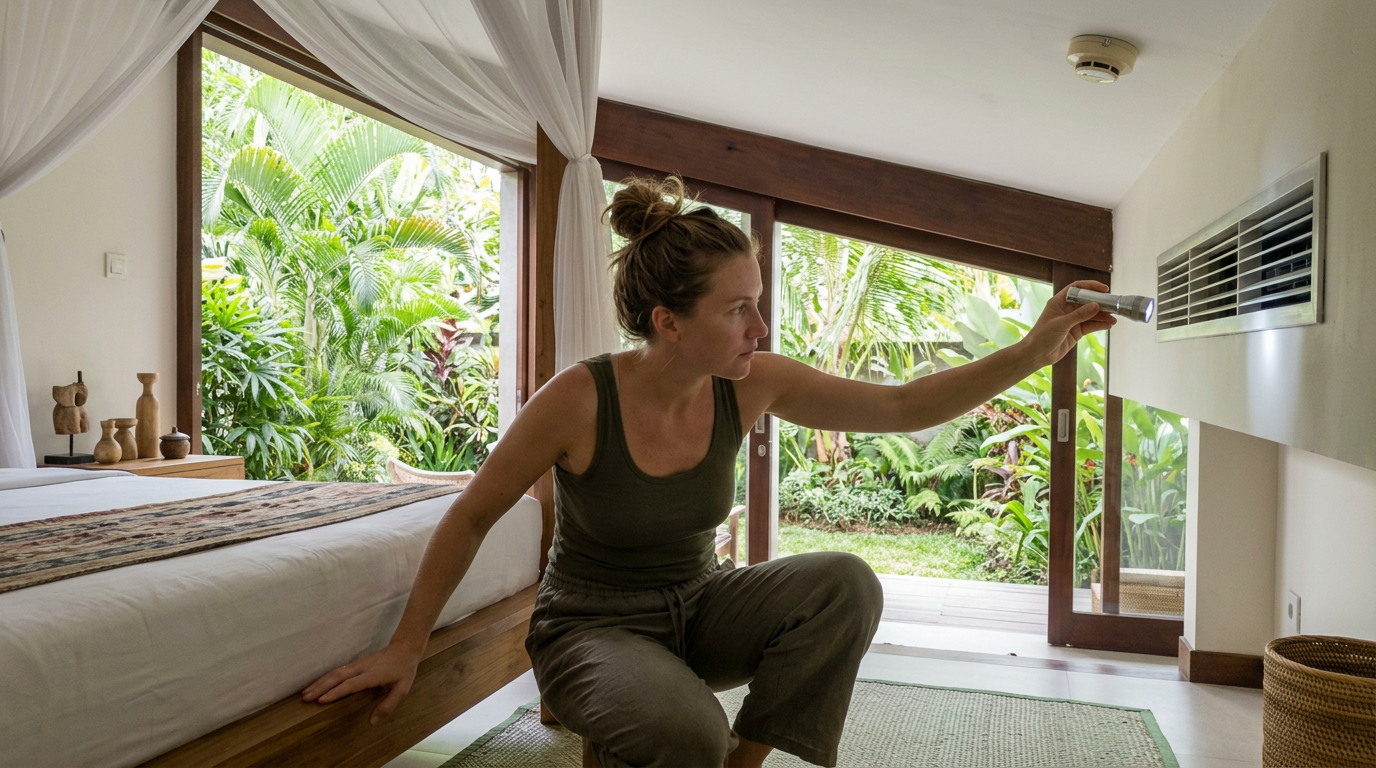
On arrival, perform a quick inspection of your room. Scan common hiding spots—smoke detectors, alarm clocks, lamps and decorative items—for small glass lenses or unusual wiring. Shine a phone flashlight across reflective surfaces to spot tiny glints that could reveal a lens. Cover any suspect device and call reception to request clarification or an immediate room change. Always ask the host or front desk directly about their surveillance policy at check in.
With those practical checks in mind, it helps to understand the legal protections that apply to surveillance and guest privacy in Indonesia.
Indonesian laws and hotel privacy protections you should know
Understanding local law makes it easier to judge what is acceptable and what is not when it comes to surveillance in accommodation. Indonesia now recognises personal data protection as a legal obligation, and existing electronic information rules also address unlawful recording. The points below help you assess a property's practices and protect your privacy.
Core legal framework
Indonesia enacted a personal data protection law that requires a lawful basis for collecting and processing personal information. The Electronic Information and Transactions law also criminalises certain invasive acts carried out via electronic devices. In practical terms, recording guests inside private spaces without clear consent can trigger civil claims, fines and criminal investigation.
What hotels must do to comply
Hotels and villas should limit cameras to public areas unless guests provide explicit consent for any indoor monitoring. Properties are expected to publish a clear surveillance policy, post visible signage near monitored zones and explain how long footage is retained. In practice, many reputable operators keep recordings for a limited period—typically 30 to 90 days—and restrict access to authorised staff only.
Remedies and reporting options
If you suspect unlawful recording, first notify hotel management and request evidence of lawful processing. You may file a report with local police and lodge a complaint with the national data protection authority. Keep copies of any communication and, if needed, contact Bali Villa Hub customer support for assistance verifying a property policy and pursuing a remedy.
Knowing these protections helps you ask the right questions at check in and respond quickly if something seems wrong. Clear documentation and timely reporting improve the chance of a swift and enforceable resolution.
Typical locations where hotels install surveillance equipment
Hotels and villas place cameras to protect guests and property while avoiding private spaces. Understanding usual camera zones helps you know what to expect and where to look if you have privacy concerns when checking in.
Common spots for visible surveillance include:
- Lobby and reception areas — Cameras monitor arrivals and departures to deter theft and document incidents at the front desk. These units are typically positioned high and aimed at main traffic flows.
- Entrances and building perimeters — Outdoor cameras cover doorways, gates and driveways to record who enters and leaves the property; coverage often includes adjacent walkways.
- Parking areas and garages — Surveillance protects vehicles and provides evidence in case of break-ins or damage, focusing on entry points and high-use sections.
- Corridors, stairwells and elevator lobbies — Common paths are monitored to ensure guest safety and track unauthorized access; placement usually covers multiple sight lines.
- Pool, spa and gym facilities — Open amenity zones are recorded to help respond to emergencies and enforce safety rules; cameras avoid enclosed changing rooms and private treatment areas.
- Service and back-of-house spaces — Staff entrances, loading bays and storage corridors are monitored to protect assets and manage deliveries.
Visible cameras in these locations are standard practice. If you find a device in a space you expect to be private, ask reception for clarification and request a different room if you remain uncomfortable.
How to inspect a Bali hotel room for hidden cameras
Performing a calm, systematic check on arrival gives you confidence and protects your privacy. A quick 10-minute inspection using just your phone and careful observation will reveal most covert devices without dismantling anything or causing a scene.
Visual sweep of likely hiding spots
Begin with obvious concealment areas: smoke detectors, wall clocks, table lamps, decorative items, power strips and air purifiers. Examine mirrors for a gap between glass and frame and look for tiny pinhole openings in phone chargers, alarm clocks and ornaments. Check behind curtains, inside lampshades and inside hollow fixtures where a small lens might be hidden.
Simple electronic checks using your phone
Turn off the lights and use your phone camera to scan the room slowly. Many cameras use infrared for night vision and will show up as small bright dots on a phone screen when you sweep. Next use your phone flashlight and angle the beam across surfaces to look for a reflected glint that could indicate a lens. You can also place a call and move around to see if any device emits unusual interference, though that is less reliable than visual checks.
When to document and involve staff
If you find anything suspicious, photograph the device without touching it and notify reception calmly, asking for clarification and an immediate room change if you feel unsafe. Request written confirmation of their response and a timeline for investigation. If the reply is unsatisfactory, contact Bali Villa Hub support for verification and advice and consider filing a local report to preserve evidence.
These steps are practical and non-confrontational. A careful inspection plus clear documentation will usually resolve concerns quickly and let you enjoy your stay.
Steps to take and who to contact if you find a camera
If you discover a camera in your room, remain calm and do not touch the device. Photograph the device from several angles without moving it and take a wider image that shows its exact position in the room. Note the date, time and precise location, and back up these images to your phone or cloud storage. Notify reception immediately in person and request a written incident note and an immediate room reassignment. Ask staff to preserve surrounding items and to secure relevant CCTV (closed-circuit television) footage so evidence is not overwritten. Where possible, obtain the names and roles of staff who respond and ask for a clear timeline for investigation and follow up.
Contact Bali Villa Hub customer support if you booked through the platform and provide your booking details and the photographs you took. If the hotel response is unsatisfactory, file a report with the local police and request a police written report for your records. You may also lodge a complaint with the national data protection authority and contact your embassy if you are traveling from abroad. Keep all documentation including booking confirmations, receipts and correspondence. Clear documentation and prompt reporting make it far easier to resolve the matter and seek compensation or formal remedies if needed.
For help confirming a property's surveillance policy or arranging an alternative stay, visit https://www.balivillahub.com/en or contact their customer support—they can assist with verification and next steps so you can travel with greater peace of mind.