Essential Dos and Donts Every Visitor Should Know in Bali
Bali Villa Hub
2/19/2026
Essential Dos and Donts Every Visitor Should Know in Bali
Bali welcomes visitors with vibrant culture, stunning landscapes and warm hospitality. To enjoy the island fully while preserving local customs and communities, a little knowledge and simple mindfulness go a long way. The following guide highlights everyday practices, common pitfalls, temple etiquette, dress and boundaries, and practical travel tips to help you move through Bali with respect and confidence.
Everyday Dos for Respectful Travel in Bali
Simple daily habits shape the quality of your visit and the wellbeing of local communities. Adopt a few consistent practices and you will leave a positive impression while enjoying the island.
Below are practical actions you can take every day to show respect and stay mindful of Balinese customs and the environment.
- Learn a few local greetings Saying selamat pagi or terima kasih at appropriate moments opens doors and signals cultural curiosity in a gentle way.
- Respect offerings and sacred spaces Step around canang offerings on sidewalks, avoid touching temple adornments, and follow posted signs about footwear.
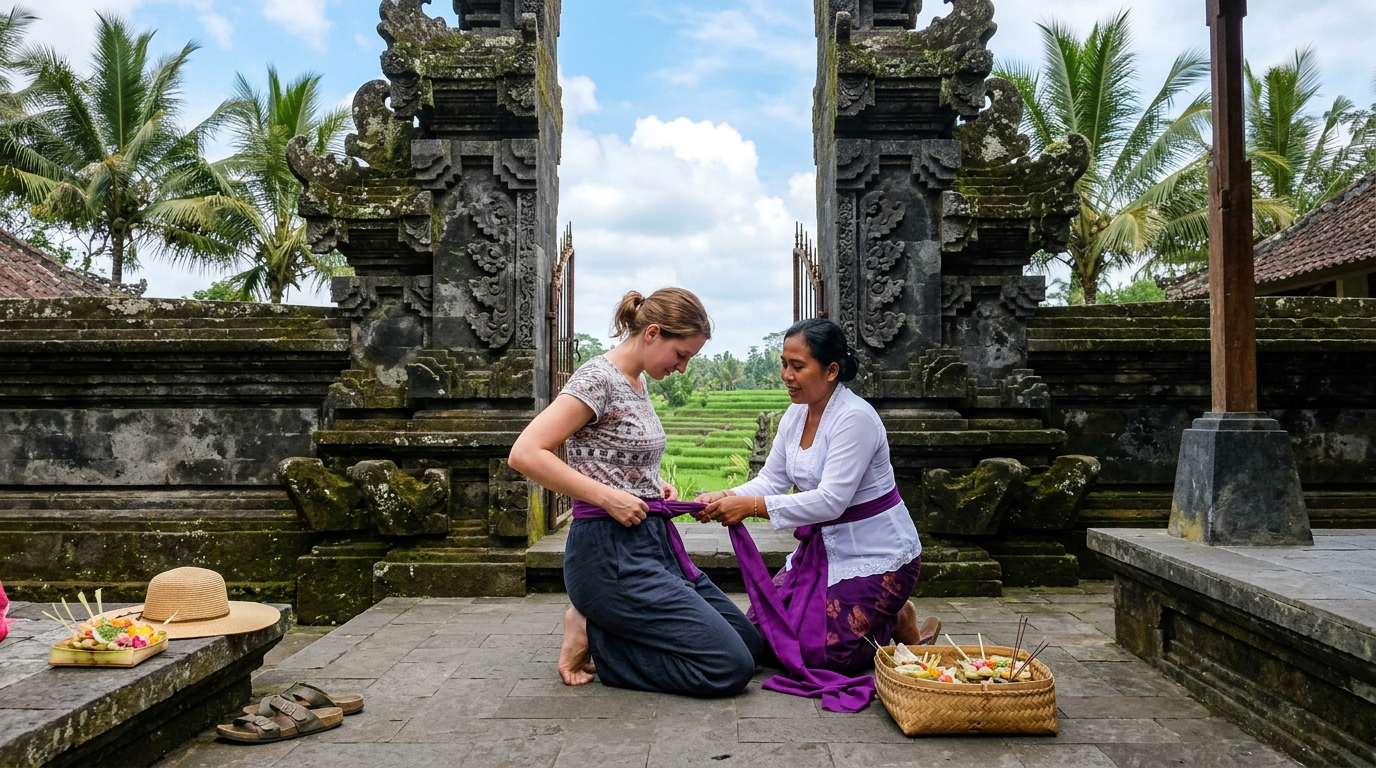
- Dress modestly in villages and at temples Keep shoulders and knees covered when entering community areas, and carry a sarong or scarf for quick coverage.
- Ask before photographing people or ceremonies A quick request shows courtesy and preserves privacy, especially during family rituals and temple events.
- Choose low-impact habits Use a reusable water bottle, refuse single-use plastic when possible, and prefer locally run stalls and markets for meals and crafts.
These dos are small to practice and meaningful to others. They help you move through Bali with sensitivity and create more authentic interactions.
Keeping these simple habits in mind each day will enhance both your experience and the places you visit. With this foundation, you will also avoid common missteps highlighted next.
Common Donts That Could Offend Local Communities
Being mindful of what to avoid is as important as knowing the positive actions to take. Small missteps by visitors can have a real impact on daily life and sacred practices in villages and temples. Below are concrete behaviours that commonly cause offence and how to steer clear of them.
Do not step on canang offerings placed on pavements or doorsteps and do not move them for convenience. Avoid touching temple textiles and carved figures, and never climb on shrines for photos. Do not wear beachwear in village centres or at temple entrances, and avoid sitting with your feet pointing toward an altar or a seated person. Refrain from loud language or amplified music in residential areas late at night.
Never photograph private rituals or people without explicit permission. Ceremonies and family rites are not spectacles. Do not enter a rumah adat compound without an invitation and remove shoes where asked. Do not touch a child's head as the head is considered sacred in Balinese culture. When bargaining in markets, avoid aggressive tactics that humiliate sellers and do not throw rubbish into gutters or rice paddies.
When in doubt, ask first and mirror local behaviour. Consider supporting community projects or purchasing directly from local artisans rather than handing cash to children. Respectful restraint protects traditions and improves every interaction you have on the island. Practise these cautions and you will travel with sensitivity and leave a positive impression on the communities you visit.
Understanding these avoidable behaviours prepares you for more formal settings like temples and ceremonies, which require a little extra attention.
Temple Protocol and How to Attend Religious Events
Visiting a Balinese temple is both a privilege and a lesson in local customs. A little preparation shows respect and makes your participation welcome rather than intrusive.
Before You Arrive
Wear a sarong and sash when required and ensure shoulders are covered. Many temples offer loan sarongs at the entrance, but bring a lightweight scarf if you prefer. Keep footwear outside the main shrine area and carry small change for a modest offering or donation if you wish to contribute.
Behavior While Inside
Move calmly and speak softly. Avoid stepping on canang offerings on floors and thresholds and do not touch temple ornaments or the sacred statues. Sit with legs tucked or cross-legged and never point your feet toward an altar or a person who is praying. Follow the lead of local attendees and obey attendants or signs about where to stand and when to be still.
Attending Ceremonies
Ask permission before taking photographs and do not use flash during rituals. If you are invited to join a procession or a rite accept guidance from a local host or priest and follow simple instructions like where to stand and when to remain seated. Women who are menstruating may be discouraged from entering certain inner shrines, so respect any guidance offered by temple staff or community elders.
Observing these protocols allows you to witness ceremonies respectfully and supports the continuity of local practice. When in doubt, ask a polite question; your willingness to learn will be appreciated by the community hosting the event. After observing temple etiquette, you will find it easier to navigate dress norms and personal boundaries discussed next.
Dress Code, Nudity Rules and Personal Boundaries
How you dress and behave affects both comfort and respect. Bali is relaxed by many standards, but public modesty remains important in villages, temples and family settings. Follow clear, simple rules to avoid embarrassment and to show consideration for local customs.
Temple and Village Attire
Always cover shoulders and knees when entering a temple or walking through a village. Many temples require a sarong and a sash for inner access. If you do not have one, the temple may offer a loan sarong, but it is best to carry a lightweight wrap for quick coverage. Remove shoes when asked and avoid clothing that is transparent or overly tight in community areas.
Beach and Resort Norms
Swimwear is acceptable at beaches and hotel pools, but avoid wearing bikinis or board shorts while crossing village streets or public plazas. Topless sunbathing and public nudity are not appropriate in Bali and can lead to confrontation or involvement from local authorities. In private villas guests have more privacy but still respect neighbours and staff when moving between property and public areas.
Physical Contact and Personal Space
Do not touch a person's head as it is considered sacred, and ask before hugging or photographing someone. Keep public displays of affection discreet, especially near temples and in rural communities. Never handle offerings or temple objects and ask permission before touching children or participating in intimate family rituals.
When unsure, observe those around you and ask a polite question rather than making assumptions. Small acts of modesty and restraint protect traditions and make interactions on the island far more positive for both visitors and hosts.
With clothing and boundaries managed, practical matters like money, safety and transport require a few careful choices to keep your trip smooth.
Practical Tips on Money, Safety and Getting Around
Practical planning makes travel smoother and keeps stress to a minimum. Think ahead about how you will access cash, store valuables and choose transport to match your comfort and skill level.
Money and safety essentials
Carry Indonesian rupiah for daily purchases and small offerings and keep larger sums locked in your accommodation safe. Use ATM (automated teller machine) located inside bank branches or shopping centres and count notes before leaving the machine to avoid disputes; many ATMs impose daily withdrawal limits of around one to two million rupiah, so plan withdrawals accordingly.
Keep one photocopy of your passport separate from the original and leave extras locked up in the villa safe. Avoid displaying expensive cameras, watches or jewellery in crowded areas and use a concealed money pouch when travelling on foot in busy markets or ferry terminals.
- Paying and changing money Use licensed money changers or bank counters and check the total you receive before walking away; accept smaller denomination bills for vendors and transport fares.
- Using local transport Choose registered metered taxis or drivers who provide a written quotation and confirm the final price before departure if a meter is not used.
- Renting a scooter Only rent if you have the appropriate licence and confident riding experience; inspect brakes, tyres and lights and always wear a helmet.
- Night safety Avoid poorly lit side streets, walk in groups when possible and keep your phone charged with emergency contacts stored in the address book of a trusted local contact or your accommodation.
With these simple precautions you reduce common hassles and can focus on enjoying the island. Plan a little each day and you will travel with greater ease and confidence.
For help finding respectful accommodation and local guidance, consider browsing https://www.balivillahub.com/en to explore villa options and practical local tips that match your travel style.
By combining mindful behaviour, awareness of local protocols and basic practical planning, you will make the most of your time in Bali while leaving a positive impact on the communities you visit. Safe travels and enjoy the island with respect and curiosity.