How is the healthcare system in Bali?
Bali Villa Hub
2/20/2026
How is the healthcare system in Bali?
Bali offers a mixed healthcare landscape that combines public services with an expanding private sector. For residents, long‑stay visitors, and tourists alike, understanding how facilities are distributed, what services they provide, and how costs and insurance interact can make seeking care far less stressful. The following sections summarize the system, typical costs, insurance options, public coverage, and practical tips for emergencies and medication access.
Overview of Bali’s healthcare system and facility types
Bali’s healthcare combines government-run clinics and hospitals with private clinics and specialist practices. Quality and capacity vary by location: the most comprehensive resources are concentrated around Denpasar and the southern tourist areas, while smaller towns and rural areas offer more limited options. Recognizing what each facility can do will help you choose the right level of care quickly and efficiently.
Primary care and community clinics
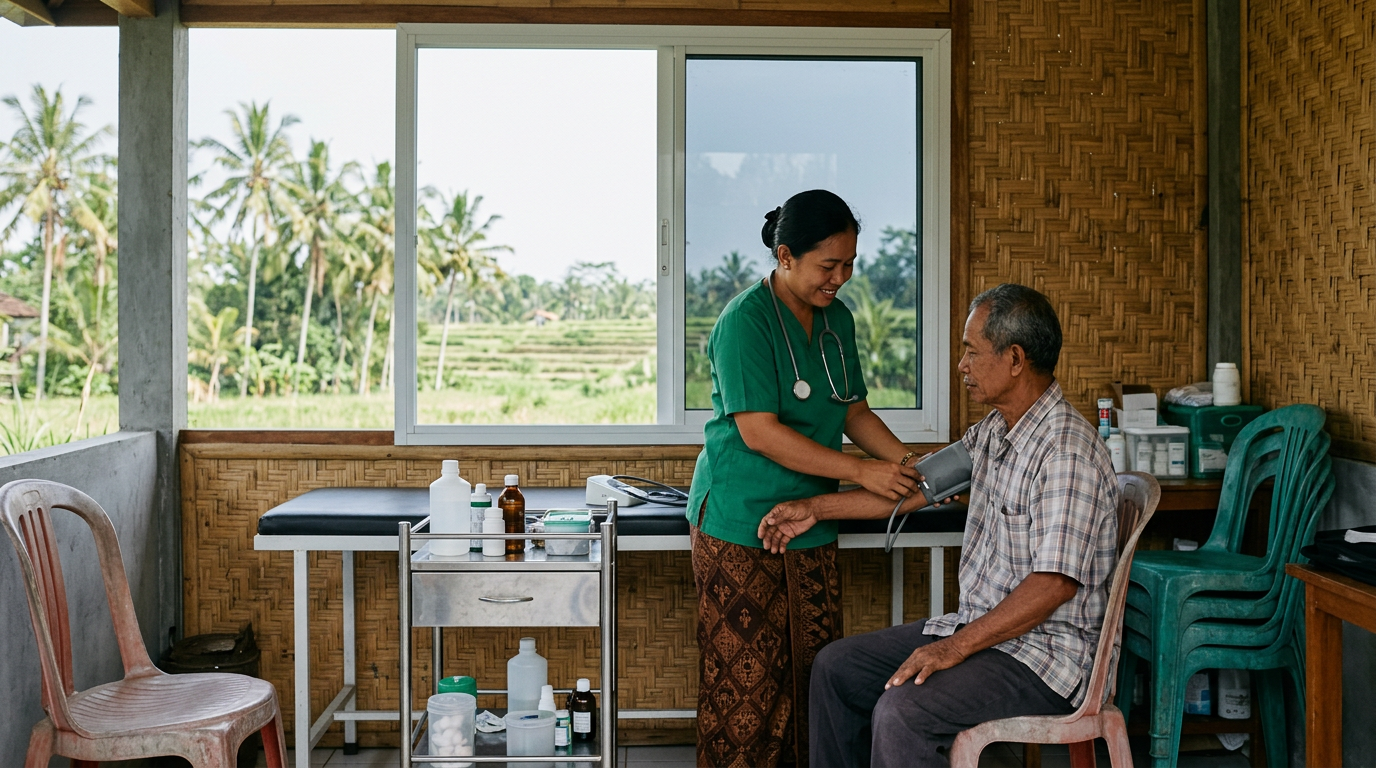
Puskesmas community health centers deliver basic outpatient services such as immunizations, maternal and child health, and simple wound care. They are low cost and widely available but may have limited diagnostic equipment and fewer English‑speaking staff, so they work best for routine or non‑complex issues.
Private clinics and specialist practices
Private clinics in areas like Canggu, Seminyak, and Ubud cater to tourists and expatriates with English‑friendly consultations, urgent care services, and some onsite imaging. Specialist practices cover dentistry, dermatology, obstetrics, and other fields with more modern equipment and faster appointment availability, though at higher fees than public options.
Hospitals and emergency care
Major hospitals—primarily in Denpasar and the southern corridor—provide emergency departments, intensive care, operating theatres, and comprehensive laboratories. Public hospitals serve broader geographic needs at lower cost but can be crowded and variable in service level; private hospitals generally offer higher standards, multilingual staff, and quicker handling of complex cases.
When choosing care, consider urgency, complexity, and budget. For planned treatments contact facilities in advance to confirm language support and payment procedures, and bring identification and relevant medical records to ensure a smooth visit. With that context, it helps to know what the typical out‑of‑pocket costs look like.
Typical costs and what you can expect to pay for care
Healthcare prices in Bali depend on whether you use public clinics, private clinics, or private hospitals and on the area of the island where you receive care. Expect the most affordable care in government facilities and the highest fees at private hospitals near tourist hubs. Amounts below are indicative and shown in USD (United States Dollar) and IDR (Indonesian Rupiah) for clarity.
- General practitioner consultation Private clinic visits generally cost 15 to 40 USD (United States Dollar) or 220000 to 600000 IDR (Indonesian Rupiah) per consultation, while a visit to a puskesmas community clinic is often 1 to 5 USD or 15000 to 70000 IDR.
- Specialist consultation Seeing a specialist at a private practice commonly ranges from 30 to 90 USD or 450000 to 1350000 IDR depending on the specialty and clinic reputation.
- Dental care Routine procedures such as a basic filling cost about 25 to 80 USD or 350000 to 1200000 IDR, and a simple extraction 20 to 60 USD or 300000 to 900000 IDR.
- Diagnostic tests Imaging and lab costs vary: X‑ray around 10 to 30 USD or 150000 to 450000 IDR, ultrasound around 30 to 70 USD or 450000 to 1000000 IDR, CT scan 150 to 350 USD or 2200000 to 5000000 IDR, and MRI 250 to 600 USD or 3700000 to 8800000 IDR.
- Emergency and ambulance services A minor emergency visit to a private hospital emergency department typically starts at 50 to 150 USD or 750000 to 2200000 IDR, while private ambulance transfers commonly range from 30 to 100 USD or 450000 to 1500000 IDR.
- Hospital admission and surgery Private hospital overnight rates are often 100 to 300 USD or 1500000 to 4500000 IDR per night; common surgeries such as an uncomplicated appendectomy may range from 1200 to 3500 USD or 18000000 to 52500000 IDR.
These figures are typical starting points and can fluctuate by facility, season, and case complexity. Always confirm prices with the clinic or hospital beforehand and carry proof of insurance and identification to reduce unexpected costs. Cost expectations also influence the insurance choices many residents and long‑stay visitors make, which we outline next.
Health insurance choices for expats and digital nomads
Choosing the right health insurance in Bali depends on the length of stay and the level of coverage desired. Short‑term visitors often prefer travel policies that emphasize emergency and evacuation cover, while long‑stay residents and digital nomads usually choose comprehensive international plans covering routine care and major events. Understanding trade‑offs between cost, portability, and hospital access will help you decide.
Short term travel and emergency cover
For stays under six months, a travel medical policy that includes emergency evacuation and inpatient hospital cover is often the most practical option. These plans typically have lower premiums and are straightforward to purchase online. Ensure evacuation limits are sufficient and that outpatient urgent care is included for common issues like minor injuries and acute infections.
Comprehensive international plans
Expats and nomads planning multi‑year residency should consider private international medical insurance covering inpatient care, outpatient visits, specialist consultations, and prescription drugs. Look for policies with direct billing at major private hospitals in Bali, robust emergency evacuation cover, and reasonable annual limits. Portability is important if you plan to move between countries.
Local Indonesian options and add ons
Local private plans can be more affordable for routine care but may lack international portability and extensive specialist networks. Many residents combine a local plan with a travel medical rider for evacuation. Optional extras such as dental care, maternity cover, and riders for pre‑existing conditions can be added based on personal needs.
Before purchasing any plan, compare coverage limits, exclusions, waiting periods, and claim processes, and confirm which hospitals accept direct billing. Keep digital copies of policy documents and emergency contact numbers so you can access care quickly when necessary. With insurance decisions understood, it’s also important to know how public coverage works for residents.
Public BPJS system and what residents need to know
BPJS (Badan Penyelenggara Jaminan Sosial Kesehatan) is Indonesia's national health insurance and it operates on a membership and referral model that residents should understand before relying on it for major care. Enrollment routes vary by status: employed residents are typically registered through their employer, which shares contribution payments, while self‑employed or non‑working residents must register individually and pay monthly premiums according to the chosen class—commonly Class I, Class II, and Class III. The selected class affects inpatient room entitlement and priority level for certain services.
Care under BPJS starts at the primary care level, meaning you must first visit a registered puskesmas or primary clinic for consultation; a referral is generally required to access most specialists and hospital admissions. BPJS covers a wide range of essential services, including outpatient visits, inpatient care, basic surgery, maternal and child health, chronic disease management, vaccinations, and many essential medicines, but it typically does not cover purely elective or cosmetic procedures. In practice, expect queues at public facilities, variable English language availability, and limited diagnostic options in smaller centers, so many residents choose private providers for complex or urgent needs where direct payment or private insurance is accepted.
To register as a local citizen you will need identity documents and family information, and foreigners with legal residency permits should check eligibility at the nearest BPJS office because employer‑sponsored registration is the most straightforward route for non‑citizens. Keep copies of your membership card and referral letters, and confirm in advance which hospitals accept BPJS. For those wanting faster access to private hospitals or international evacuation options, consider pairing BPJS with private or travel medical coverage.
Emergency services, pharmacies, and practical tips for seeking care
In urgent situations, knowing how to access emergency services and where to find reliable medicines can make all the difference. Bali provides a mix of public ambulance services, private ambulance options, and hospital emergency departments. Pharmacies are widespread in towns and tourist districts, but availability of specific medications varies, so it helps to be prepared.
How to access emergency care on the island
For life‑threatening emergencies, head to the nearest hospital emergency department immediately or ask local staff to arrange urgent transport. Private hospitals in the south of the island often have more consistent English‑speaking staff and faster triage for tourists and expatriates. If time allows, call reception at your accommodation or a trusted local contact to coordinate transport and alert the hospital of your arrival. Carry identification and any critical medical information so staff can act quickly.
- When to call ambulance or go to emergency Use ambulance or hospital emergency services for severe bleeding, chest pain, breathing difficulty, major head injury, or loss of consciousness. For non‑life‑threatening injuries, a private clinic can often provide faster and more affordable care.
- Using pharmacies Community pharmacies can supply many common prescriptions and offer basic advice, but some medicines require a doctor’s prescription. If you need a specific medication, call ahead to confirm stock and possible generic alternatives.
- Payment and documentation tips Bring your passport or ID and your insurance card when possible, and ask whether the hospital accepts direct billing. Have cash or a credit card ready for deposits, as some hospitals request payment before treatment.
Plan ahead by saving local hospital contacts and keeping digital copies of prescriptions and insurance details; quick preparation reduces stress and speeds access to appropriate care when you need it most. If you’re arranging a longer stay or need help finding suitable accommodation near reliable healthcare facilities, consider checking resources at https://www.balivillahub.com/en for practical local support and listings.
Ultimately, Bali’s healthcare system can meet a wide range of needs when you understand the facility types, costs, insurance options, and emergency procedures. With basic preparation—confirming hospital acceptance of your insurance, carrying identification, and keeping important contacts handy—you can access care more smoothly and confidently during your time on the island.