How likely are you to encounter a snake in Bali?
Bali Villa Hub
2/21/2026
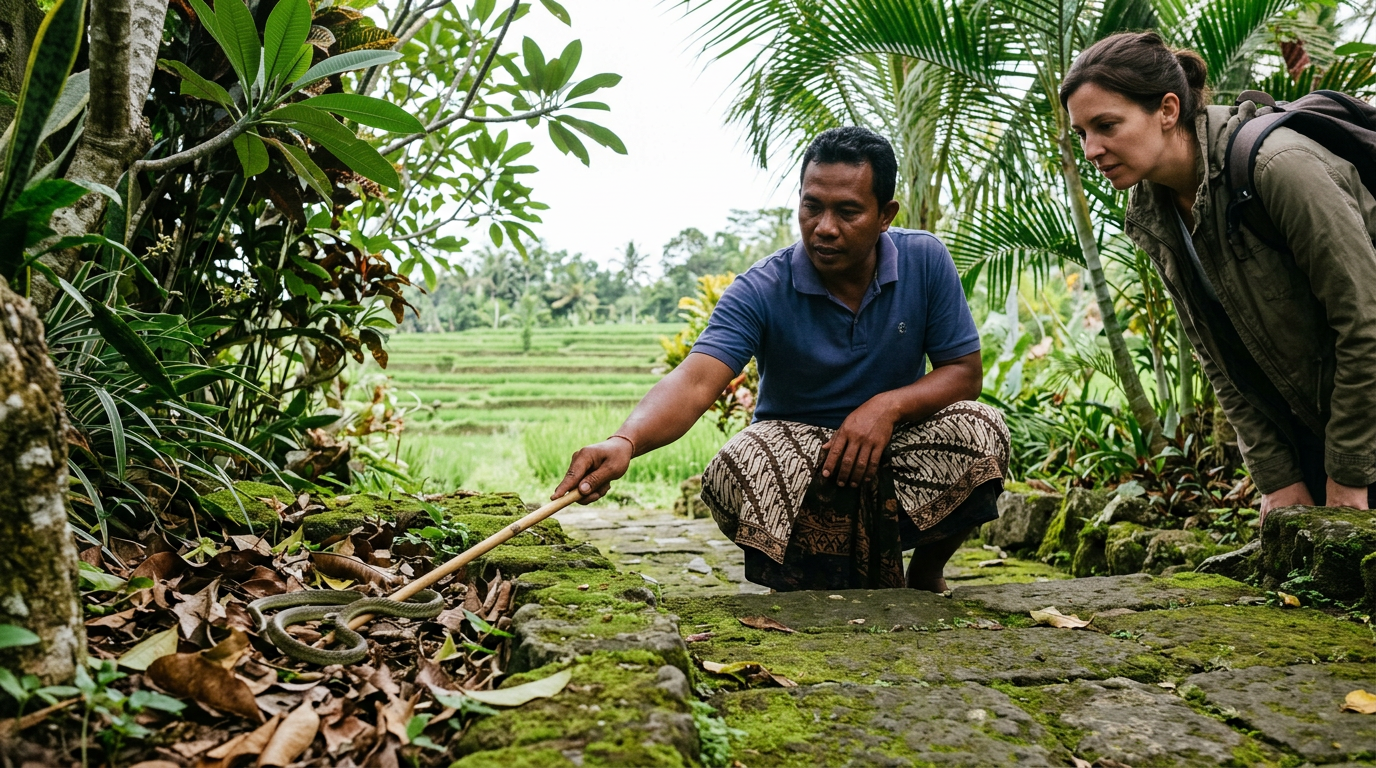
How likely are you to encounter a snake in Bali?
Bali’s wildlife is part of the island’s charm, but many visitors wonder how likely it is to meet a snake during their stay. This guide explains which species live on the island, where encounters are most common, what to expect in marine environments, practical steps visitors can take to reduce risk, and the immediate first aid actions to follow if a bite occurs. Read on to learn how to enjoy Bali safely while respecting its wildlife.
Which snake species live in Bali and how common are they?
Bali supports a modest but ecologically diverse snake fauna. Both venomous and non-venomous species live across rice paddies, village gardens, streams and coastal reefs. Sightings depend strongly on location, time of day and season, so familiarity with the common species helps set realistic expectations.
In built-up tourist areas and well-kept villas, snakes are uncommon. Encounters are more likely in rural rice fields, forest edges and during the wet months when snakes move more to hunt rodents and frogs.
- Javan spitting cobra(Naja sputatrix) — Common in lowland farms and village gardens. It has caused several medical cases but generally avoids people when given space.
- King cobra(Ophiophagus hannah) — Rare and mostly restricted to forested hills and remote valleys. Sightings are infrequent but treated with caution due to its size and venom potency.
- Banded krait(Bungarus fasciatus) — Present in some lowland and wetland zones and active at night. Encounters are uncommon because it is secretive and nocturnal.
- Lesser Sunda pit viper(Trimeresurus insularis) — Found in shrubby and forest habitats across the island, with higher occurrence in eastern areas. Bites are uncommon but do occur in rural locations.
- Reticulated python(Malayopython reticulatus) — Non-venomous and fairly common near rivers, farms and rubbish sites where prey is available. Large individuals are impressive but generally shy of people.
- Common ratsnakes(Ptyas species) — Agile non-venomous snakes often seen in gardens and around buildings. Sightings are relatively frequent and they help control rodent populations.
Overall, the chance of seeing a snake while visiting Bali is low in developed resort and town areas. If you plan to explore rice terraces, forests or stay in rustic accommodation, the odds rise—especially at night and during rain. Understanding which species are present helps when considering where encounters might occur, so next we look at the habitats where snakes are most commonly seen.
Where in Bali are snakes most commonly seen and why?
Snakes are not evenly distributed across Bali; their presence follows food sources, shelter and water availability. Knowing the habitats where snakes thrive explains why some areas produce more sightings for visitors and residents.
Rice terraces and agricultural zones
Wet, grassy landscapes attract rodents, frogs and insects that provide reliable prey. Irrigation channels and tall bunds offer shelter and hunting corridors, so snakes such as ratsnakes, pit vipers and some cobras are more likely to be encountered here, especially at dawn and dusk.
During the wet season, activity increases because amphibians are abundant and field edges become easier to navigate. Workers and walkers in paddies should watch their footing and avoid reaching into dense vegetation.
Village edges, gardens and villas
Homes near farmland or jungle margins see the most human–snake interactions. Garden debris, compost heaps and open drains offer cover for small mammals and reptiles. Non-venomous ratsnakes and reticulated pythons are frequently recorded in these settings while venomous species may pass through seeking prey.
Well-maintained properties with good lighting, tidy gardens and sealed waste storage reduce attractants and therefore sightings. Nighttime is when secretive species move through built environments, so simple housekeeping and awareness matter.
Rivers, mangroves and coastal paddies
Freshwater streams, mangrove edges and rice paddies near shore host snakes hunting fish and frogs. Sea snakes are encountered by divers and fishermen around reefs and in shallow tidal pools. These marine species are generally not aggressive but should be observed from a safe distance.
In short, the highest likelihood of seeing a snake is in rural wet habitats, forest margins and poorly managed perimeters of human settlement. Respect their space and contact trained handlers if removal is needed. Coastal and marine environments present a different set of species and behaviors, so the next section focuses on sea snakes and diving sites.
Sea snakes around Bali beaches and diving sites
Sea snakes are a discreet but regular part of Bali’s marine life, and divers or snorkelers at certain sites will often notice them if they know where to look. Common reef-associated types include olive sea snakes and sea kraits that hunt in crevices and may rest on rocky shorelines at dusk, while pelagic species like the yellow-bellied sea snake can appear at the surface after storms or in calm open water. Typical habitats include shallow reef flats, coral rubble, seagrass beds and the sheltered channels around Nusa Penida, Nusa Lembongan, Amed, Tulamben and Menjangan where fish and eels congregate. Sightings increase in calm clear conditions and during low tide when snakes hunt in exposed crevices and tidal pools.
For divers, the usual behaviour observed is a long thin body slipping between bommies or resting coiled on sand patches rather than aggressive displays. Practical safety is straightforward: keep at least two meters distance, avoid attempting to prod or corner a snake, maintain neutral buoyancy so you do not accidentally trap one against coral, and never handle a snake even if it appears dead since venom can still be transferred. If you plan to dive in remote sites, ask local dive operators about recent sea snake activity and follow their guidance because they know the microhabitats where snakes commonly appear. Whether on land or in the water, visitors can take practical precautions to reduce risk, as explained in the next section.
How tourists can reduce the risk of snake encounters and bites
Simple, consistent habits cut the chance of a snake encounter dramatically. Tourists who plan ahead and adapt behaviour to local conditions lower their personal risk while enjoying Bali with confidence.
Practical measures for day-to-day safety
On land, wear closed shoes with thick soles whenever you leave paved areas and avoid sandals when walking through gardens or rice terraces. Carry a handheld torch for night walks and always keep children and pets within sight. Inside accommodation, shake out shoes and towels before use and check bedding if doors or windows have been left open. Store food and rubbish in sealed bins and ask staff about recent snake sightings so you can choose rooms with fewer perimeter gaps.
- Footwear and clothing — Wear long trousers and sturdy shoes when hiking or moving through tall grass, since most bites occur on lower limbs. Use gloves when handling firewood or debris.
- Path selection and lighting — Stay on clear paths after dark and avoid stepping into dense undergrowth. Use a torch to scan the ground and do not put your hands or feet into unseen crevices.
- Housekeeping and waste — Keep garden areas tidy, remove wood piles and secure bins to reduce rodents that attract snakes. Report any visible gaps under doors or around plumbing to accommodation staff for repair.
If you do see a snake, keep a safe distance of at least two meters and contact local wildlife handlers rather than attempting removal. These straightforward practices prevent most incidents while allowing you to enjoy Bali safely and respectfully. If, despite precautions, a bite occurs, follow immediate first aid steps below.
Immediate first aid and emergency steps after a snakebite in Bali
First, secure the scene and keep both the victim and helpers safe from further risk. Reassure the person and ask them to lie down with the bitten limb supported and still. Remove rings, bracelets and tight clothing near the bite to prevent problems with swelling. Gently wash the bite area with clean water and cover with a loose sterile dressing but do not cut the wound or attempt to suck out venom. Do not apply a tourniquet or tight constriction and do not apply ice. Immobilise the limb with a splint or broad bandage to limit movement and keep it at approximately heart level. Note the time of the bite and, if it is safe to do so, take a clear photograph of the snake from a distance to help medical staff identify it. Call local emergency services immediately and request transport to the nearest hospital able to manage envenoming.
While awaiting transport, monitor breathing, pulse and consciousness and be prepared to deliver basic life support if breathing or circulation deteriorates. Keep the person warm, calm and immobile and avoid giving food, alcohol or painkillers unless instructed by medical personnel. When handing over to medical staff, provide the time of the bite, a description or photo of the snake and any first aid already performed. Antivenom and supportive care may be required, so rapid medical assessment is essential. Avoid folk remedies and trying to handle the snake yourself; seek trained help for safe removal after the medical emergency is resolved.
Practical snake-proofing tips for homes, villas and resorts
Effective snake-proofing combines simple structural fixes with disciplined site management. These measures reduce attractants and remove easy entry points so snakes are much less likely to enter living areas while keeping the setting attractive for guests.
Perimeter sealing and structural upgrades
Seal gaps around doors, windows, plumbing and under floors so openings larger than two centimeters are closed. Fit solid door sweeps and weather strips to exterior doors and cover vents and weep holes with fine mesh screening fixed to framing. Use concrete or fine gravel along foundations for a 30-centimeter strip to remove hidden edges where snakes can hide.
Garden layout, waste and storage management
Keep lawns trimmed short and remove rock, wood and compost piles from close contact with buildings. Store firewood on raised racks at least 30 centimeters from the ground and at least one meter from walls. Secure rubbish in rodent-proof bins and maintain a routine rodent control plan since fewer rodents means fewer snakes.
Operational practices and staff readiness
Install good perimeter lighting and use motion-sensitive units near service entries. Train staff and villa guests to check shoes, towels and bedding before use and to close doors at night. Display clear instructions about what to do if a snake is seen and keep contact details for licensed local snake handlers readily available. Avoid encouraging DIY removal or unlicensed pest treatments that can worsen the problem.
These straightforward steps make homes, villas and resorts much less attractive to snakes. When choosing accommodation, consider properties that apply these practices; for convenient access to vetted villas and to ask hosts directly about their snake management policies, visit https://www.balivillahub.com/en. This can help you pick a stay that aligns with your safety preferences and peace of mind.