How much should I pay for a sarong in Bali?
Bali Villa Hub
2/22/2026
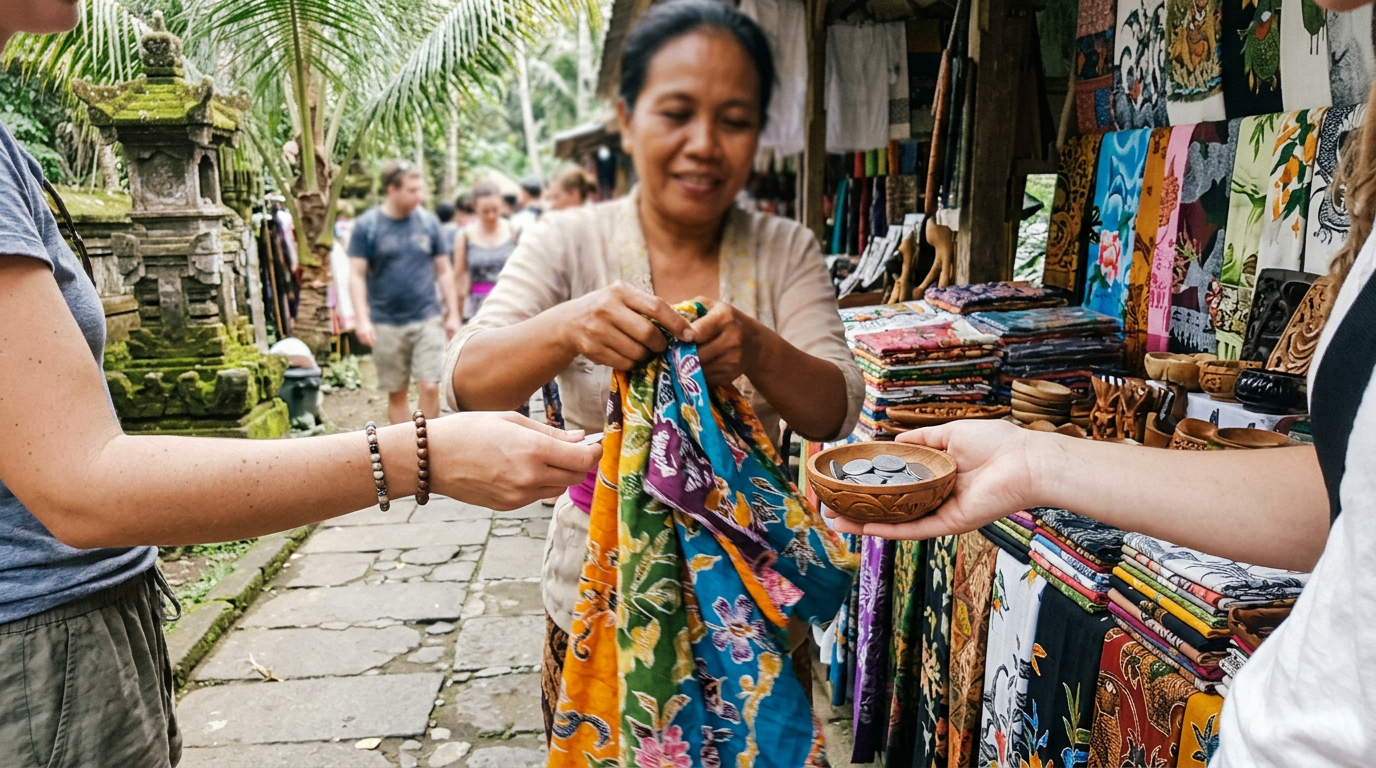
How much should I pay for a sarong in Bali?
Shopping for a sarong in Bali can be enjoyable and economical if you know what to look for. This guide walks you through typical price ranges, where to buy, how fabric and workmanship affect value, bargaining tactics, and quick checks to spot a genuine bargain. Read on to match your budget to the right sarong for beachwear, gifts, or a lasting wardrobe piece.
Typical sarong price ranges across Bali markets and shops
Sarong prices in Bali vary with fabric quality, place of purchase and whether a piece is machine printed or handcrafted. Below are realistic price brackets you will commonly encounter at street markets, fixed-price shops and artisan stalls. Note the currency used throughout: IDR (Indonesian Rupiah).
These figures reflect typical asking prices before bargaining and illustrate what a reasonable purchase looks like for daily wear, gifts and collector pieces. Always compare material and finishing when evaluating similarly priced items.
- Street market bargains — Basic polyester or lightweight rayon sarongs sold at local markets typically range from IDR 20,000 to IDR 60,000 and are fine for beach cover-ups or one-time use.
- Midrange cotton and rayon — Better printed cotton and higher-quality rayon sarongs in tourist areas and simple boutiques usually cost between IDR 75,000 and IDR 250,000 and will last multiple seasons.
- Hand batik and hand dyed — Small-batch batik and hand-dye pieces made by local craftsmen generally fall in the IDR 200,000 to IDR 750,000 range because of labour-intensive work and superior dyes.
- Premium fabrics and silk — Silk, fine woven ikat and designer pieces sold in upscale stores can command IDR 750,000 to IDR 2,000,000 depending on provenance and finishing.
- Wholesale lots — Buying in bulk for resale or events brings unit prices down to roughly IDR 40,000 to IDR 120,000 each depending on order size and fabric choice.
Use these ranges as a guide and inspect seams, pattern alignment and fabric weight before buying. If a price seems unusually low, ask about material composition and be prepared to haggle at markets to reach a fair deal. A modest premium often buys much better longevity and colourfastness, so match your purchase to how you plan to use the sarong.
With price brackets covered, the next step is choosing where to shop—location strongly affects both price and the opportunity to bargain.
Where to buy sarongs in Bali and how location affects price
Where you shop in Bali has a direct effect on price, quality and the chance to bargain. Below are the main shopping environments with concrete expectations so you can match budget to purpose.
Street markets and local bazaars
Markets such as Pasar Badung in Denpasar, Sukawati Art Market and the stalls along Kuta beachfront are the best places to find low-cost sarongs. Expect polyester and basic rayon pieces from IDR 20,000 to IDR 80,000 before bargaining. These venues are ideal if you need cheap beach wraps or many pieces at once.
Tourist boutiques and mall shops
Seminyak shops, Canggu boutiques and mall outlets in Denpasar and Kuta sell higher-quality rayon, cotton and ready-made batik at fixed prices. Typical ranges here are IDR 100,000 to IDR 600,000. Prices are steadier with nicer finishing and more fashionable designs, so shoppers pay for convenience and consistent sizing.
Artisan workshops and specialty villages
For hand batik, ikat or tissue silk visit artisan areas such as Tenganan village and small batik workshops around Klungkung. Hand-dyed and double-ikat pieces are labour intensive, so expect IDR 300,000 to IDR 1,500,000 depending on technique and provenance. Buying directly from makers offers authenticity and the chance to commission unique designs.
In practice, compare fabric weight, print clarity and seam finishing across these locations. If you plan to wear a sarong often, spend a little more in a boutique or workshop. For one-time use, grab bargains at markets and be ready to haggle to reach a fair price.
Having chosen where to shop, you’ll want to understand how material and construction influence value so you can make an informed purchase.
How fabric, print and workmanship change a sarong's value
A sarong's price reflects three clear elements buyers should inspect before deciding: fabric choice, print technique and workmanship. Each affects feel, durability and how long the piece will look good.
Fabric matters because fibres behave very differently. Lightweight rayon made for beaches is soft and affordable but will fade and thin after many washes. Midweight cotton and cotton blends offer better structure and resist pilling, so they usually last several seasons. Natural silk and handwoven ikat sit at the top end; these fabrics require skilled production and careful finishing, which explains their higher price compared with mass-produced rayon.
Print and dyeing method affect both appearance and longevity. Machine screen prints are economical and can look vibrant when new. Block printing and hand batik use manual techniques that create deeper, longer-lasting colour and unique irregularities collectors value. Ikat patterns that are resist-dyed before weaving demand more time and control, increasing the final cost. Consider a simple colourfastness check by dampening a hidden corner to see if dye transfers.
Workmanship is the final determinant of true value. Look for straight, evenly spaced stitches, neat double-folded hems, matched patterns at seams and clean fringe finishes. Minor irregularities in hand-dyed pieces are expected and can add character, but crooked seams, loose threads or uneven hems signal poor construction and a short usable life. For a sarong you will wear often, invest in better fabric and solid finishing; for casual or decorative use, a lower-cost piece can be perfectly suitable.
Next, learn practical bargaining techniques so you pay a fair price without friction.
Bargaining strategies and example prices to aim for
Knowing how to bargain will save you money and help you get a fair sarong without awkwardness. Aim to be respectful while steering the price toward a realistic target: read the seller, start low but reasonable, and be ready to walk away if the price does not match quality.
Prepare and set your target price
Before you speak, know the typical ranges for the type of sarong you want. For basic rayon at a market, expect asking prices around IDR 20,000 to IDR 80,000. For a market polyester cover-up, consider offering about IDR 20,000 when the seller asks IDR 80,000, then plan to agree near IDR 40,000 to IDR 50,000. For midrange cotton pieces with better print and finishing, start your first offer around 40 percent of the asking price and aim to settle at roughly 50 to 65 percent.
Tactics to use while bargaining
Use friendly small talk and inspect the sarong calmly. Point out minor flaws to justify a lower offer and hold cash in hand to signal seriousness. If the seller refuses your first reduced offer, move up in small steps rather than jumping to the asking price. Buying two or more pieces gives stronger leverage. If a seller remains firm, thank them and walk away to see if they call you back with a better price.
Example prices to aim for by venue
Street market simple rayon (asking IDR 20,000 to IDR 80,000) — aim to pay IDR 30,000 to IDR 50,000. Tourist boutique rayon or cotton (asking IDR 100,000 to IDR 250,000) — expect small discounts and aim for IDR 85,000 to IDR 180,000 when bargaining is possible. Hand batik or ikat from artisans (asking IDR 300,000 to IDR 1,500,000) — negotiate respectfully and aim for 10 to 25 percent off rather than steep cuts. Keep these targets in mind and adapt to each seller so the final price fairly reflects material and workmanship.
Before you finish your shopping list, make sure you can spot genuine quality at a glance to avoid overpriced or low-quality pieces.
Spotting bargains and avoiding overpriced or low-quality sarongs
Finding a genuine bargain means balancing price with clear signs of quality. A smart purchase fits your intended use, whether that is a daily wrap, a gift or a long-lasting wardrobe piece. Below are immediate checks to perform and practical red flags that reveal when a price is too good to be true or when a seller is overcharging.
Quick quality checks before you buy
Begin by feeling the fabric and inspecting construction. A midweight cotton or quality rayon should feel substantial, not thin and papery. Examine hems and seams for even stitching and matched patterns at joins. For hand-dyed and batik styles, look for slight irregularities that indicate handmade work rather than perfectly repeated machine prints.
- Test colourfastness — Damp a hidden corner with a little water and press with a white cloth. If significant dye transfers, the piece will fade or stain clothing after a few washes and is best avoided.
- Inspect finishing details — Check hems for double folding, neat stitches and tidy fringe. Loose threads, crooked seams or raw edges suggest cheap construction that will unravel quickly.
- Assess fabric and hand feel — Natural fibres and handwoven textiles have a cooler, denser feel. If the sarong feels shiny, plasticky or smells strongly of chemicals it is likely low-grade polyester.
- Compare provenance and price — Ask where the sarong was made and compare asking prices nearby. If a seller offers silk quality at a fraction of the usual market cost, it is likely a printed imitation rather than true silk or ikat.
Use these checks while you browse and let price follow proven quality. A modestly higher spend on authentic fabric and solid workmanship saves money in the long run and yields a sarong you will enjoy returning to.
If you’re planning a shopping trip and looking for comfortable accommodation nearby, consider browsing options at https://www.balivillahub.com/en to make your stay convenient and relaxed while you hunt for the perfect sarong.