How to avoid methanol poisoning in Bali?
Bali Villa Hub
2/23/2026
How to avoid methanol poisoning in Bali?
Travel to Bali is often a highlight, but like many popular destinations it carries some hidden risks. Methanol poisoning from contaminated or illegally produced alcohol is one of those hazards that can cause severe and lasting harm. This article explains what methanol is, why it sometimes appears in drinks, where the greatest dangers are in Bali, what simple checks travellers can make before drinking, and what to do if exposure is suspected.
What is methanol – and why is it so dangerous?
Methanol is a simple alcohol used in industry as a solvent and fuel; it is distinct from the ethanol found in beverages. When swallowed or absorbed, methanol is metabolised by the body into toxic compounds that attack the nervous system and disrupt the body's acid–base balance.
What methanol is and where it is found
Methanol is a clear, volatile liquid used in products such as paint removers, antifreeze and some industrial fuels. It can appear in illegally produced alcoholic drinks when cheap or recycled alcohol is mixed in to increase potency. Because it looks and smells similar to ethanol it can be hard to detect without testing.
How methanol acts in the body
After ingestion methanol is converted in the liver to formaldehyde and then to formic acid. Formic acid accumulates and causes metabolic acidosis. That acid and other metabolites damage optic nerve cells and central nervous system structures, which explains symptoms such as vision loss, breathing failure and altered consciousness.
Why small amounts can be lethal
Relatively small volumes can cause severe harm. As little as 10 millilitres of pure methanol can lead to permanent blindness and about 30 millilitres can be fatal for an adult, though individual sensitivity varies. Symptoms are often delayed by 12 to 24 hours, which can give a false sense of safety and delay treatment.
Understanding what methanol is and how it works shows why prevention and rapid medical care matter. Given these effects, it is important to know why methanol might be present in drinks.
Why would anyone add methanol to drinks?
There are two main reasons methanol ends up in beverages. One is deliberate adulteration aimed at cutting production costs or boosting perceived strength. The other is accidental contamination caused by poor distillation or fermentation practices. Both routes are driven by economics and gaps in regulation, but the consequences for consumers are the same and often severe.
When addition is deliberate it usually comes down to money. Methanol is produced industrially and can be obtained far more cheaply than potable ethanol. Unscrupulous producers or vendors seeking a stronger product at lower expense may mix small amounts into liquor to raise its apparent alcohol content. This is a criminal practice driven by profit and by an environment where enforcement is weak and consumers lack reliable ways to verify quality.
Accidental contamination is more common than many realise. Distilling fermented fruit with high pectin content or failing to discard the initial distillate fractions can concentrate methanol. Small-scale or home distillers who lack proper equipment and training may inadvertently create dangerous levels. In markets where informal production supplies a large share of local demand, negligent techniques and recycled industrial alcohol add to the risk.
Understanding the motives and mechanisms behind contamination helps explain where risks are highest.
Where are the biggest risks?
The greatest dangers come where regulation, quality control and transparency are weakest. In Bali that typically means informal supply chains and low-cost outlets where alcoholic beverages are sold without proper labelling or traceable origin.
Risks rise when drinks are bought in bulk, repackaged or produced with makeshift equipment. Time of purchase and the appearance of the container are often more telling than price alone.
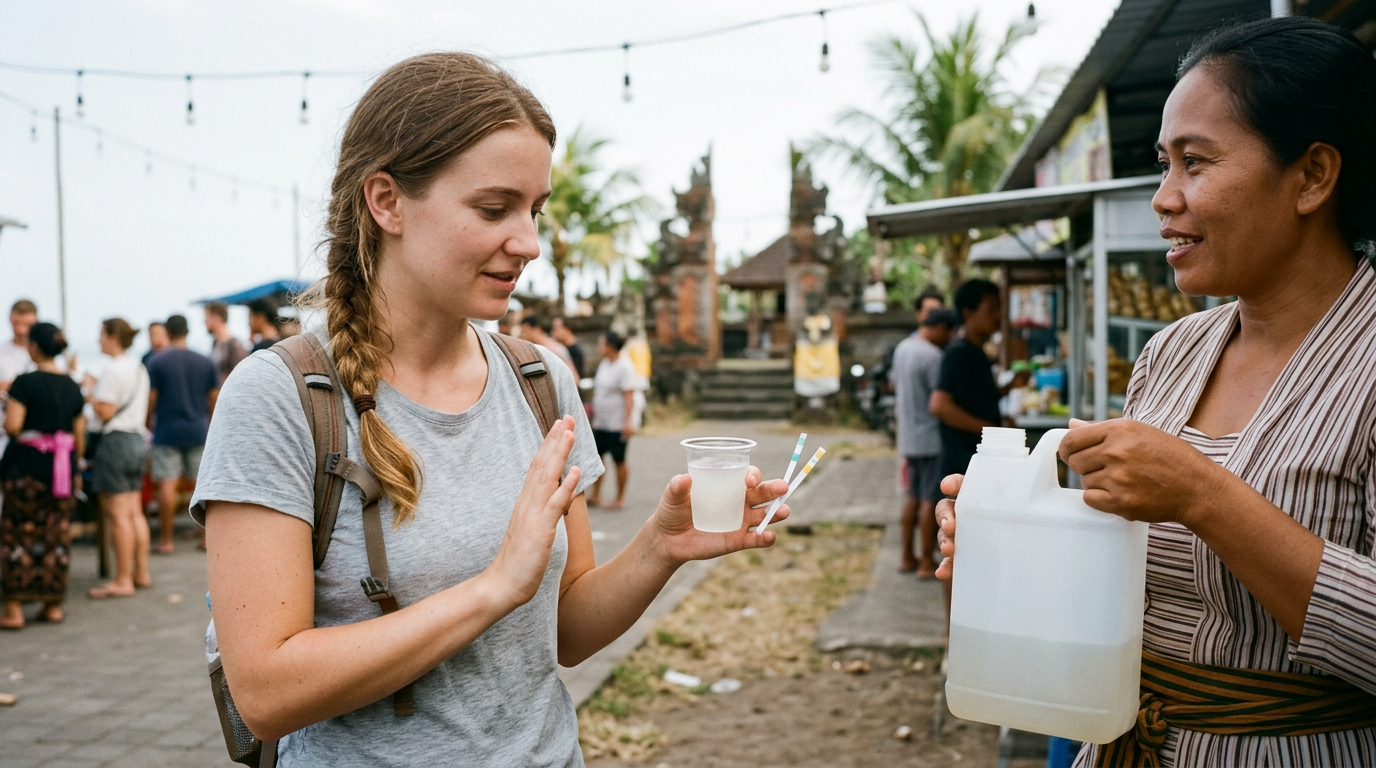
- Unlicensed street vendors and night markets in busy tourist districts often sell loose or repackaged spirits in unsealed containers. These sellers rarely have proof of source or laboratory testing, making contamination more likely.
- Small-scale or home distillers using improvised stills can produce methanol when fruit with high pectin content is fermented or when the initial fractions are not discarded. Such products may look like ordinary liquor but carry hidden toxins.
- Cheap unbranded bottles and plastic containers found at roadside stalls and informal shops frequently lack ingredient lists and safety seals. The absence of a proper label is a reliable warning sign that the product has not passed quality checks.
- Recycled industrial alcohol diverted into the beverage market can appear in low-cost commercial batches or at private events. Middlemen seeking to boost alcohol strength or reduce cost may blend industrial methanol with drinkable ethanol.
- Private parties and bulk purchases for events are a risk when organisers source large volumes from unknown suppliers. Bulk transfers increase the chance that tainted stock will be distributed widely before anyone realises.
Knowing these hotspots makes it easier to take practical precautions before accepting a drink.
What should travellers look out for before drinking?
Before you accept a drink, take a moment to check its origin and presentation. Many dangerous incidents trace back to small details that are easy to spot once you know what to watch for. A few simple precautions reduce the chance of exposure to methanol and other contaminants.
Quick checks to make before you order
Examine packaging and labels for consistency. A sealed factory cap, a clear label and a batch code are reliable indicators that a product has passed quality controls. If a bottle is unlabelled, repackaged or presented in a plastic container, treat it as high risk and decline.
Observe the venue and the seller. Licensed bars, restaurants and hotel outlets are more likely to source traceable stock and follow safety rules. When in doubt ask to see the sealed bottle and decline offers of shots or mixed drinks made from unknown sources.
- Packaging and seal. Look for intact manufacturer seals matching labels and no signs of resealing. Any evidence of tampering means walk away.
- Seller credibility. Buy from licensed shops or well-known venues and avoid roadside stalls and unmarked carts. If a vendor cannot prove the origin of a spirit do not buy it.
- Prefer lower-risk drinks. Beer, canned cocktails and sealed wines are far less likely to contain methanol than small-batch spirits sold loose or in plastic bottles.
- Avoid suspicious tastes and smells. A solvent-like chemical or petrol smell or a harsh burning aftertaste is a red flag and you should stop drinking immediately.
Trust your instincts and err on the side of caution. If you feel unwell within 12 to 24 hours after drinking, seek urgent medical attention and tell clinicians about possible methanol exposure so appropriate tests and treatment can begin.
What should you do if you think you have methanol poisoning?
If you suspect methanol exposure act immediately and seek emergency medical care. Do not wait for symptoms to appear, as effects are often delayed by 12 to 24 hours. Call for urgent transport to the nearest hospital and tell clinicians you suspect methanol ingestion so they can prioritise specific tests and treatment. Preserve any remaining bottle, container or a sample of the drink and bring it with you. Do not try home remedies and do not induce vomiting. If the person is conscious keep them calm, upright and supervised. If they become confused, have breathing problems or lose consciousness place them on their side and ensure the airway is clear while help is on the way.
At hospital staff will assess acid–base balance and blood methanol levels and start specific therapy when indicated. Antidotes used by clinicians include fomepizole or carefully monitored intravenous ethanol and in many cases urgent haemodialysis is needed to remove toxic metabolites and correct severe acidosis. Treatment is time sensitive and early intervention greatly reduces the risk of permanent vision loss and death. If you are abroad ask for transfer to a facility with intensive care and dialysis if local services cannot provide these interventions. Be clear about timings, amounts and symptoms when you arrive so care can begin without delay.
If you are planning a stay in Bali and want accommodation that helps you avoid risky settings while travelling, consider checking https://www.balivillahub.com/en for vetted villa options and local guidance.
Staying informed, choosing traceable drinks and acting quickly on any suspicion of exposure are the best ways to reduce this preventable risk. Safe travels and stay vigilant.