How to blend in and avoid looking like a tourist in Bali
Bali Villa Hub
2/23/2026
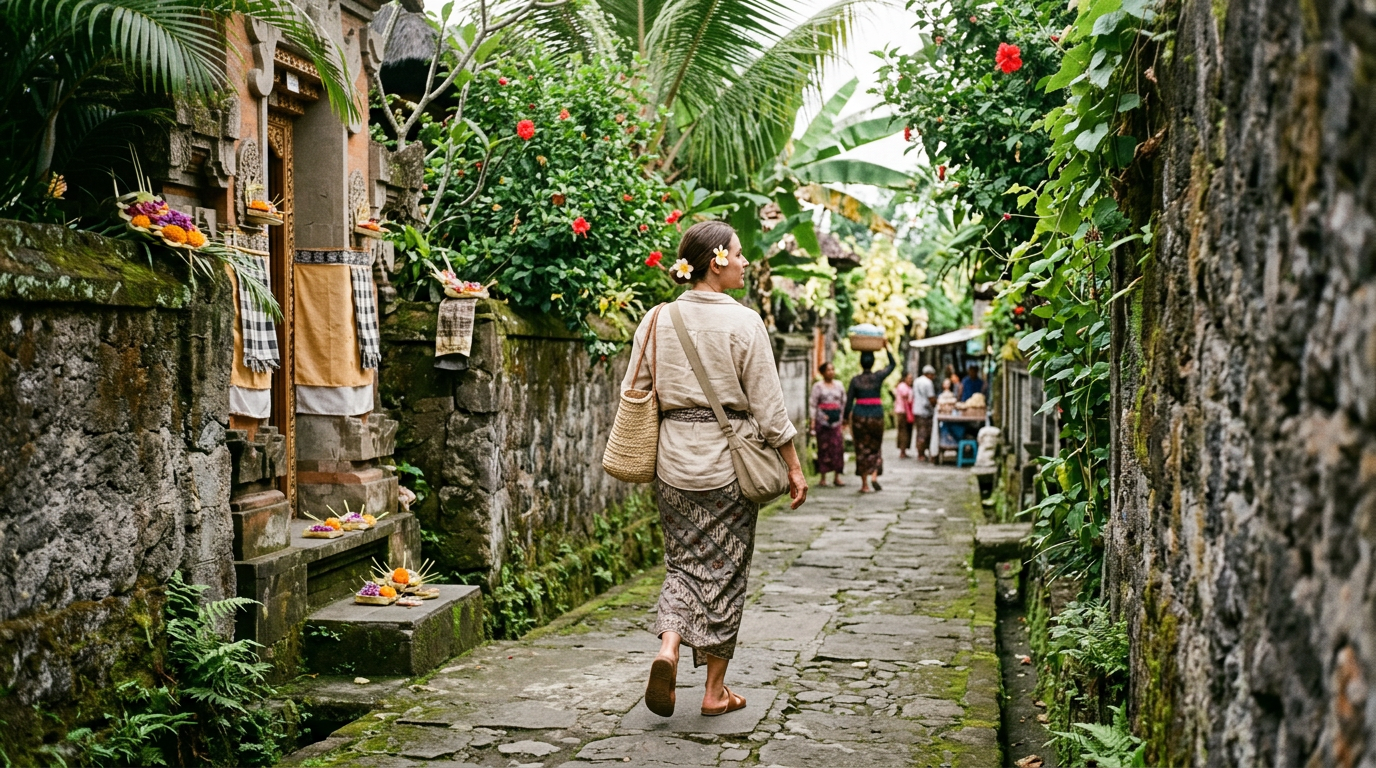
How to blend in and avoid looking like a tourist in Bali
Bali rewards travelers who show a little cultural awareness and practical sense. Small choices in clothing and behavior help you stay comfortable in the heat while signaling respect for local customs. This guide keeps the original tips intact but tightens the language and adds clear transitions so you can move through daytime streets, temples and village paths with ease.
Daytime dressing tips for Bali
Daywear in Bali should balance cooling comfort with a quietly polished look. Aim for lightweight pieces that move with you and read as intentional rather than touristy. Below are focused recommendations to help you achieve that balance.
Choose breathable natural fabrics
Prioritize linen, cotton and lightweight viscose that wick sweat and dry quickly. Select loose shirts, relaxed trousers and mid-length skirts that allow air circulation and avoid clingy silhouettes. Leave heavy denim and stiff fabrics at home; they trap heat and feel out of place in Bali's climate.
Opt for understated colors and patterns
Stick to muted tones such as white, beige, olive, soft blue and terracotta to blend with local aesthetics. Small-scale prints or subtle batik-inspired patterns work well, while large branded logos and loud tourist slogans draw attention. Keep accessories minimal and neutral to maintain a composed, locally aware appearance.
Smart footwear and sun protection
Choose sandals with secure straps or lightweight closed-toe shoes for scooter rides and walks on uneven paths. Reserve flimsy flip-flops for short beach visits only. Bring a wide-brim hat and polarized sunglasses for sun glare, and carry a small bottle of reef-safe sunscreen to protect your skin without harming the environment.
In practice, pick pieces that mix and match easily so you look put together without effort. Small thoughtful choices—proper fit, muted colors and breathable fabrics—help you move through daytime Bali without looking like a tourist while staying comfortable all day long.
With daytime wear covered, the next section explains how to adapt clothing for temple visits, where modesty and simple preparation matter most.
How to dress for temple visits
Visiting a Balinese temple calls for respectful dressing that blends practicality with local custom. A simple strategy is to cover shoulders and knees, choose breathable fabrics and wear clothing that can be adjusted on the spot.
Sarong and sash rules
A sarong that reaches at least to the knee is required in most temples. If you do not bring one, many temples loan sarongs at the entrance, but carrying a lightweight sarong in cotton or rayon lets you avoid queues. Finish the look with a sash tied snugly at the waist about 6 to 8 centimeters wide to hold the sarong in place.
Modest tops and bottoms
Women should avoid strapless or low-cut tops and opt for short-sleeved or sleeveless tops paired with a sarong or long skirt. Men should wear long trousers or a sarong rather than short shorts. Avoid sheer fabrics and body-hugging garments so posture and movement remain discreet and respectful.
Footwear and small details
Wear slip-on sandals or shoes that remove easily since you will be asked to leave footwear at the outer courtyard. Remove hats and sunglasses inside the inner temple area, and keep backpacks slung in front to show attentiveness. Cover visible religious tattoos if possible during ceremonies and avoid loud colors or large logos.
By preparing a simple sarong and sash and choosing modest, breathable clothing you will meet local expectations and feel comfortable moving through temple grounds. These small efforts make a meaningful difference and show respect for Balinese sacred spaces. Next, learn how similar principles apply when visiting rural villages and community areas.
Dress with respect in sacred places and rural villages
When you step into a temple courtyard or wander a rural Balinese village, your clothing speaks before you do. Aim for modest, practical garments that show awareness of local customs while keeping you cool and comfortable.
Carry one lightweight item that can add coverage when needed—such as a cotton sarong or a versatile scarf. This small preparation avoids awkward refusals and helps you engage with local life respectfully.
- Cover shoulders and knees Wear tops that cover the shoulders and skirts or trousers that reach the knee or below so you meet common expectations at temples and village homes.
- Bring a sarong or wrap A cotton sarong folds small in a bag and can be tied at the waist or draped over shoulders to make any outfit appropriate for a sacred setting.
- Choose muted colors and simple patterns Neutral tones such as beige, olive, white and soft blue blend with local dress and avoid drawing unnecessary attention.
- Select practical footwear Use slip-on sandals for easy removal and closed-toe shoes for walking on uneven village paths or during market visits.
- Avoid bathing suits and revealing clothes outside beaches Save swimwear for the shore and avoid crop tops or very short shorts when visiting temples, homes or community events.
In most cases a neat, modest outfit plus a sarong is all you need to show respect and move around freely. Observing how local people dress at a ceremony or in a village will give you immediate clues about what is appropriate. The next cultural habit to adopt is a simple hand etiquette that matters in everyday exchanges.
Use your right hand when giving and receiving
In Bali, using the right hand to give and receive is a simple gesture that signals respect and cultural awareness. The left hand has traditionally been associated with personal hygiene, so offering money or a gift with the right hand avoids awkwardness and shows you have paid attention to local customs. When you hand over cash, a small parcel or even a business card, make a point of transferring the item with your right hand and receiving with your right hand. If you need to use both hands to show extra politeness, place your left hand lightly under your right wrist as you present something to an elder, a priest or a host. This supported presentation elevates the exchange without seeming theatrical.
If you are eating with your fingers, follow the same rule and use the right hand for the meal while keeping the left for non-food tasks. Practical habits help you in everyday situations, so if you are carrying a bag or holding a phone in your left hand, shift the item to your right before handing something over. There are kind exceptions when the right hand is injured or unavailable; in that case, a brief apology or a soft smile as you use the left hand is understood and accepted. For formal introductions, a right-hand handshake is normal and you can place your left hand over your heart afterward to convey sincerity. Observing this one habit reduces cultural friction and is noticed by locals as a thoughtful sign of respect.
With hand etiquette clear, the final cultural detail to be mindful of involves how you treat heads and feet in Balinese society.
Respect the head and feet customs in Bali
In Balinese culture the head is considered the most sacred part of the body and the feet are regarded as the lowest. Observing simple habits around heads and feet shows deep respect and helps you connect more genuinely with local people and rituals.
How small actions make a big difference
Avoid touching anyone on the head even in a playful way. Children often receive casual affection from family, but a visitor patting a head can be perceived as intrusive.
Likewise, be mindful of where your feet point while sitting or standing near people and sacred objects. Directing the soles of your feet toward someone or toward a shrine can be seen as disrespectful, so adjust your posture if needed.
- Do not touch heads Never place your hand on a person's head even to show affection or to pose for photos. If you need to guide a child gently, use the shoulder or call their name instead.
- Keep feet pointed away from people and shrines When seated cross-legged, turn your feet so the soles are not aimed at others or at temple offerings. If you must adjust seating, do so quietly and with awareness of where your feet rest.
- Avoid placing feet on furniture or sacred items Refrain from resting your feet on tables, walls or other raised surfaces, especially in temple grounds and family compounds; it is seen as untidy and disrespectful.
These habits are easy to adopt and will be noticed and appreciated by locals. A little mindfulness about heads and feet fosters warmer interactions and smoother visits across Bali.
If you're planning a stay in Bali and want a comfortable, locally minded base from which to explore respectfully, consider browsing villa options and practical local advice at https://www.balivillahub.com/en. A thoughtfully chosen place to stay can make it easier to pack appropriately and practice these customs during your visit.
Respectful dress and small cultural adjustments help you move through Bali with confidence and consideration. When you blend comfort with care, your interactions become more genuine and your experience richer.