Is $50 an hour for cleaning good in Bali?
Bali Villa Hub
2/24/2026
Is $50 an hour for cleaning good in Bali?
Deciding whether $50 an hour is a fair rate for cleaning in Bali depends on what you need, where you are, and the type of service you expect. This guide walks through local pay benchmarks, typical hourly rates for cleaning and garden work, what a premium rate should deliver, cost differences between short-term and long-term hires, and tipping etiquette so you can make an informed choice that fits your budget and standards.
How $50 compares with local cleaner wages in Bali
Paying fifty dollars per hour in Bali is well above the market rate for routine domestic help. At a commonly used exchange rate of roughly 15,000 Indonesian rupiah per US dollar, fifty dollars equals about 750,000 rupiah per hour, immediately placing it far above everyday local pay.
Below are practical comparisons across common arrangements so you can see what that figure buys in context.
- Casual hourly domestic cleaners often earn between 25,000 and 50,000 rupiah per hour, roughly 1.5 to 3.5 US dollars. Fifty dollars is about 15 to 30 times that usual hourly rate.
- Daily workers and gardeners commonly receive 100,000 to 200,000 rupiah per day, about 7 to 14 US dollars. One hour at fifty dollars covers three to seven typical days of local daily pay.
- Full-time live-in housekeepers are frequently paid between 1,500,000 and 3,500,000 rupiah per month, roughly 100 to 230 US dollars. A single hour at fifty dollars represents a substantial share of a monthly salary for many local staff.
- Agency or professional cleaners who serve expat villas usually charge 100,000 to 300,000 rupiah per hour, about 7 to 20 US dollars. Fifty dollars still exceeds standard agency rates by two and a half to seven and a half times.
- Specialist deep cleans or end-of-tenancy jobs are often priced per visit from 500,000 to 2,000,000 rupiah depending on size and scope. Fifty dollars sits within the lower to mid part of that market for single comprehensive cleans.
In short, fifty dollars per hour is generous for routine tasks and signals urgency or high standards. For regular cleaning it is usually more cost effective to negotiate daily or monthly terms while reserving premium hourly rates for specialist work or short intensive hires. With that market context in mind, the next section breaks down average hourly rates you can expect for specific types of cleaning and garden work.
Average hourly rates for home cleaning and garden work
Hourly rates for cleaning and garden maintenance in Bali vary by skill level, location and whether supplies or travel are included. Using an exchange rate near 15,000 rupiah per US dollar helps translate local figures into dollars for comparison. Below are commonly seen ranges to help you budget for single visits or regular help.
Typical home cleaning rates
Casual domestic cleaners hired by the hour typically charge between 30,000 and 80,000 rupiah per hour, roughly 2 to 6 US dollars. Agency or professional villa cleaners commonly charge 100,000 to 300,000 rupiah per hour, about 7 to 20 US dollars depending on experience and whether materials are supplied. For deep cleans or end-of-tenancy jobs expect single-visit pricing often starting at 500,000 rupiah for a small villa and scaling up for larger properties.
Garden and outdoor maintenance rates
General garden work such as mowing, pruning and light weeding is typically 30,000 to 100,000 rupiah per hour, about 2 to 7 US dollars. Regular landscape maintenance from experienced gardeners tends to be 100,000 to 300,000 rupiah per hour, which covers routine care and simple repairs. Specialist tasks like tree work or irrigation installation are charged higher and are often billed per job with rates similar to premium cleaning when skill or equipment is required.
Factors that change the hourly price
Location affects price—areas popular with tourists and expats such as Seminyak and Ubud usually command higher rates than rural parts of the island. Supplied materials, travel time and urgency also increase cost. Hiring full-time or agreeing to package rates usually lowers the effective hourly price and provides more predictable budgeting for homeowners. Use these ranges to set fair offers and consider monthly or daily arrangements for regular needs while reserving higher hourly rates for specialists or urgent one-off jobs.
Having reviewed local averages, the next section explains what services and quality you should expect if you choose to pay a premium rate like $50 per hour.
What services and quality to expect at a $50 hourly rate
At fifty dollars per hour in Bali you are paying a premium that should deliver more than a standard sweep and mop. Expect either a highly experienced single cleaner working with professional equipment or a small team (for example, two people) tackling a mid-size villa. This rate is typical for urgent short-term work, deep cleans and specialist tasks in tourist and expat areas rather than routine daily maintenance in rural locations.
Concrete services normally included are intensive bathroom and kitchen sanitation, strong stain removal on floors and surfaces, steam or high-quality vacuum cleaning for soft furnishings, careful bed linen changes and basic laundry or ironing when requested. The cleaner or team should bring higher-grade detergents and tools such as microfibre cloths, steam cleaners and upright vacuums. Tasks that commonly cost extra include heavy furniture moving, upholstery shampooing, pest treatment and large-scale outdoor landscaping.
Quality indicators to look for are a written checklist, clear start and end times, punctual arrival, neat uniform or identifiable staff, respectful handling of valuables and the ability to follow specific homeowner instructions. Good providers perform a short walk-through with you at the end of the job to confirm satisfaction and will correct missed items without debate. Communication in basic English is often available and safe use of chemicals is standard when premium rates apply.
Practical advice: agree scope and materials ahead of time, request an itemised invoice and reserve this hourly rate for deep cleans, one-off projects or emergency hires. For regular upkeep, negotiate daily or monthly terms which will be more cost effective while keeping premium hourly bookings for work that truly needs specialist attention. Next, consider how costs change when you choose short-term hires versus long-term staff.
Short-Term Hires Versus Long-Term Staff How Costs Differ
Choosing between short-term hires and long-term staff in Bali affects both your monthly budget and the type of service you receive. Short-term help is billed by the hour or by single jobs and is priced to cover immediate flexibility and higher per-hour pay. Long-term staff offer a lower effective hourly cost but involve monthly commitments and additional employer responsibilities.
Upfront and recurring expenses
Short-term hires typically charge from 100,000 to 300,000 rupiah per hour, about 7 to 20 US dollars depending on skill and location. That rate often includes supplies and travel for that visit. Long-term live-in staff earn around 1,500,000 to 3,500,000 rupiah per month, roughly 100 to 230 US dollars, and may include meals, accommodation and transport allowances. Employers should also consider extras such as paid holidays, end-of-service payments and any medical support, which raise the true monthly cost.
Quality consistency and training costs
Short-term workers can deliver specialist deep cleans quickly but consistency varies and you may need to supervise new hires each visit. Long-term staff learn your home layout, routines and preferred products which reduces mistakes and saves time. Factor in training time for new long-term hires—this is a one-off cost that pays dividends after several weeks.
When each option is most cost effective
If you need occasional deep cleaning, urgent turnarounds or one-off garden projects, using short-term hires makes sense despite higher hourly rates. For ongoing maintenance, regular laundry and daily upkeep, hiring long-term staff becomes far cheaper per hour and builds stronger trust and reliability. A simple rule is to compare expected hours per month and include benefits and supplies when calculating the break-even point.
In practice, reserve premium hourly rates for specialist or urgent jobs and negotiate daily or monthly terms for routine needs to achieve the best balance of cost and quality for your Bali home. If you would like help finding vetted providers or arranging regular staff, consider browsing listings and services at https://www.balivillahub.com/en to compare options that fit your schedule and standards.
Tipping and cultural etiquette when paying cleaners in Bali
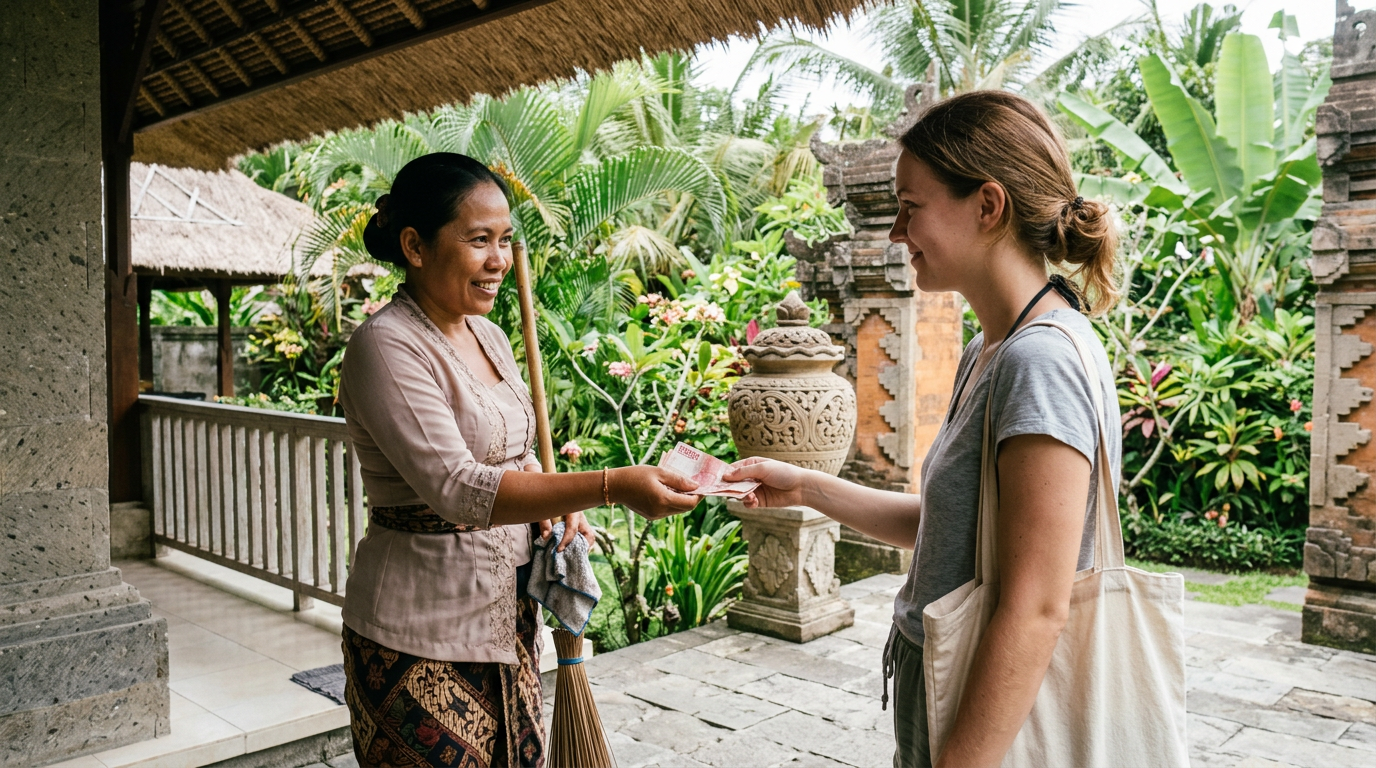
When paying cleaners in Bali, a thoughtful approach matters as much as the amount you give. Cash is the most practical and appreciated form of tip, so keep small denominations on hand in Indonesian rupiah (using about 15,000 rupiah per US dollar for easy conversion). For a single visit by a casual cleaner consider 20,000 to 50,000 rupiah (roughly 1.50 to 4 US dollars) depending on job size. For a specialist deep clean or an urgent short-notice hire, 100,000 to 250,000 rupiah is reasonable and signals gratitude for extra effort. For regular full-time staff a simple practice is to provide a small monthly bonus or an annual holiday bonus, THR (annual holiday bonus equal to one month of pay), which is highly valued and culturally significant.
Always present tips politely, preferably in an envelope, and hand it with both hands while saying terima kasih (thank you in Indonesian). Avoid announcing tips loudly in front of other staff to prevent embarrassment and to respect local sensibilities about privacy. If your cleaner is employed through a villa management company, clarify tipping policy first—some employers prefer tips to go directly to staff while others pool contributions centrally. Gifts of household staples or a voucher for medical care can be meaningful alternatives to cash for longer-term employees. Digital transfers are becoming more common but use them only if you are confident the payment goes straight to the cleaner and they can access the funds easily.
In short, a modest regular gesture for routine work and a more generous one for exceptional service or during holidays reflects both fairness and cultural respect. Clear communication about expectations and consistent, discreet appreciation will build trust and a positive working relationship in your Bali home.