Are private villas in Bali safe?
Bali Villa Hub
8/27/2025
Are private villas in Bali safe?
Many travellers love Bali for its beaches, culture and private villa stays—but safety questions often come up when planning a trip. This guide walks through the advantages of villa living, common hazards to watch for, neighbourhood considerations, how to avoid scams, and the concrete security measures to verify so you can book with confidence.
Benefits of staying in a private villa during your Bali holiday
Choosing a private villa transforms a Bali trip from a standard stay into a personalised escape. Villas give you dedicated space and privacy while offering services that match a small boutique hotel in a more intimate setting.
Beyond the feeling of seclusion there are concrete advantages that matter for families, groups and couples. Confirming these features before you book makes the difference between a pleasant stay and an exceptional one.
- Complete privacy and space A private villa lets your party spread across multiple bedrooms, living areas and outdoor spaces without shared corridors or busy communal facilities.
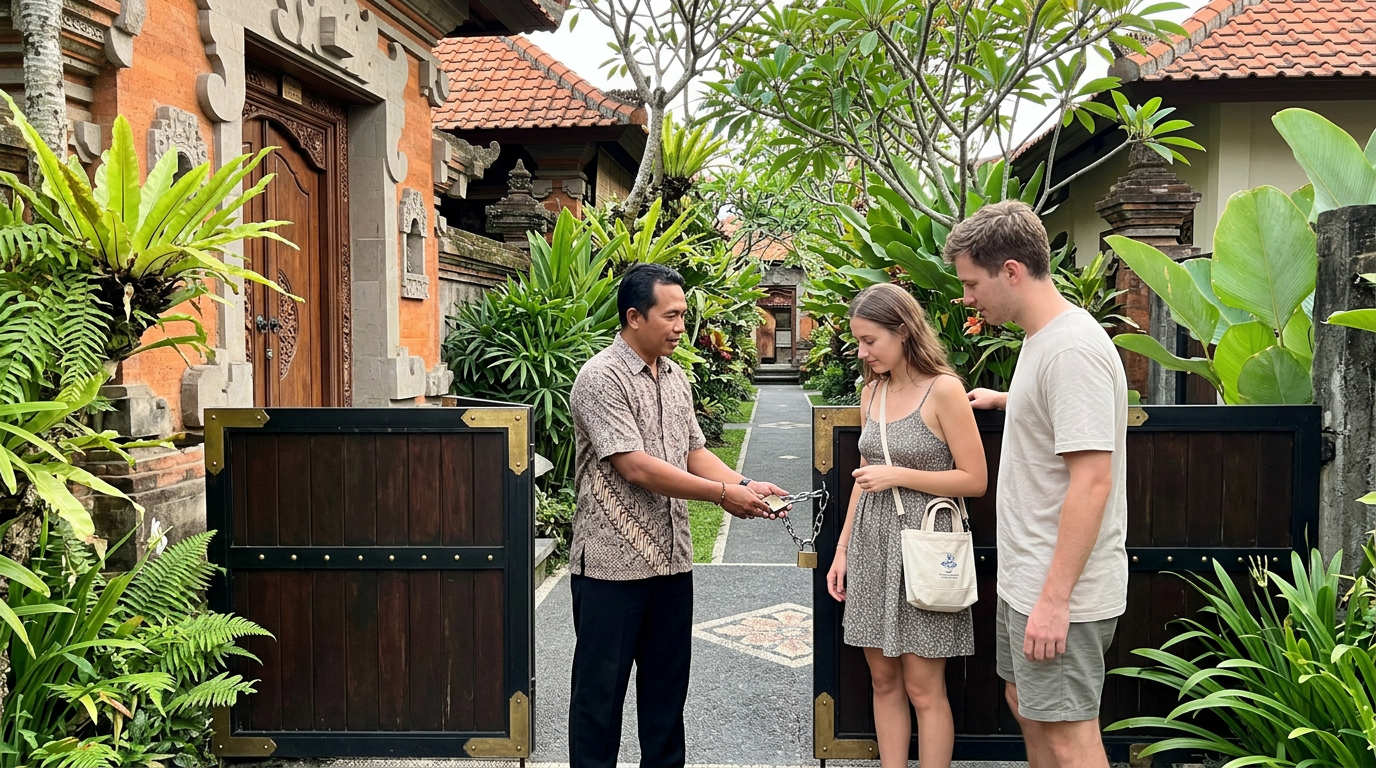
- Secure gated compound Many villas are within a fenced property with a locked gate and on-call staff, which reduces unwanted visitors and gives peace of mind at night.
- Personalised service Dedicated staff often include a housekeeper, cook and gardener so meals and daily routines are organised for your group rather than following rigid hotel schedules.
- Better value for groups When travelling with four or more people a villa with a private kitchen and pool often costs less per person than booking multiple hotel rooms.
- Practical amenities for modern travel Villas typically provide fast internet options suitable for remote work, private parking, flexible check-in and the option to hire a private driver or in-villa spa therapist.
These benefits add up to a more relaxed and controlled holiday experience. For maximum satisfaction check recent guest reviews, verify the exact amenities listed and message the host with any specific safety or service requests before you finalise your booking. Before you commit, weigh these advantages against the common risks and mitigation steps outlined below.
Common risks at Bali villas and how to reduce them
Private villas offer comfort and privacy but carry risks that differ from hotels. Being aware of the most common hazards and taking specific steps before and during your stay reduces the chance of an unpleasant incident and helps you relax from arrival to departure.
Theft and unauthorized access
Opportunistic theft is the most frequent concern. Verify that the property has secure perimeter walls, reliable locks and a functioning safe for passports and valuables. Ask whether staff keep keys overnight and if there is a night patrol or CCTV (closed-circuit television) covering entry points. Keep valuables locked when you leave and document any damage on arrival to avoid disputes.
Pool and physical hazards
Pools and stepped gardens look idyllic but cause most serious injuries. Confirm the stated pool depth, presence of non-slip surfaces and any child safety gates. Request life jackets for non-swimmers and check whether the pool has a visible ladder and shallow entry. Inspect terraces and stair railings on arrival and ask staff to secure loose tiles or slippery mats.
Utilities, health and emergency preparedness
Power outages and water quality problems are common in certain districts. Ask if the villa has a backup generator and how hot water is supplied. Confirm whether drinking water is bottled or filtered and where the first aid kit and fire extinguisher are located. Note the nearest clinic or hospital and save local emergency numbers to your phone before you arrive.
Make these checks part of your booking routine and cross-check them with recent guest reviews. Understanding these operational and physical risks will also help you choose a neighbourhood that matches your safety priorities.
Best neighbourhoods for safe villa stays in Bali
Choosing the right neighbourhood sets the tone for a secure and relaxed stay. Below are three areas that consistently offer strong safety features paired with easy access to services and amenities suitable for families, couples and solo travellers.
Seminyak and Kerobokan
These neighbouring districts combine reliable infrastructure with a high concentration of professional villa managers. Many properties sit within gated compounds or have perimeter walls and private security on call. Shops, clinics and dining options are within a short drive which reduces time on unfamiliar roads at night.
If you prefer quieter evenings, pick villas set back from the main nightlife strip and confirm whether the property has external lighting and a staffed night check-in protocol.
Canggu and Berawa
Canggu is popular with families and long-stay visitors so community awareness and villa management standards are generally strong. Look for villas with controlled entrances, CCTV and off-street parking to reduce theft risk. Roads can be busy with motorbikes, so choose a villa with a flat, well-maintained driveway and clear signage for drivers.
For a balance between surf culture and safety choose properties a short ride from the beach rather than right on the main lane to limit noise and traffic exposure.
Ubud and the Central Highlands
Ubud offers a tranquil environment with low petty crime but some villas sit on narrow lanes or hillsides. Verify drive access for emergency vehicles and confirm backup power and water arrangements. Villas here often provide spacious grounds and privacy which suits families who prefer minimal street traffic.
Confirm proximity to a clinic and estimated travel time by car to the nearest hospital before you finalise your booking.
Match a neighbourhood to your priorities and then verify the specific safety features listed for the villa such as gated access, staff availability and emergency contact procedures before you book. Once you've selected an area, it is equally important to guard against scams and unreliable hosts.
How to spot and avoid villa rental scams and untrustworthy hosts
Scams and unreliable hosts can turn a dream villa stay into a stressful experience. A few targeted checks before you book and simple verification steps will protect your payment and ensure the property exists and matches its listing.
Key warning signs
Unrealistically low prices combined with pressure to pay quickly are classic red flags. Listings with few or no recent reviews, inconsistent photos or vague location details also warrant caution.
Trustworthy hosts provide clear contact information, respond promptly and accept secure payment methods. If a host resists a short video call or refuses a written rental agreement then treat the booking with suspicion.
- Verify photos and the exact address Ask for recent timestamped images or a short video walk-through and confirm the street address so you can check nearby landmarks and services on a map.
- Check reviews and reviewer history Read multiple reviews and look for repeat guest names or detailed accounts of stay quality. Few details or many identical reviews suggest they may be fake.
- Use secure payment methods Insist on credit card payments or a reputable booking platform that holds funds in escrow. Avoid direct bank transfers to a personal account without a contract or invoice.
- Get everything in writing Request an invoice, reservation terms and a cancellation policy. Confirm who will meet you on arrival and how to contact local staff in case of issues.
Trust your instincts and document all communications and receipts. After vetting a host and neighbourhood, confirm the villa's security measures, staff training and insurance before you finalise the booking.
What to look for in villa security measures staff training and insurance
Security is not a single feature but a combination of physical measures, trained people and proper insurance. When evaluating a villa focus on tangible items you can verify quickly and on policies that protect both guests and staff. Ask for clear answers and documents before you finalise any booking.
Security hardware should include lockable perimeter gates, sturdy external doors with deadbolt locks and visible perimeter lighting. Check for CCTV coverage of entry points and a documented policy for footage retention. Confirm the presence of a bolted safe large enough for passports and electronics and test that balcony railings and pool gates are secure. Verify backup systems such as a generator and emergency lighting so refrigeration and medical devices are protected during outages.
Staff vetting and training matter as much as physical devices. Request ID for staff who work on site and ask whether background checks or local police clearances are carried out. Ask when the team last completed first aid and fire response training and whether there is an evacuation plan practised with staff. Clarify routines for visitor screening, key management and how maintenance issues are logged and resolved. Well trained staff will provide certificates on request and explain protocols without hesitation.
Insurance and liability reduce financial risk after an incident. Ask for the insurer name, policy number, coverage limits and expiry dates and confirm whether public liability covers guest injury, theft and property damage during short-term stays. Ensure staff accident coverage is in place and request proof that gas and electrical systems are inspected regularly. Keep copies of all documents and save emergency contacts to your phone.
Before you finalise any booking, consider using a platform that verifies listings and host credentials to reduce uncertainty. For practical reassurance and an easier verification process, you may want to browse verified villa listings at https://www.balivillahub.com/en to compare documentation and safety features for properties that meet your needs.