Are Spiders Still a Big Problem for Travelers in Bali
Bali Villa Hub
2/26/2026
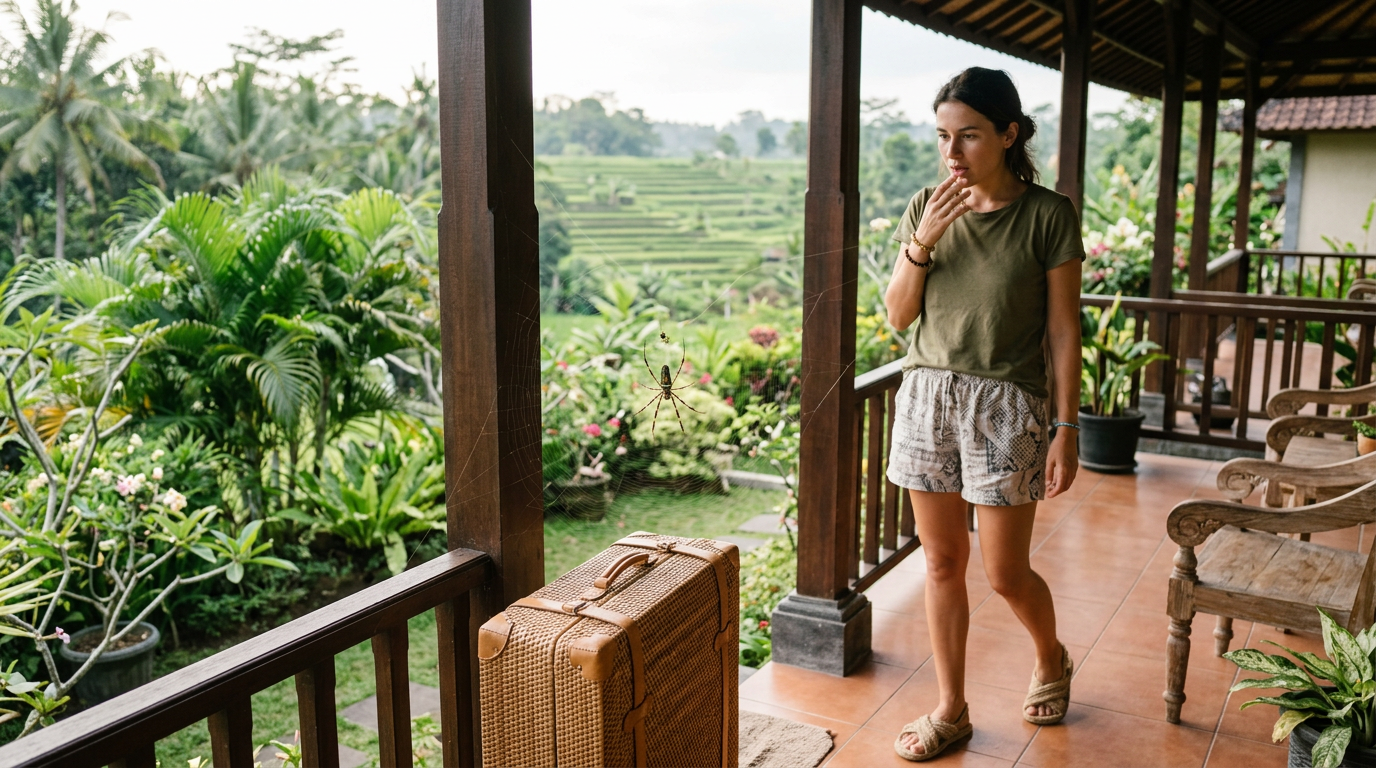
Are Spiders Still a Big Problem for Travelers in Bali
Spiders are part of Bali's natural fabric, and for many visitors the sight of one can be more surprising than dangerous. This article explains where spiders live on the island, which species you are most likely to see, how risky bites tend to be, and practical steps to reduce encounters during your trip. Read on for clear, calm guidance so you can enjoy Bali with fewer surprises.
Do Spiders Actually Live in Bali
Yes. Spiders are a normal and widespread part of Bali's environment. The island's warm, humid climate and abundant insect life create ideal conditions for a variety of species. You will find spiders in gardens, rice terraces, temples and inside homes and villas, especially in areas near outdoor lights or dense vegetation.
Common visitors to built spaces include small house spiders and agile jumping spiders, while larger species such as orbweavers and huntsman often appear outdoors or on walls. Some of the larger orbweavers can span several centimeters across from leg tip to leg tip. While their size can be startling, their behavior is generally nonaggressive and they prefer to avoid people.
Bites are uncommon and most spiders you encounter in Bali are not dangerous to healthy adults. When bites do happen they usually cause local discomfort similar to a mosquito bite. It is sensible to clean and cover the area and watch for increasing pain or signs of infection. If unusual symptoms appear, seek medical care promptly so professionals can assess and treat you.
For most travelers spiders are more a matter of surprise than threat. Simple habits reduce encounters effectively: keep outdoor lights off or use screened fixtures at night, shake footwear and clothing left on the floor, and ask villa staff to tidy corners and ceilings if you prefer minimal contact. Remember that spiders play a useful role controlling mosquitoes and other pests, which helps make outdoor life in Bali more pleasant.
To make that practical, the next section outlines the species you are most likely to meet so you can recognize them and react calmly.
Common Spider Species Visitors Might Encounter
During a visit to Bali, a small group of spider species tend to appear most often around homes, gardens and outdoor areas. Recognizing these common types by size, web style and usual habitat can help you stay calm and respond appropriately.
Below are the species visitors notice most frequently with notes on appearance, behavior and whether they pose a bite risk.
- Black Golden Orbweaver — A medium to large orbweaver with a dark body and golden silk that often builds webs near garden lights and pathways, with a legspan commonly up to 8 cm. They are nonaggressive and bites are rare, producing only mild local reactions when they occur.
- Giant Golden Orbweaver — Much larger than the black variety, with a legspan that can reach about 12 cm and long spindly legs designed for catching flying insects in trees. These spiders are shy and remain in their webs by day, so encounters with people are uncommon.
- Pantropical Huntsman Spider — A fast, flattened spider that slips into wall crevices and under eaves, often reaching a legspan near 10 cm. They do not build webs and can deliver a painful bite if provoked but are not considered medically dangerous to healthy adults.
- Common House Spider — Small and unobtrusive, these spiders favor ceiling corners and storage areas, producing tangled webs with a body length usually under 1 cm. They are harmless and help reduce nuisance insects indoors.
- Jumping Spider — Compact with large forward-facing eyes, often seen on walls and foliage during daytime, measuring just a few millimeters to about 1 cm. They are curious rather than aggressive and bites are very rare and mild.
- Grass Cross Spider — A small orbweaver that builds delicate webs among grasses and low shrubs often at ground level with a legspan of a few centimeters. They pose no real threat and are helpful predators of mosquitoes and flies.
Knowing typical size, web location and behavior makes it easier to tell harmless species from those you should avoid handling. Most encounters end with a quick photo and no harm done, so simple awareness is usually enough to keep your trip comfortable.
With species in mind, the next section explains actual risk levels and what to do if a bite occurs.
How Dangerous Are Bali Spiders to Humans
Overall the danger posed by Bali spiders to humans is low, and most encounters are more startling than harmful. The island is home to orbweavers, jumping spiders, common house spiders and huntsman types that rarely bite unless trapped or handled roughly. When bites do occur they typically cause immediate sharp pain followed by localized redness, swelling and mild itching similar to a wasp sting or a large mosquito bite. Serious systemic reactions are uncommon and there are no well documented patterns of life-threatening envenomation from species commonly found around homes and tourist areas.
The pantropical huntsman can deliver a painful bite and in some cases cause temporary nausea, sweating or muscle ache, but these effects tend to resolve with basic first aid and monitoring. Children, elderly people and anyone with a known allergy to insect bites remain at higher risk and should seek medical attention sooner if symptoms escalate or spread beyond the bite site.
Practical first aid is straightforward and effective: clean the area with soap and water, apply a cold compress, take an over the counter pain reliever if needed and use an antihistamine for itch. If the bite is on the face or neck, or if breathing difficulties, severe muscle cramping, fever or rapidly spreading redness develop, seek professional care quickly and bring a photo of the spider if available to assist diagnosis. For most travelers, simple common-sense measures such as avoiding handling spiders, wearing closed shoes in dimly lit areas and shaking out clothing and footwear before use will prevent nearly all incidents. In short, Bali spiders are more of an annoyance than a real health threat for the vast majority of visitors.
Next, learn where and when spiders are most active so you can time your movements and reduce surprise sightings.
Where and When You Are Most Likely to Spot Spiders in Bali
Bali offers many habitats where spiders thrive, and knowing the most common spots and times helps you avoid surprises. Spiders concentrate where insect prey is abundant and where there is shelter from sun and rain. Observations on the ground and in villas follow clear patterns tied to light, vegetation and weather.
Outdoor Gardens and Villa Grounds
Gardens, hedges and open lawns are prime territory for orbweavers and grass cross spiders. Look along garden paths, between shrubs and across the low vegetation at eye level and below; webs are often visible with morning dew. Villas with mature trees attract large golden orbweavers that build stable webs between branches and along walking routes.
Around Lights and in the Evening
Most spider activity concentrates near outdoor lighting from dusk into the first few hours of the evening when flying insects gather. Expect to see webs strung between light fixtures, posts and eaves from about 6:00 to 10:00 in the evening. After heavy rain spiders will rebuild webs within a few hours, which can temporarily increase sightings in the evenings.
Inside Homes, Villas and Temple Corners
Indoors you are most likely to find common house spiders and jumping spiders in ceiling corners, storage areas and behind furniture. Pantropical huntsman spiders hide under eaves, in wardrobes and behind curtains where they follow crevice lines. Bathrooms and seldom used rooms are typical hideouts when humidity is high.
Spotting patterns are predictable, so small adjustments make a big difference: use screened lights, keep vegetation trimmed, shake out shoes and clothes left on the floor and ask villa staff to check high corners. These simple habits reduce encounters without harming the spiders that quietly help control nuisance insects.
After learning where spiders appear, the next section covers practical prevention and removal techniques to keep your trip calm and comfortable.
Practical Ways to Avoid and Remove Spiders During Your Trip
Simple, consistent habits make the biggest difference when it comes to avoiding spiders while traveling in Bali. Focus on prevention inside and around your villa and learn a few gentle removal techniques so a surprise encounter stays calm and quick to resolve.
Prevention in Your Villa
Keep doors and windows screened and shut at night to reduce flying insects that attract spiders. Store luggage on racks and hang clothes inside wardrobes or sealed suitcases rather than on the floor. Shake sandals and clothing before wearing and tuck towels and swimwear into closed drawers. Request that staff sweep ceilings, high corners and eaves during routine cleaning to remove new webs before they attract more insects.
Safe Removal Techniques
For small spiders use a clear jar and a stiff piece of paper to trap and release the animal outdoors. If a spider is out of reach, use a vacuum with a narrow attachment or a long-handled duster to collect webs and the spider at once. Avoid handling spiders with bare hands and do not crush specimens close to bedding or luggage. For large or fast species ask villa management to assist so removal is safe and minimizes stress for both you and the animal.
Natural Repellents and Ongoing Maintenance
Spray a natural solution of water and essential oil such as peppermint around door frames, windows and storage areas to make corners less inviting. Keep exterior vegetation trimmed back from walls and move outdoor lights away from main entrances to reduce insect gatherings. Regularly remove old webs and vacuum corners to interrupt breeding and feeding sites.
These measures limit encounters without harming local wildlife and help you enjoy Bali with fewer surprises. If you prefer extra support, most villas are happy to perform targeted checks on request.
If you would like a place that offers routine maintenance and guest support, consider browsing https://www.balivillahub.com/en to find villas where staff can assist with checks and light pest prevention during your stay.
Should Expats Be Worried About Living with Spiders in Bali
For the vast majority of expats the answer is no. Spiders are common on the island but most species found around homes are shy and avoid people. Typical encounters involve small house spiders, jumping spiders and orbweavers that build webs between vegetation or near lights. Larger species such as huntsman can startle due to size and speed but they rarely bite unless provoked. When bites happen they usually produce local pain, redness and mild swelling similar to a wasp sting. Young children, older adults and anyone with a known allergy should take extra care and seek medical help promptly if breathing difficulty, rapid spreading redness, severe pain or fever appear after a bite. Immediate first aid is simple: wash the area with soap and water, apply a cold compress and consider an over the counter pain reliever or antihistamine for itch. If symptoms worsen seek professional assessment and if possible bring a photo of the spider to aid identification.
Long term residents can greatly reduce encounters with a few practical habits. Fit screens on windows and doors, keep trees and shrubs trimmed at least one meter from walls, move outdoor lights away from entryways to avoid drawing insects, and store clothing and footwear off the floor. Request routine checks from villa staff to clear webs from high corners and eaves and call a trained pest helper for removal of large spiders rather than handling them yourself. Embracing a low-impact approach keeps both you and the local ecosystem safe since spiders help control mosquitoes and other pests. With sensible precautions most expats find spiders an occasional nuisance rather than a cause for concern.