Avoiding exchange fees in Bali a practical travel guide
Bali Villa Hub
2/23/2026
Avoiding exchange fees in Bali a practical travel guide
Traveling to Bali should be about beaches, temples, and food — not confusing exchange rates and hidden fees. This guide walks you through the currency you’ll use, the safest and most cost-effective ways to get rupiah, how to use ATMs and cards without paying unnecessary charges, and practical steps to avoid scams and leftover currency losses. Read on to make your money go further so you can focus on enjoying the island.
Which currency is used in Bali and why it matters
Indonesian rupiah is the official currency used throughout Bali. Its ISO code is IDR (Indonesian rupiah) and prices are quoted in whole rupiah amounts rather than in decimal fractions. Banknotes commonly seen are 1,000; 2,000; 5,000; 10,000; 20,000; 50,000; and 100,000 rupiah. Coins are used for small change and include 100, 200, 500 and 1,000 rupiah pieces. Familiarising yourself with these denominations before you travel makes everyday transactions smoother and helps avoid simple mistakes at busy markets.
Understanding the rupiah matters because numbers look large even for modest purchases. As a practical reference, one US dollar typically equalled roughly 15,000 Indonesian rupiah around mid-2024. So a meal costing 50,000 rupiah is about 3 to 4 US dollars. Keeping this scale in mind helps with budgeting, tipping, and comparing prices when vendors list amounts in rupiah or occasionally in foreign currency.
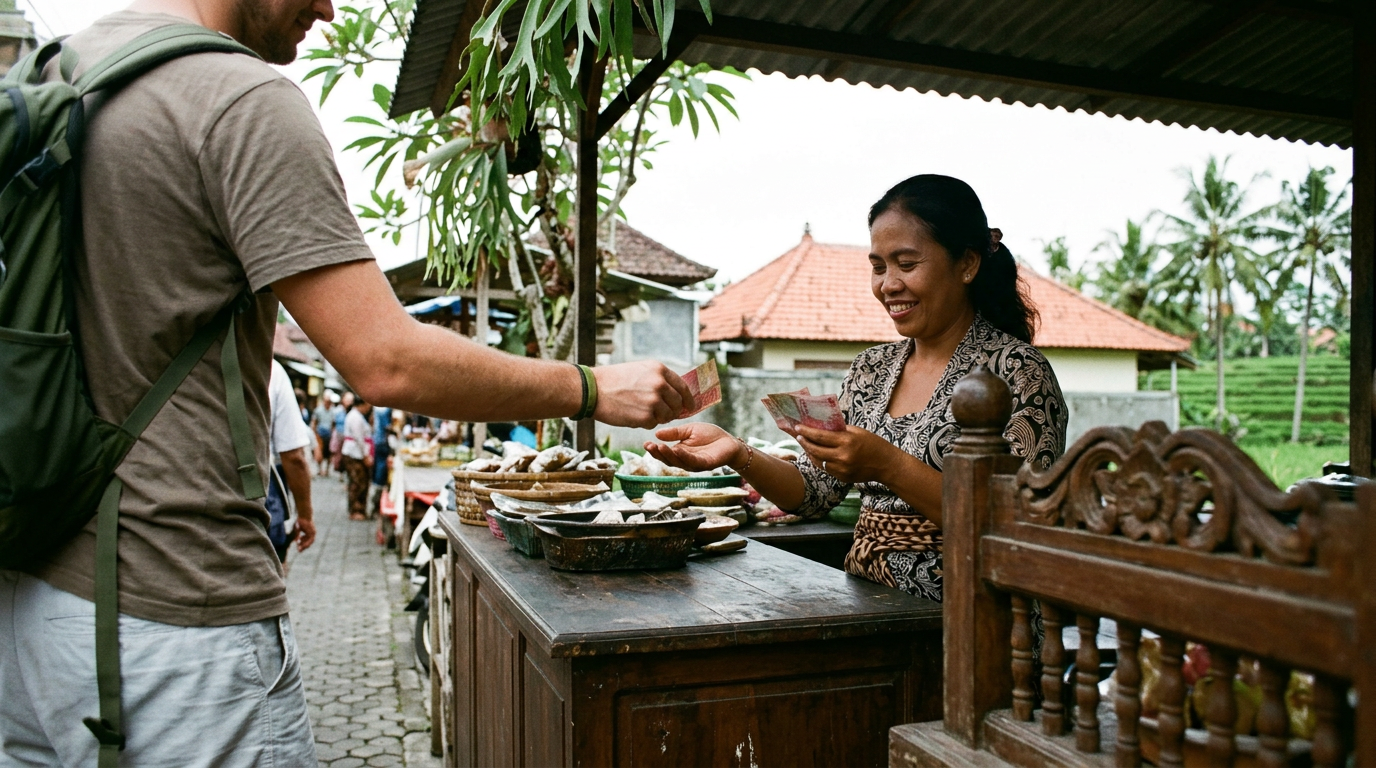
Knowing the currency also shapes how you pay. Many small warung, taxis and market stalls accept cash only, while hotels, modern restaurants and larger shops take cards. Carry a mix of small notes and larger banknotes so you can pay exact amounts and avoid losing value when vendors cannot break big bills. Always count change out loud and keep smaller notes handy for daily expenses.
Practical tip pack enough rupiah on arrival for the first two or three days until you find a reliable ATM or authorised exchange. Learn to recognise recent banknote designs and handle cash with care to reduce the chance of disputes and ensure a relaxed, enjoyable stay on the island.
With currency basics covered, next are the best places and methods to exchange money in Bali so you can avoid unnecessary fees.
Best places and methods to exchange money in Bali
Finding the right place to change money in Bali saves time and reduces costs. Choose options that show clear rates and provide a printed receipt so you can confirm the amount received and avoid disputes.
Carry a modest amount of local cash on arrival while you locate a trusted option for larger exchanges. Prioritise safety and transparency over convenience when rates look unusually attractive.
- Authorised money changers in tourist areas These outlets often display live rates in the window and provide receipts for every transaction, which helps if you need to verify or reconvert leftover rupiah.
- Bank branches Banks offer consistent rates and genuine banknotes. They may charge a small commission and operate limited hours, so plan exchanges during business times.
- ATM (automated teller machine) locations Use ATMs at main bank branches to reduce the chance of skimming and prefer withdrawals of larger sums to limit fixed withdrawal fees.
- Hotel front desks and concierge Hotels will exchange cash for guests, but rates are usually less favourable — use them only for emergency top-ups.
- Prepaid travel cards and multicurrency options These let you preload funds and lock a known rate before travel while avoiding constant conversion at the point of sale.
Always count notes immediately and ask for recent banknotes, which are easier to spend and to reconvert. Keep receipts in case you need to exchange leftover rupiah before departing the island.
When comparing options, look at the effective cost after fees and awkward banknote handling rather than the headline rate alone. That approach keeps more of your money working for your trip and reduces surprises.
Next, learn how to use ATMs and cards smartly to reduce bank and withdrawal fees.
Using ATMs and cards to reduce bank and withdrawal fees
Using ATMs and cards intelligently can cut the cost of accessing money in Bali. Small changes to how and where you withdraw and pay will often save more than hunting for the absolute best exchange rate.
Pick safe ATMs at bank branches
Use ATMs located at major bank branches or inside shopping centres to reduce the risk of card skimming and to ensure machines display any applicable withdrawal fee before you confirm. Many local ATMs charge a fixed fee around 20,000 rupiah per withdrawal, so it pays to remove larger amounts at once rather than many small withdrawals.
Always choose local currency on the screen
When an ATM or card terminal offers to convert the transaction into your home currency, decline that option and accept the price in rupiah. That avoids dynamic currency conversion, which typically uses a poor exchange rate and adds an extra fee at the point of sale.
Manage card types and bank fees
Use a debit card for cash withdrawals where possible and avoid treating withdrawals as credit cash advances, which attract higher fees and interest. Check with your home bank about foreign withdrawal fees and foreign transaction charges and consider grouping withdrawals to limit the number of fixed fees you pay.
Before you travel, set a sensible withdrawal plan for your trip length and expected cash needs and note ATM limits on daily withdrawals to avoid being stuck. Small preparation goes a long way to keeping banking costs low and your travel budget intact.
After handling withdrawals and card use, the right travel or prepaid card can further reduce conversion fees — here’s what to look for.
Choosing travel and prepaid cards to avoid conversion fees
Choosing the right travel or prepaid card can immediately reduce the hidden costs of spending abroad. Focus on cards that explicitly charge no foreign transaction fee and that use a fair exchange rate close to the interbank rate. Knowing the card features you need prevents unexpected markups when you withdraw cash or pay for a meal.
Key features that actually matter
Look for a card that supports multiple currencies so you can preload funds in Indonesian rupiah at a rate you accept before spending. Check ATM withdrawal terms and any per-withdrawal flat fees from the card issuer and from local ATMs, which commonly add about 20,000 rupiah per withdrawal. Confirm whether the card allows free or low-cost top-ups and whether reloads incur a fee.
- No foreign transaction fee Cards that waive this fee avoid a common 1–3% charge that quickly adds up during a two-week trip.
- Transparent exchange rate policy Prefer cards that use the Mastercard or Visa wholesale rate with a disclosed small margin rather than dynamic conversion at the point of sale.
- Reasonable ATM allowance Choose a card that reimburses ATM fees or offers a couple of free withdrawals to reduce fixed local ATM charges.
- Easy top-up and emergency support Opt for a provider with simple online reloads and a responsive help line so you can add funds quickly if needed.
Before you travel, preload an amount that covers the first few days and keep a backup payment method. When using cards in Bali always accept charges in rupiah and decline any prompt to convert to your home currency to avoid automatic poor rates. This approach keeps conversion costs predictable and gives you more control over travel spending.
With card and ATM strategies in mind, the next section explains how to spot shady money changers and avoid scams so you don’t lose money to tricks.
Spotting shady money changers and avoiding common scams
Shady money changers often rely on distraction and haste, so adopt a calm, deliberate approach and you will avoid most problems. First, check for a visible licence or authorisation sticker, a printed rate board showing both buy and sell rates and a receipt printer. If the quoted rate is significantly better than bank or reputable cash point rates, treat it as a red flag and walk to another outlet. Always count notes yourself and ask the cashier to place your exchanged notes on the counter rather than handing them directly into your palm. Watch for sleight of hand where a smaller note is substituted or where change is given from a hidden pile. Use your phone calculator to verify the conversion on the spot and insist on a printed receipt that shows the exact amount received. Examine banknotes under light for basic security features such as the watermark and security thread and request newer banknotes where possible since older or damaged notes can be refused later. Refuse offers to exchange money in side streets, hotel lobbies or market stalls and never let your passport be held as collateral. Beware of tricks where the exchanger changes the rate after you hand over cash or where staff pretend the till shows one figure but press buttons that record another. If a stall suddenly needs to "verify" a large note, accept only after inspection or go to a bank machine instead. If someone pressures you to decide quickly, politely decline and move on. Keep small change handy so sellers are not forced to give large change back and keep receipts until you depart. When in doubt, use ATMs inside bank branches or authorised money changers in shopping centres for clearer accountability and safer transactions.
Having avoided scams, plan your cash needs carefully so you don’t pay extra fees or end up with unusable banknotes at the end of your trip.
Planning cash needs and handling leftover rupiah without extra costs
Good planning keeps you from paying unnecessary fees or ending your trip with a pocket full of low value notes. A clear cash plan covers how much to carry, when to withdraw, and simple ways to use or reconvert leftover rupiah so you do not lose money at the final hour.
Estimate your daily cash needs
Build a realistic daily cash target based on your itinerary. For basic street meals and local transport plan for 150,000 to 300,000 IDR (Indonesian rupiah) per person per day. For mixed dining and activities budget 400,000 to 800,000 IDR per person per day. Add a small buffer for tips and incidental purchases and convert that total into one or two planned ATM withdrawals to avoid paying a fixed fee many times.
Withdraw smart and consolidate
Use ATMs inside bank branches and withdraw larger sums to reduce per-withdrawal charges which are commonly around 20,000 IDR per transaction. Keep smaller notes for markets and transport so you do not lose value when vendors cannot break large bills. Store receipts and count notes immediately to avoid disputes later.
Handle leftover rupiah before departure
Spend remaining notes on low-cost items before you leave — snacks, local taxi fares or souvenirs — so you do not pay reconversion commissions. If you must change leftover currency, reconvert at a bank branch or authorised money changer with printed receipts and clear buy-back rates rather than accepting airport counters which often use poorer rates. Keep newer notes because many exchangers refuse old or damaged bills.
By estimating needs, consolidating withdrawals and planning how to spend or reconvert leftovers, you keep more of your budget for experiences rather than fees. A little attention to denominations and authorised exchange points makes the final day smooth and cost-efficient.
If you’re arranging accommodation as part of your Bali trip, consider checking available villas and local support at https://www.balivillahub.com/en to simplify planning and help manage costs while you travel.