Bali tourism paradox growth or simply more visitors
Bali Villa Hub
2/26/2026
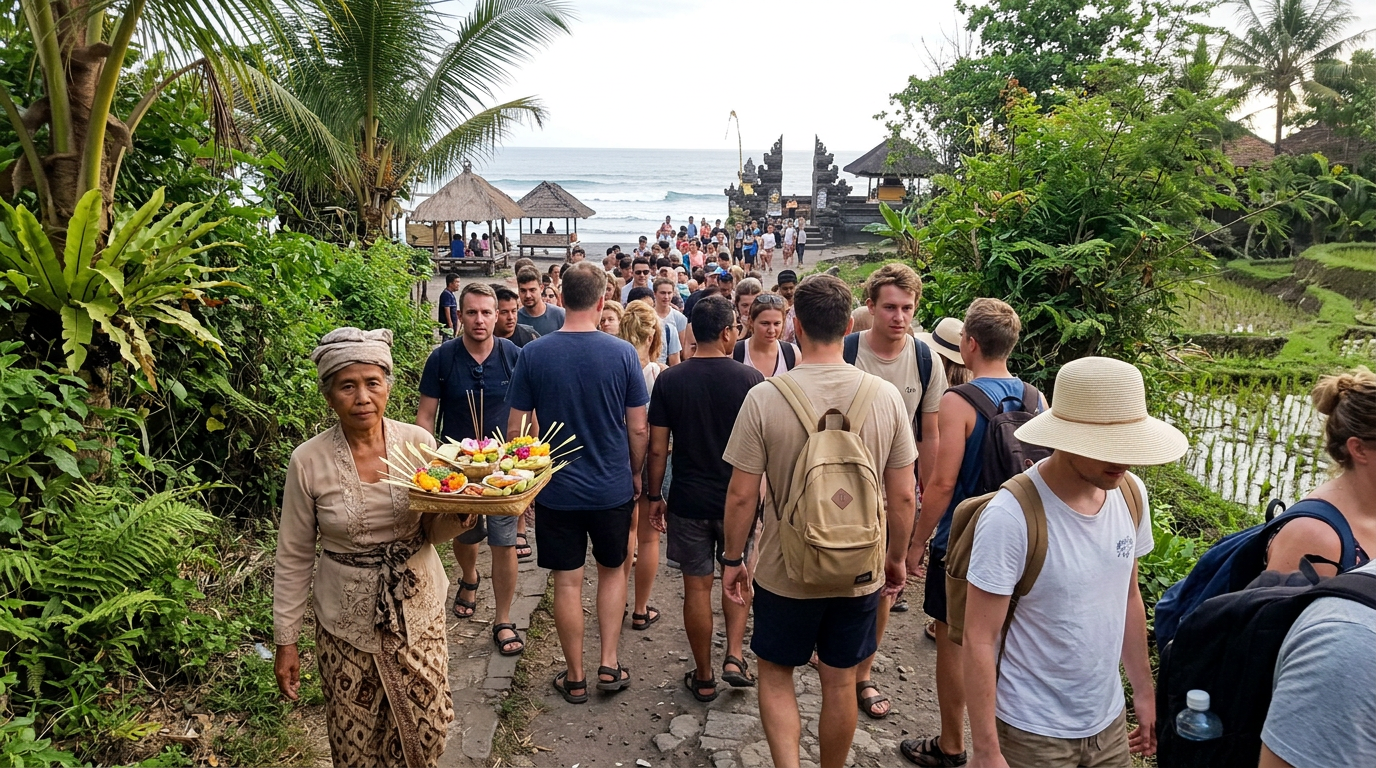
Bali tourism paradox growth or simply more visitors
Bali’s tourism figures present a puzzle: headline arrival numbers are climbing, yet many businesses and communities report falling occupancies and weaker economic returns. This article unpacks that paradox by examining how arrivals are recorded, who is visiting, where visitor spending goes, and what social and policy choices could restore tourism’s benefits to local life. Read on for a clearer view of what the statistics mean and what might be done to align visitor growth with community wellbeing.
Explaining the surge in arrival statistics
Recent headline figures show a noticeable rise in arrivals to Bali even as occupancy and spending tell a different story. To understand that gap, it helps to look beyond raw totals and consider how arrivals are counted and how the composition of visitors has changed.
Real growth versus reporting artifacts
Part of the increase reflects genuine recovery in international travel as more direct flights and reopened routes return from Europe and Asia. At the same time, administrative changes and improved data capture at ports and land crossings can raise official totals. For example, counting transit passengers or same day visitors as arrivals inflates tallies without adding significant overnight stays.
Shifts in market mix and visitor behaviour
The profile of incoming travellers has shifted toward long stay remote workers and day trippers who typically spend less per day than classic holidaymakers. Digital nomads often book long term rentals and spend selectively, which reduces hotel occupancies and average revenue per room even as arrival counts rise. Cruise ship calls and event driven spikes also concentrate arrivals without proportionate stays in mainstream accommodation.
Policy and transport factors
Visa facilitation and temporary tourism promotions encourage short term entries. Airlines restarting seasonal services and low cost carriers adding seat capacity push passenger arrivals higher but do not always translate into more hotel nights. Conversely, reduced domestic connectivity can lower domestic visitors while international arrivals grow, producing a counterintuitive picture in aggregate statistics.
In short, the surge in arrival statistics is partly a sign of recovery and partly a product of measurement and market shifts. To judge the true trajectory of Bali tourism, arrivals data should be paired with nights stayed, average spend and transport origin details. These reporting and market shifts also help explain why per visitor spending may be falling, a topic explored next.
Why per visitor spending is falling
Headline arrival figures can mask a steady decline in how much each guest spends while on the island. This distinction matters because total tourism revenue depends on both visitor numbers and the average spend per person per night.
Several concrete shifts in the market explain falling per visitor receipts and point to practical measures operators can use to respond.
- Change in visitor profile. More long stay remote workers and budget minded travellers book private rentals and prepare many meals themselves, which reduces spending on hotels and restaurants.
- Shorter night stays and transit entries. Growth in same day visitors and transit passengers increases arrival totals without adding hotel nights or local tour purchases.
- Rise of low cost accommodation. Rapid expansion of budget guest houses and shared stays lowers the average revenue per room even when occupancy grows.
- Heavy use of online booking platforms. Commission fees and intense price competition on booking sites push net receipts down and incentivise discounting over value added services.
- Leakage to external suppliers. A large share of visitor spending leaves the local economy through imported food and foreign owned businesses, which reduces local multiplier effects.
Together, these factors can make a busy season look muted at the community level despite full terminals and crowded beaches. Operators aiming to arrest falling per visitor spend should develop tailored experiences that command higher daily rates, strengthen local sourcing to keep more money in the community, and improve reporting so arrivals are matched with nights stayed and real spend patterns. Understanding where revenue flows next leads naturally to a closer look at economic leakage and who benefits.
Economic leakage and who really benefits
Economic leakage in Bali occurs when visitor spending bypasses local hands and flows out of the island economy instead of circulating through villages, markets and small businesses. The main channels are consistent. High value items such as construction materials and luxury goods are often imported for villas and resorts, sending capital overseas. Many accommodation units and tour operators are owned by non local investors who repatriate profits rather than reinvest them in neighbourhood enterprises. International booking platforms and airlines collect a significant share of ticket and reservation value, reducing the net income available to island suppliers. Packaged tours arranged through foreign wholesalers keep tour margins off the island, while cruise passengers and transit visitors frequently spend only with large operators or at airport concessions. Land and property speculation also diverts gains to absentee landlords who earn rent while local workers remain in low paid service roles. The practical result is that a busy high season can look economically muted at community level because much of the cash never becomes local wages or purchases. Under the current structure, the largest beneficiaries tend to be hotel groups, foreign investors, online intermediaries and import reliant sectors rather than smallholders, fishers and artisans. Rebalancing requires deliberate choices from policymakers and business owners alike: prioritise local procurement, encourage community ownership models, address profit repatriation through tax measures and foster direct booking channels that keep revenue in Bali. Equally important is transparent accounting that pairs arrivals data with detailed spend tracking so decision makers can see not only how many people arrive but how much of each visitor dollar stays in a local family, a warung, a cooperative or a village economy.
Economic outcomes are closely tied to social and cultural effects, which we consider next.
Social and cultural impacts on local communities
Tourism shapes everyday life in Bali in ways that are both visible and subtle. Visitors bring income and cultural exchange, but rapid growth also alters social structures, rituals and the sense of place that defines village life.
Displacement and pressures on land use
Rising demand for villas and short term rentals pushes land prices up and converts rice fields into developments. Families who once relied on farming face financial pressure to sell ancestral plots, which fragments neighbourhood ties and reduces communal cultivation that supports festivals and local food security.
Commodification and reshaping of tradition
Many ceremonies and crafts have gained tourist audiences, which can provide income for priests, artisans and performers. However, this also encourages staging rituals at times and locations that suit visitors rather than community rhythms. When offerings and dances are packaged primarily for outsiders, deeper meanings risk dilution and younger generations may take on performance roles rather than custodial roles.
Daily life, youth aspirations and social tension
Employment in hospitality offers alternatives to farming, yet wages, seasonality and ownership patterns influence outcomes. Where businesses are absentee owned, local workers can feel marginalised despite high visitor numbers. Young people often pursue hospitality careers or entrepreneurship focused on short term gain, which shifts aspirations away from traditional crafts. Increased traffic, noise and crowding at temples create friction between residents and guests.
Balancing benefits and harm requires deliberate choices by local leaders and planners. Protect key cultural sites, enforce zoning that preserves rice terraces, support cooperative ownership of tourism services and educate visitors about respectful behaviour. When communities retain control over how culture is presented and when revenue flows more directly into local households, tourism strengthens rather than erodes the social fabric of Bali.
Having looked at cultural and economic impacts, the final section outlines policy approaches that can better align tourism with community and environmental objectives.
Policy paths toward sustainable tourism
Creating a durable tourism model in Bali requires policy action that is precise, measurable and rooted in local benefit. Policies must reconnect visitor numbers with community wellbeing by aligning land use, fiscal tools and visitor management with clear environmental and social goals.
Building an integrated policy framework
Begin with zoning rules that protect rice terraces and sacred sites while defining appropriate areas for tourism development. Pair those rules with mandatory local procurement targets and incentives for community owned enterprises so that revenue circulates within villages rather than flowing outward.
Complement land use and ownership measures with regular data collection that pairs arrivals with nights stayed, average spend and origin markets. That data enables targeted regulations such as occupancy caps in sensitive areas, seasonal limits for large events and graduated fees tied to environmental impact.
- Zoning and carrying capacity limits. Set clear maps for conservation and development, enforce them consistently and define visitor caps for beaches, temples and fragile landscapes to prevent irreversible damage.
- Local ownership and benefit sharing. Support cooperatives and local business licensing, offer low interest finance for resident entrepreneurs and require a share of development to fund community services.
- Economic instruments that retain value locally. Implement progressive visitor levies and airport departure fees with ring fenced revenue for waste management, water systems and cultural preservation.
- Visitor education and responsible tourism standards. Promote transparent certification for operators, mandatory visitor guidance at key sites and multilingual campaigns that teach respectful behaviour.
These policy paths are most effective when designed collaboratively with village leaders, business owners and independent monitors. Applied together, they shift the focus from merely counting arrivals to safeguarding places and ensuring that tourism enhances rather than erodes island life.
If you are planning a stay or managing a property in Bali and want options that align with community minded tourism, consider exploring villa listings and resources at https://www.balivillahub.com/en to find accommodations that support local economies and responsible travel practices.
Ultimately, interpreting Bali’s tourism figures requires multiple lenses: arrivals, nights stayed, spending patterns and where that money lands. Only by combining better data with targeted policy and local empowerment can Bali turn headline growth into shared, long term benefits for the island’s communities and culture.