Bedbug Risk in Bali What Travelers Need to Know
Bali Villa Hub
2/4/2025
Bedbug Risk in Bali What Travelers Need to Know
Bedbugs are a nuisance that can affect any traveller, yet clear information and a few simple checks make them manageable. This guide explains how common bedbugs are in Bali, how to spot them, what to do if you find them, and practical steps to reduce your risk on future trips. Read on to learn the key signs and sensible responses that protect your health and belongings.
How common are bedbugs in Bali hotels and villas
Bali records occasional bedbug reports in both hotels and private villas, but widespread infestations across the island are uncommon. Incidents are more likely in properties with high guest turnover and inconsistent housekeeping rather than being uniformly distributed.
Bedbugs are carried by people and their belongings, so local climate is not the primary factor. Human travel, reused furnishings and gaps in routine inspections are the main reasons bedbugs appear and spread within accommodations.
- High turnover properties Busy guesthouses and budget hotels with many short-stay visitors have a higher chance of introductions because bedbugs travel on luggage and clothing. Carefully managed villas with stable bookings tend to report fewer issues.
- Housekeeping practices Rooms that are not routinely inspected and cleaned are more likely to harbour small infestations. Regular checks of mattresses, headboards and furniture seams reduce risk substantially.
- Secondhand furniture and renovations Used beds, couches or recently refurbished rooms can introduce bedbugs if items were not treated before installation. New purchases are less likely to be contaminated but are not a guaranteed safeguard.
- Proximity to transport hubs Properties near airports, bus stations or popular beaches experience more guest movement and therefore have a higher chance of introductions. Isolated villas with long-term guests face lower risk.
- Reporting and awareness As awareness grows, more reports appear, which can make the issue seem more common even when actual infestation rates remain stable.
Overall, the practical risk ranges from low to moderate depending on property type and management standards. Performing a brief inspection on arrival and asking about recent pest control measures will catch most issues early and reduce disruption to your stay. To understand how to spot the insects and signs they leave behind, the next section explains what to look for in detail.
How to identify bedbugs and signs of infestation
Knowing the concrete signs of bedbugs makes inspections fast and effective. Start with the mattress area and expand to furniture and crevices when you find anything suspicious. A bright light and a magnifier improve detection.
What bedbugs look like
Adult bedbugs are flat, oval-shaped and measure roughly four to five millimetres long—about the size of an apple seed. Their colour ranges from light brown to reddish-brown after feeding. Nymphs are smaller and translucent while eggs are tiny white ovals about one millimetre long.
Direct evidence to search for
Live insects are the clearest proof. If you cannot find live bugs, look for shed skins that resemble pale, empty shells and for tiny white eggs tucked into seams or joins. Dark rust-coloured spots are bedbug droppings and often appear on mattress seams, box springs or headboards. Fresh blood specks on sheets can result from crushed bugs after feeding.
Where to inspect beyond the bed
Check headboards, bed frames, baseboards and electrical outlet covers. Inspect the seams of sofas, behind picture frames and inside bedside tables. Luggage racks and clothing left on the floor are common transfer points. A musty sweet odour is a strong indicator when an infestation is advanced.
If you find anything suspicious, take clear photographs and collect a sample using tape for verification. Report findings to property management immediately and request a professional pest assessment—early detection keeps the problem contained and minimises disruption to your stay. The following section explains how bite reactions typically present and the health considerations to keep in mind.
Recognizing bedbug bites and possible health risks
Bedbug bites typically appear as small, red, raised bumps that are intensely itchy and often form in groups or a linear pattern where skin was exposed during sleep. Common sites include the face, neck, arms, hands and ankles. Reactions vary: some people develop visible welts within hours, others may not react for one to three days, and some show no visible marks at all. Most reactions are limited to localized swelling and itching. Excessive scratching can break the skin and lead to secondary bacterial infection, signalled by increasing pain, spreading redness, warmth or pus, which requires medical care. True allergic reactions are uncommon, but highly sensitive individuals may experience large swollen areas or intense itching that benefits from short-term oral antihistamines or topical corticosteroid cream prescribed by a clinician.
Current evidence does not show bedbugs as proven vectors of human disease in normal travel situations; therefore the primary health risks are physical irritation, potential infection after scratching and psychological stress that can disrupt sleep and cause anxiety. For basic treatment, clean the area with mild soap and water, apply a cold compress to reduce swelling and use over-the-counter antihistamine or anti-itch cream if needed. Photograph bites and note timing relative to your stay to support medical advice and any discussion with accommodation providers. Seek urgent medical help if you develop fever, rapidly spreading redness, breathing difficulty or a severe widespread reaction that affects daily function. With health and documentation handled, the next section outlines immediate practical steps to limit spread and begin resolution within the accommodation.
Immediate steps to take if you discover bedbugs
Discovering bedbugs is unsettling, but swift, measured action will limit spread and speed resolution. First, avoid moving clothing or luggage into other rooms or common areas. Keep suitcases closed and place them on a hard surface away from beds and soft furnishings. Take clear photographs of live insects, shed skins, droppings and mattress seams, and collect a small sample on clear tape or in a sealed container for verification. Inform property management immediately and request a professional inspection rather than relying on a quick DIY spray. If offered a room change, decline relocation to an adjacent room because bedbugs can migrate through walls and furniture. Ask for written confirmation of inspection findings and any planned treatments, and save all communications for follow up.
For personal items, launder clothing on a hot wash at 60 degrees Celsius and tumble dry on high for at least 30 minutes. Seal shoes and non-washable items in sturdy plastic bags for several days and keep luggage isolated until inspected. Vacuum luggage and affected areas and dispose of vacuum contents into a sealed trash bag. Clean bite sites with mild soap and water and use an oral antihistamine or topical anti-itch cream if needed; seek medical care for signs of infection. Keep receipts for any emergency expenses and insist on professional pest control before returning to the room. Careful documentation and containment protects you and future guests while experts eradicate the infestation. The following section explains how to formally handle complaints and communicate with hosts or booking platforms.
How to handle your accommodation and file complaints
Finding bedbugs in your room is distressing, but a calm, organised approach gets the best results. Start by documenting everything with clear photographs and concise notes about times and locations. Avoid spreading the infestation by keeping luggage closed and isolating clothing until you can launder it on a hot cycle.
Communicating with the host or hotel
Alert management immediately and request a professional inspection rather than an improvised spray. Ask for a written report or confirmation of the inspection and any planned treatment so there is a clear record of actions and timing.
Do not accept an adjacent room as a replacement before a full assessment because bedbugs can move through walls and furniture. If relocation is necessary, insist on an alternative that has been inspected and cleared by pest control and keep all receipts for extra accommodation or cleaning costs.
- Collect evidence Take multiple photos of bites, droppings, shed skins and live insects. Preserve a small specimen on clear tape or in a sealed container and note the exact date and time for your records.
- Document communications Save text messages, emails and any written statements from staff. Ask for timelines for treatment and follow up and keep copies of every reply to support a later complaint or refund claim.
- Protect your belongings Launder clothing at 60 degrees Celsius and tumble dry for at least 30 minutes. Seal shoes and non-washables in plastic bags and avoid moving them through common areas to prevent spread.
- Notify the booking platform If you booked through BalivillaHub, contact their support with evidence and receipts and request assistance with relocation reimbursement or escalation to property management.
Persist politely but firmly until a professional solution is confirmed. Clear documentation and timely contact with both the property and BalivillaHub make complaint resolution faster and protect your health and your rights as a guest. After handling the immediate response, the final section offers practical prevention tips to use before and during future trips.
Practical tips to avoid bedbugs on future trips
Preventing bedbug encounters is about smart habits rather than paranoia. Inspecting a room on arrival takes five minutes and can prevent hours of stress later. Keep a small kit with a bright handheld light, a magnifying glass and a few sealable plastic bags so you can check bedding seams, headboards and upholstery before unpacking.
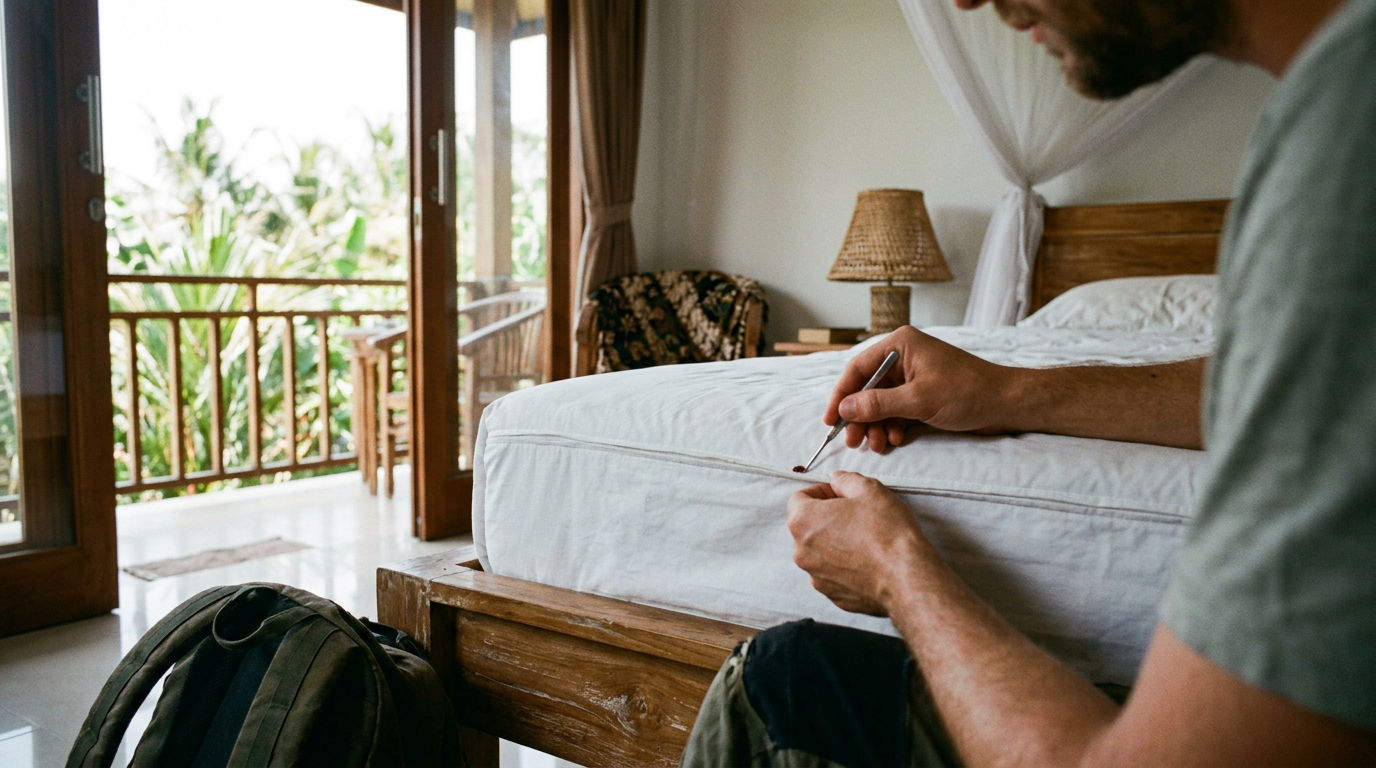
On arrival, check mattress seams and piping for tiny white eggs, pale shed skins or dark droppings. Pull back the sheets and look inside the mattress fold and along the headboard joint. Keep luggage closed and raised on a rack or hard surface away from the bed and curtains. Avoid placing clothing on soft furnishings; if you must change outfits, use the bathroom or a tiled floor to reduce transfer risk.
For your belongings, wash clothing in hot water at 60 degrees Celsius and tumble dry on high for at least 30 minutes on return or if you suspect exposure. Seal shoes and non-washables in plastic bags for several days and inspect them before reuse. Consider packing a lightweight mattress encasement if you travel frequently and store it in your luggage. When booking, prefer properties that can provide recent pest control records and request confirmation of any treatment so you travel with greater confidence.
Document and report — if you find anything suspicious take clear photos, keep receipts for any emergency expenses and contact BalivillaHub support for assistance with relocation or reimbursement. For trusted listings and clear management practices when planning your stay in Bali, consider checking options at https://www.balivillahub.com/en to review property details and pest control histories. A calm, consistent approach combined with simple inspections and careful laundering will greatly reduce your risk and help keep trips enjoyable.