Choosing Between Hotels and Villas for Your Bali Trip
Bali Villa Hub
4/16/2025
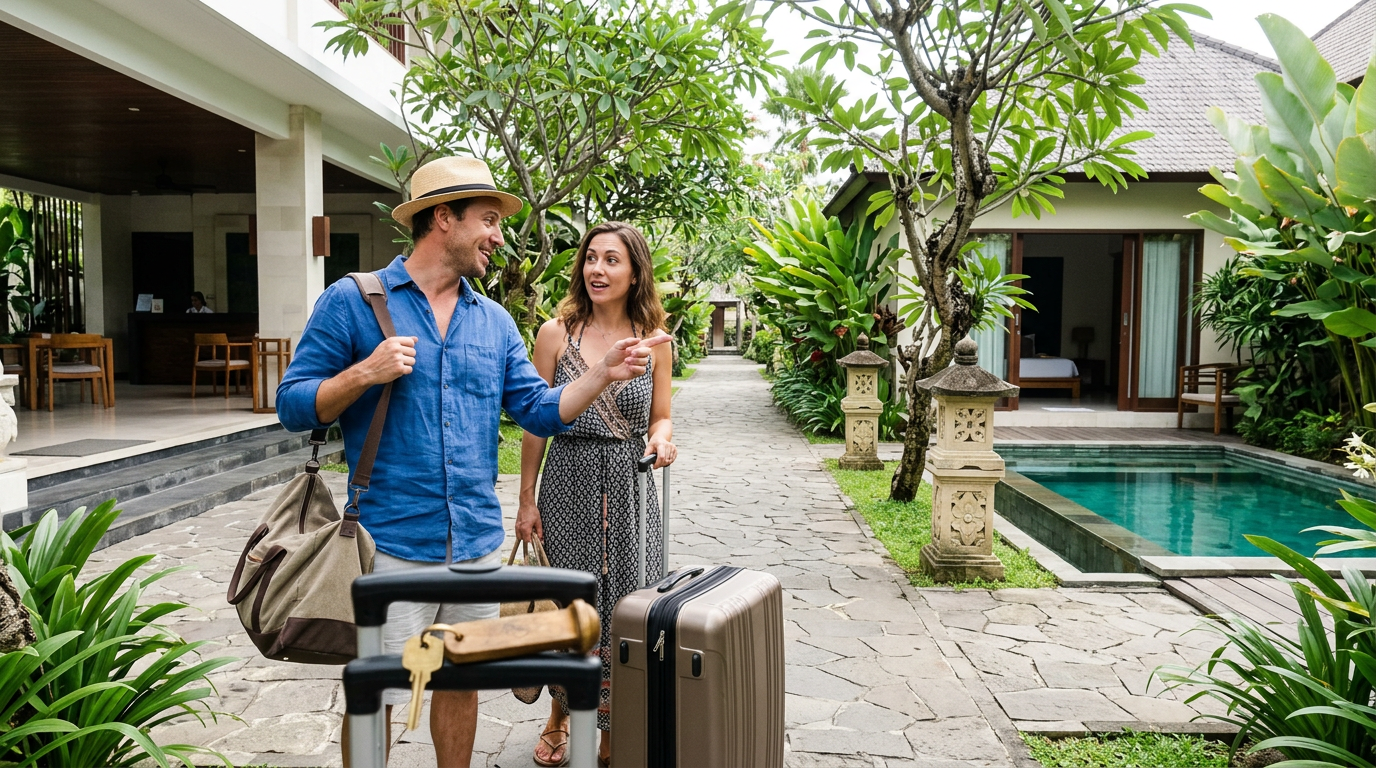
Choosing Between Hotels and Villas for Your Bali Trip
Deciding whether to stay in a hotel or a villa in Bali is a common dilemma for travellers. The right choice depends on your travel style, group size, budget, length of stay, and priorities such as privacy, convenience, or on-site facilities. This guide walks through the practical differences so you can match your accommodation to your itinerary and get the most from your Bali holiday.
When to choose a villa versus a hotel in Bali
Deciding between a villa and a hotel in Bali comes down to how you plan to spend your days and who you are travelling with. Consider length of stay, group size, and the level of privacy and service you need to get the most value from your booking.
Short stays and convenience
If your trip is three nights or fewer and your priority is ease of travel, choose a hotel. Hotels excel at quick check-ins, punctual transfers and 24-hour reception. They are the easiest option when you want on-site dining, daily housekeeping, a concierge to arrange tours and immediate access to a spa or gym without extra planning.
Family gatherings and privacy
For families or groups of four to twelve, a private villa usually wins. Villas provide separate bedrooms, living areas, a full kitchen and a private pool, keeping children and adults comfortable while controlling costs per person. Villas also make it simple to store baby gear and prepare meals for picky eaters, reducing daily logistics and adding restful downtime.
Special occasions and longer stays
Choose a villa for celebrations or stays longer than one week. Villas offer personalised layouts and exclusive use of outdoor spaces, making them ideal for intimate weddings, reunions or slower-paced month-long retreats. For stays of seven nights or more, owners and managers commonly offer weekly discounts and more flexible arrival times, which increases overall value.
In practice, hotels are best when you want convenience and consistent service, while villas are better when privacy, space and flexibility matter most. With these considerations in mind, next we’ll look more closely at privacy and space — two of the strongest arguments in favour of villas.
Privacy and space: why villas often win
Privacy and spaciousness are the reasons many travellers pick a villa over a hotel in Bali. When uninterrupted time with family or friends is the priority, a villa provides tangible benefits that hotels rarely match.
- Exclusive outdoor living — Villas include private gardens and pools reserved for your group only, so you control the schedule for swimming, dining and lounging without competing for space.
- Separate living areas — Most villas offer multiple bedrooms, living rooms and communal dining spaces. The extra square metres allow families to spread out so everyone enjoys a comfortable corner to relax and recharge.
- Quiet and seclusion — Villas are often set behind gates and walls that shield you from street noise and neighbouring guests, creating a restful environment for naps, late nights and private conversations.
- Flexible daily routines — With a private kitchen and dining area you can set meal times to suit children or guests with dietary needs. Staff can be scheduled to match your rhythm, keeping each day unhurried and comfortable.
- Cost efficiency for groups — Per-person cost often falls as group size increases because a single villa replaces multiple hotel rooms. For groups of four or more this frequently translates into better value and simpler logistics.
For travellers who value uninterrupted together time and generous personal space, a villa will usually deliver a more private and relaxed stay. That said, hotels still offer reliable service and a wider range of on-site amenities — which brings us to how service models differ between villas and resorts.
Service and amenities: tailored villa hospitality versus resort offerings
Service and amenities shape the guest experience more than any single feature. Villas deliver highly personalised hospitality focused on privacy and flexibility, while resorts provide a broad selection of on-site facilities and consistent operational standards. Understanding these practical differences helps you pick the right option for your itinerary.
Personalised service and staff
Villas typically include dedicated staff such as a villa manager, private chef, housekeeper and sometimes a driver or babysitter. For a three-bedroom property it is common to have two to five staff members available to coordinate meals tailored to dietary needs, run errands and adapt schedules. Resorts rely on departmental teams that ensure 24-hour reception and rapid response across many rooms, but the service often follows standard operating procedures rather than bespoke requests.
Facilities and shared amenities
Resorts offer scale: multiple restaurants, daily entertainment, a fitness centre, spa and supervised kids' programmes. Large resort pools and beach access make them ideal for guests who value variety without leaving the property. Villas provide private pools, gardens and fully equipped kitchens, and can include extras such as a small gym, home cinema or private yoga pavilion on request. The trade-off is that villas may require advance planning to secure specialised services such as a visiting therapist or extra equipment.
Flexibility and bespoke experiences
Villas shine when you want meals at odd hours, private excursions launched from your gate or customised in-villa experiences like Balinese cooking lessons. Many villa managers will arrange bespoke activities and adapt staffing to suit your rhythm. Resorts tend to package experiences for convenience and include set schedules and group classes that suit travellers who prefer organised options and predictable pricing.
Choose a villa when personalised attention, privacy and flexibility are priorities. Choose a resort when you want varied on-site amenities, consistent service and the convenience of everything in one place. With service and amenities understood, it’s useful to compare costs and overall value.
Cost comparison and value for money for hotels and villas
Start by comparing base rates, then factor in how many people share the space and how long you will stay. A mid-range hotel room in Seminyak or Ubud typically rents from $70 to $150 per night and usually includes breakfast. A three-bedroom private villa that suits a family of four commonly rents from $250 to $450 per night. For a villa at $350 per night the per-person cost is about $87.50. Booking two hotel rooms at $110 each equals $220 per night or $55 per person. That means hotels can be cheaper per person for short stays and for couples. For groups of four or more and for week-long stays, villas often deliver better value because weekly discounts of 10 to 20 percent are frequently available and the ability to cook cuts daily dining expenses.
Do not stop at the nightly rate when judging value. Hotels normally add a service charge of about 10 percent and a government tax of 11 percent, which increases the final bill. Villas commonly include a cleaning fee of $30 to $100 and a refundable security deposit of $150 to $500, but they also include dedicated staff and private facilities that reduce external spending. Extra services such as airport transfers, private chefs, pool heating or in-villa massages add cost to either option. For clear comparisons, focus on total landed price per night per person and on practical savings from a kitchen or private pool.
With cost considerations in mind, the next major decision is where you want to base your Bali stay — a lively seaside hub or a secluded inland retreat.
Location and atmosphere: seaside hubs versus secluded retreats
Location shapes the mood of your stay more than any single amenity. Choosing between a lively seaside hub and a quiet inland retreat affects daily rhythms, transfer times and the kind of local experiences you can step into straight from your front door.
Balancing atmosphere and logistics
Seaside hubs such as Seminyak, Canggu and Nusa Dua put beaches, restaurants and nightlife within easy walking distance. Expect short transfers from Ngurah Rai airport of roughly 20 to 40 minutes for southwest coastal areas, and plentiful dining options from early morning to late night — ideal for short stays and guests who prize convenience and variety.
Secluded retreats in central or northern parts of the island, such as Ubud or the foothills, are quieter and more spacious. Transfer times are typically longer — often one hour to one hour thirty minutes from the airport — but you gain private rice-field views, forested hills and a slower pace that suits couples, families seeking privacy or longer stays where relaxation is the priority.
- Access to activities — Coastal hubs give immediate access to surfing, yoga studios, beach clubs and sunset dinners; secluded retreats focus on walking trails, local temples and cultural workshops.
- Noise and crowd levels — Seaside hubs have higher daytime foot traffic and occasional nightlife noise; secluded retreats offer more calm and better night-time quiet for uninterrupted rest.
- Dining and shopping — Hubs provide diverse international menus and boutique shopping a short walk away; retreats usually require a short drive for a wider choice but reward you with authentic local dining options.
- Ideal trip types — Choose a seaside hub for short lively trips or surf-focused holidays; choose a secluded retreat for wellness breaks, family bonding and extended stays.
Pick the setting that matches your itinerary and travel tempo. For practical comparisons of locations, photos and inclusive versus optional fees, visit https://www.balivillahub.com/en to explore properties side-by-side and find options that suit your group and plans.