Common Villa Rental Scams in Bali: How to Avoid Them
Bali Villa Hub
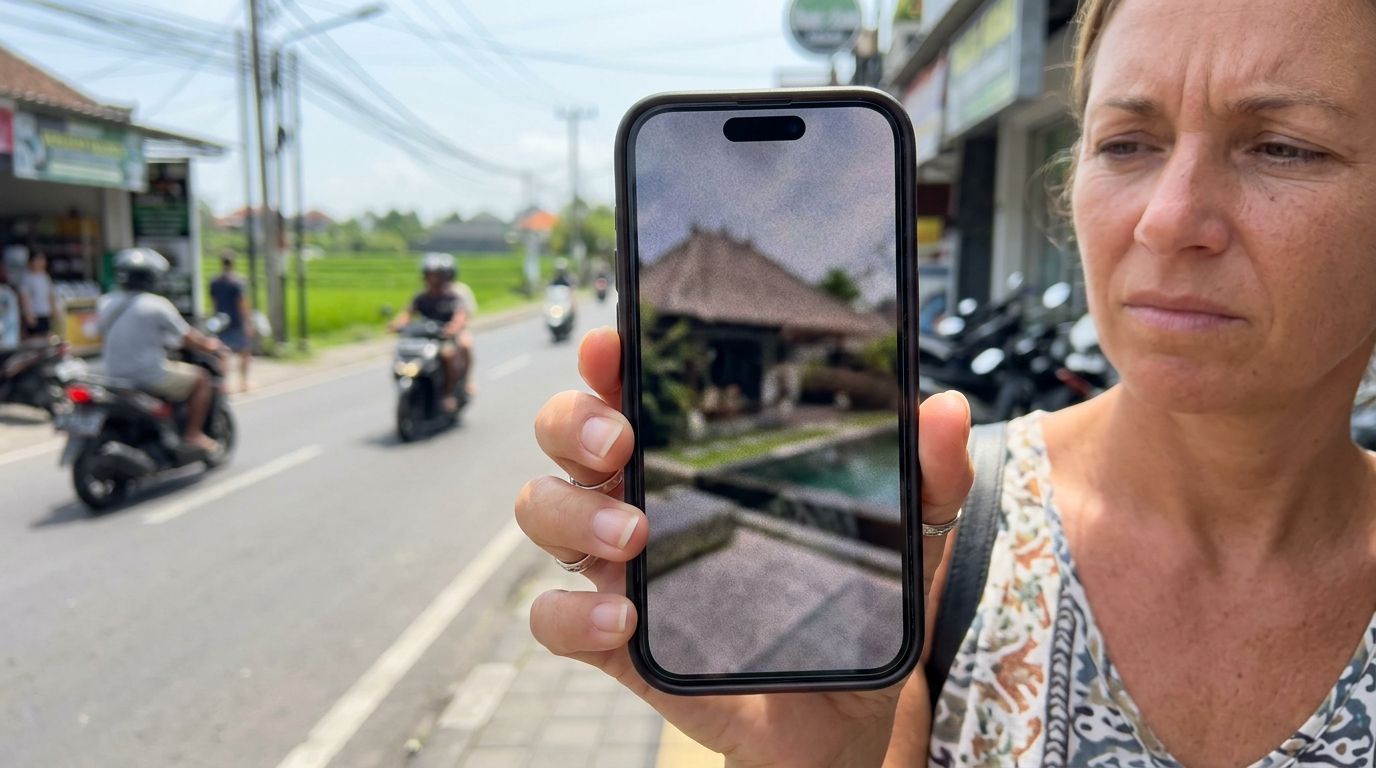
Imagine this: you are scrolling Instagram and suddenly a Bali villa pops up with a private pool, spotless bedrooms, and a nightly price that feels like a steal. Within minutes, the “owner” messages you on WhatsApp and asks for a deposit today to lock your dates. You feel that little rush of excitement. Then the chat gets vague, the location details get softer, and the payment request gets harder to refuse.
This is exactly how many common villa rental scams in Bali begin, and why the warning signs often show up only after you have already taken the bait. The article’s core idea is simple: scams thrive where bookings are remote, urgency is high, and verification is optional. Stolen photos, impersonators, and deposit-taking tactics create a vulnerability window that catches even smart travelers off guard.
In this article, you will learn the main scam patterns people run into, starting from phantom listings and disappearing deposits, then moving to bait-and-switch situations, double booking confusion, and the special Bali trick where a “whole villa” is quietly priced per room. You will also get a practical verification workflow you can run before paying anything, so you are not relying on polished pictures or quick promises.
First, we will define what actually counts as a scam and outline the most common behaviors. Then we will break down why these scams keep working right now, based on the market conditions described in the article. After that, we will walk through the exact checks to do, in a clear order that reduces risk quickly. Finally, we will address the misconceptions that make people feel safe right before they pay.
Want a safer way to book in Bali without the back-and-forth risk? Explore verified villas with Bali Villa Hub.
Good news, though. These scams are preventable. With the right steps, you can turn “hope this is legit” into a confident, verified decision. Next, we’ll start with clear definitions so you know what you are looking at when something feels off.
Any Bali villa deal that looks “too easy” can still hide a scam. That’s the annoying part. A villa booking is supposed to feel simple, but fraudsters turn the process into a guessing game. In this section, we’ll name the main types of villa rental scams in Bali, so you can recognize the pattern even before you pay anything.
Villa rental scam as an umbrella
A villa rental scam is any situation where you are misled into paying for a villa rental that either does not exist, is not available as promised, or is controlled by someone who is pretending to be legitimate. In the article, scams are described as opportunistic and fueled by remote booking and urgency, often through social media or WhatsApp.
Phantom and stolen-photo listings
With phantom listings, a scammer advertises a villa that is not actually available (or not actually real to them at all). A huge tell is the use of stolen photos where images from another listing are reposted to create credibility.
From a renter’s view, you might notice the listing looks perfect but the details feel slippery, and the “availability for your dates” story changes once you ask for verification. The article specifically points to this pattern as a common root cause of fake or non-existent villa rentals, and it emphasizes reverse image checking as a key way to detect photo reuse.
Impersonators, fake agents, and identity mismatches
Impersonators and fake agents pretend they own or manage the villa. The article highlights how scams often survive when the person’s identity is not consistent across channels, creating an identity mismatch between WhatsApp, email, invoice name, and bank account details.
In practice, it can look “normal” at first. But when you ask for business-style proof or an invoice with matching entity details, the conversation often gets evasive. The article flags mismatched names as a stop sign, not a small detail.
Deposit disappearing after you pay
A deposit scam is when you send money to secure dates, and then the host stops responding or keeps stalling until you realize the deposit is gone. The article calls out deposit-taking as a common tactic, especially because remote payments can be hard to recover once transferred.
From your perspective, the red flag is the sudden shift in behavior after payment. You may still receive messages, but they stop answering clear questions like check-in details, written terms, or live proof.
Bait-and-switch and forced relocation
A bait-and-switch happens when you book one villa, then arrive and are told the place is “unavailable.” The scammer moves you to a different villa, often smaller, older, or in a worse location, which still satisfies their goal of collecting money first.
The article also describes a related version where relocation is framed as a solution, but the guest experience becomes chaotic. The prevention theme is that check-in clarity and “exclusive use” expectations need to be written and confirmed early.
Double booking fraud
Double booking occurs when two parties are promised the same dates. The article links this scam type to either intentional overbooking or poor synchronization with the real booking calendar.
What it looks like for renters is stress at the worst time. You may arrive expecting check-in, only to find excuses or scramble. The article also suggests requesting written confirmation that includes the actual guest name and check-in information for date integrity.
Whole-villa vs per-room deception
Whole-villa vs per-room deception is a Bali-specific trap built on ambiguity. A listing may advertise “a 4-bedroom villa” with a low nightly price, but the booking terms are actually per bedroom or only apply to part of the property.
From a renter’s view, you might only discover it after you question the fine print or after payment. The article stresses that you should explicitly ask whether it is exclusive use of the entire property, and that the quote should clearly state “exclusive villa use” with no shared areas.
Unlicensed villas as a legitimacy risk
An unlicensed villa is not always a classic “scammer stole my money” story, but it can still become a major problem for guests. The article points to licensing and legal compliance as part of legitimacy, noting that administrative crackdowns can leave guests stranded mid-stay without the same level of accountability.
So even when the host seems helpful, unlicensed operations can create “fraud-like” outcomes from the guest’s perspective. This is why the article urges readers to treat legality and operational accountability as part of scam prevention, not just paperwork.
Now that you know the common patterns, the next question is why these scams keep working. What market pressure, remote behavior, and timing habits make them profitable in the Bali villa space
When you are trying to lock in a villa fast, scams look like a normal shortcut until it is too late. The article explains that these frauds keep working because the market conditions make verification easy to skip, and the scammer payoff is immediate once money is sent.
That first scam-friendly condition links directly to multiple article red flags. If someone insists on off-platform communication and payment, you lose the ability to cross-check identities and deal terms, which makes deposit disappearing much easier to pull off. Likewise, the urgency pressure pairs with refusal to do a live walkthrough, because the longer you verify, the more stolen-photo claims collapse (Villas R Us).
Finally, legal and operational ambiguity is a second “multiplier” for trouble. The article notes that underreported enforcement and unlicensed setups can lead to forced relocations or mid-stay disruptions, which then looks like fraud from the guest side even when the underlying problem is lack of accountability (Short Stay Bali). Next, let’s move from “why it works” to “what it looks like,” so you can spot the specific scam type you are most likely to face.
Picture this: you are hunting for a 4BR luxury villa in Bali, and the only contact you get is a WhatsApp chat. The “agent” replies fast, sends some gorgeous pictures, and asks for a deposit so they can hold the villa for your dates.
From there, the story usually splits into a few repeatable scam paths. The article describes these as opportunistic moves powered by stolen-photo listings, urgency, and payment misdirection, which makes your decision feel urgent and your verification feel optional.
Deposit scam that targets your urgency
First, the scammer pressures you to pay a deposit quickly, often framing it as the price of “locking in” your stay. They may mention limited availability or peak-season timing to keep you from slowing down.
Next, the traveler experiences a sudden communication drop after payment. When you ask for clearer written terms, check-in details, or proof they control the property, replies get delayed or disappear. The article’s prevention signals here are clear: if the deposit is the move they push hardest, you should assume high risk unless identity and deal terms are verifiable before you pay (Villas R Us).
Bait-and-switch when you finally arrive
In the bait-and-switch version, the scammer “sells” one villa, then claims it is suddenly unavailable. The mechanism is simple: once you are committed and the money is sent, they can redirect you without technical barriers.
On arrival, you see the symptom: you are offered a different villa, often smaller or less matched to the listing. The article ties this to the guest experience of forced relocation, and the practical prevention signal is to get check-in and exclusive-use expectations written early, not left to chat (Villas R Us).
Double booking that turns into an arrival scramble
With double booking, the scammer accepts payments from multiple guests for the same dates or operates off an unsynchronized calendar. Their mechanism is opportunism: they maximize money capture before anyone arrives to verify reality.
The traveler’s experience is the scramble symptom. You arrive expecting your booking, then hear excuses or get rushed into a replacement. The article points to written confirmation as a prevention lever, because clear documentation helps you prove what was promised for your dates and check-in time (M Visa Bali).
Whole-villa confusion that hides per-room pricing
This one is sneakier. The listing sounds like a whole villa deal, especially with “4BR” wording, but the booking terms are actually per bedroom or not for exclusive use. The scammer’s mechanism is ambiguity, not necessarily an obvious lie.
When it happens, you feel it in the mismatch symptom: the price and access terms do not match the expectation of exclusive use. The article’s prevention signal is to ask directly whether it is exclusive use with no shared areas, and require the quote wording to match your expectation (Villas R Us).
Taken together, these scams follow the same playbook. They are timed to your decision speed, they borrow credibility through stolen photos and polished chats, and they rely on you paying before you can verify who controls the villa and what you are actually renting. Good news is next: you can run a fast verification workflow before paying, starting with villa existence and ending with the deal terms.
“Verify first, pay second” is the rule that stops most Bali villa scams before they start.
Step 1. Run the 60-second non-negotiables
Set a timer and don’t negotiate with your future self. Before any deposit, request a live video walkthrough and confirm whether the booking is for the entire villa or only a room. The article calls this the 60-second checklist because scammers rely on you skipping real-time proof.
At the same moment, scan for identity alignment. If the person you’re chatting with later looks different in invoice details or bank details, pause the deal and move on to verification rather than “trusting” the chat vibe.
Step 2. Verify the villa exists with custom proof
Start with reverse image search on the hero photos. Stolen photos are a core ingredient in fake listings, so duplicates across unrelated pages are a major warning sign. Then ask for custom proof that can’t be pulled from a camera roll.
Use prompts like: a photo by the pool holding today’s date, or a continuous video showing the entrance, then pool, then living room. If they refuse live proof or only send polished clips, treat it as a prevention signal and delay payment until you get it. For reference on this approach, see Villas R Us’ Bali villa scam checklist.
Step 3. Confirm the operator with a consistent identity trail
Now verify the person behind the listing. Look for consistency across WhatsApp name, email, invoice header/company name, and bank account name. The article’s “identity mismatch” framing is important here because it’s exactly how impersonation scams survive.
Also ask for basic business identity, not just personal paperwork. A legitimate operator can usually explain who runs day-to-day and what entity issues the quote. If they can’t, you don’t have verification, you only have marketing.
Step 4. Get written deal terms that match what you expect
Request a written quote or agreement that includes your exact dates, check-in and check-out times, what’s included, cancellation and refund terms, and the security deposit details. The article emphasizes that vague chat promises are where disputes go to die.
For long stays, the quote must go further: utilities policy (electricity, water, Wi-Fi terms), maintenance responsibilities, and an inventory or condition list at move-in. If they won’t put these details in writing, you’re accepting uncertainty as part of the product.
Step 5. Pay in a safer way, and match it to your stay length
For short stays, prefer a payment path with dispute protection where possible, and avoid irreversible transfers before you’ve verified property access and identity. The article frames scams as common precisely because deposits are easy to take and hard to recover once sent.
For long stays, don’t treat the deposit like a casual “maybe.” It should be tied to a signed agreement with clear deposit return conditions and a documented payment schedule. The article also recommends staged payments when feasible instead of one large upfront transfer.
Step 6. Confirm exclusive use with a direct written line
This is where Bali-specific confusion matters most. Ask for a direct, written statement that clarifies the whole-villa vs per-room issue. The article’s prevention signal is explicit wording: “exclusive villa use / no shared areas / no shared pool,” plus clarity on whether any rooms are locked or occupied.
During the live call, use it as a check too. If the person can’t clearly explain exclusive use, you are still negotiating with ambiguity, and that’s what scammers exploit.
Once this workflow feels routine, the next chapter is mindset traps. Even after you see “proof,” certain misconceptions still lead travelers into scams. Let’s clear those up next.
“Social media is safer because there are pictures”
That feels reassuring, until you remember the most convincing “proof” is sometimes just reposted visuals. The article flags stolen-photo tactics as a common base for fake or misleading listings, especially when the booking starts in DMs and chat apps.
Result: you can pay a deposit for the wrong place, then the host disappears or changes the story. The safer move is to treat visuals as marketing, not verification, and insist on written terms plus live custom proof later in the process.
If you want to skip the risky verification legwork, browse what’s available with Bali Villa Hub and choose a villa with clear booking details.
“A cheap price is always a deal”
Here’s the catch: extreme discounts are often the bait. The article calls out “too good to be true” pricing, including examples described as significantly below market, because it creates urgency and reduces your willingness to verify.
Outcome: scammers profit from speed, not from legitimacy, and your deposit can be gone before you realize the villa does not match the listing.
“Photos and videos prove the villa is real”
That seems logical, because you are seeing something with your own eyes. But the article emphasizes that photos and polished videos can be reused, and scammers usually fail when you ask for proof tied to the current moment (like a specific date shown during a live walkthrough).
Consequence: you think you booked confidently, then arrive to a bait-and-switch or an unavailable/incorrect property.
“Paying to a personal account is normal”
This one feels convenient, especially if someone says it avoids fees or taxes. The article points out that paying to a personal account, often framed around tax avoidance like “Pajak,” is a stop sign because it reduces accountability and traceability.
What you risk: deposit disappearing after transfer, plus identity confusion that helps scammers succeed.
“A confirmation message means the booking is secured”
Confirmation screenshots can look official, but the article stresses that a real booking depends on verifiable control and written terms, not a message in chat. If the operator cannot clearly align the booking details with documents, you are still guessing.
Result: you may face a double-booking scramble or a sudden refusal at check-in.
“Unlicensed villas are fine because the place looks perfect”
It’s tempting to ignore legality if the villa looks beautiful on the inside. However, the article warns that unlicensed operations can be shut down mid-stay, leaving guests stranded without the same protections.
So even without a “classic” con, you can still lose your deposit and end up dealing with forced relocation.
“Chat screenshots count as an agreement”
That feels safe because you have records. Yet the article highlights that verbal or chat-based terms are weak, especially for long stays, where utilities, deposit return timelines, inventory, and maintenance responsibilities need clarity.
Consequence: disputes become messy, and scammers can exploit ambiguity to turn a promised deal into a loss.
“Agents are always legitimate”
It’s easy to trust someone who calls themselves an agent. The article notes that not all agents are genuine, and scammers can impersonate owners or managers, creating an identity mismatch across WhatsApp, email, invoices, and bank account names.
Outcome: you pay the “right” person according to your chat, but the wrong entity controls the property, leading to scam success.
Keep one rule in your head: verify villa, verify person/operator, and verify deal terms before you pay. If you already paid or suspect a scam, act fast, stop further payment, and prepare your evidence so you can report it and seek dispute options.
Stay Confident: Verify First, Pay Second
The one rule that blocks most scams
Keep this simple: verify villa, verify person/operator, and verify deal terms before you pay any deposit. The article frames scams as dependent on remote urgency and weak verification, so this rule cuts off the scammer’s best advantage.
If any of those three pieces are fuzzy, you are not booking a villa. You are gambling with your holiday.
Before you pay, ask for these proofs
Demand live custom proof (like a date-by-pool photo or an entrance-to-living-room video in one take), and get a written quote that includes dates, inclusions, cancellation terms, and security deposit details. For long stays, make sure the agreement clearly covers utilities, Wi-Fi terms, maintenance, and inventory.
Finally, insist on exclusive-use clarity with a direct written line such as “exclusive villa use / no shared areas.” This prevents the per-room vs whole-villa trap.
If you think you’re scammed, act fast
Stop further payment immediately, then save evidence like chat logs, listing details, invoices, and bank info. Contact your bank or card provider right away to ask about dispute or chargeback options.
Then report the case: tell the booking platform (if used) and file a police report in Bali. If it happened via online channels, report through the relevant cyber reporting routes too, because documentation helps future enforcement. For the Bali scam response mindset, see M Visa Bali’s guidance.
Before you book your next stay, use the checklist above and keep it handy. If you want a safer, clearer path to villa availability, Bali Villa Hub is ready to help you choose with confidence.