Drinking Water in Bali What Travelers Need to Know
Bali Villa Hub
3/5/2026
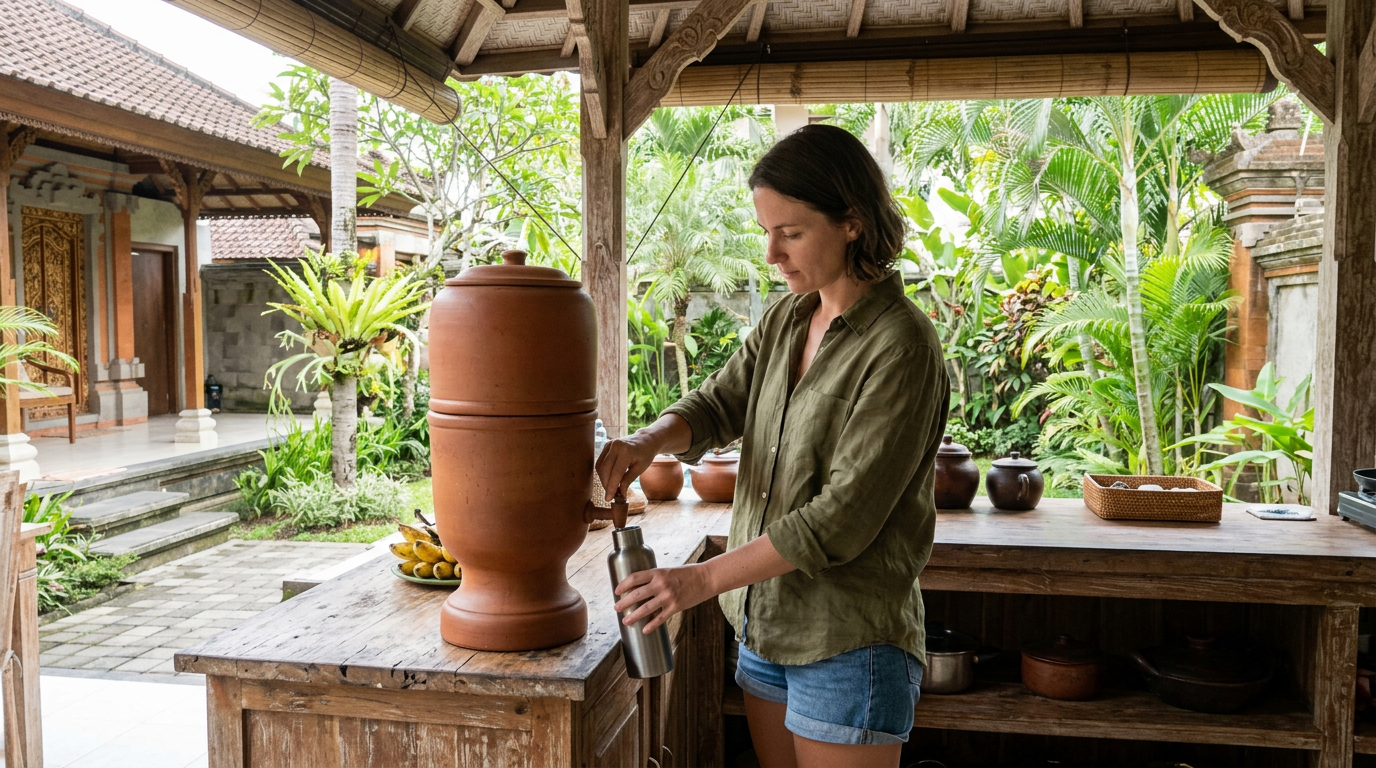
Drinking Water in Bali What Travelers Need to Know
Visiting Bali is exciting, but questions about drinking water are one of the most common concerns for travellers. This guide explains the risks, clarifies when hotel or filtered water is acceptable, and outlines practical options for staying hydrated safely so you can focus on enjoying the island.
Can you safely drink Bali's tap water?
Short answer: no for most visitors. Municipal tap water in Bali is not reliably treated to the standards many travellers expect, and quality varies between regions and properties. While some upscale hotels and private villas invest in in‑house filtration systems, the general rule for travellers is to avoid drinking straight from the tap.
The reasons are practical and consistent. Water sources can include surface water and shallow wells that pick up bacteria, parasites and agricultural runoff. Intermittent supply and older plumbing can introduce contamination after municipal treatment. These factors make microbial illness a realistic risk for people who are not accustomed to the local microbes.
Practical steps help keep you healthy while visiting. Use sealed bottled water from reputable sellers or water dispensed from a clearly maintained refill station. If you must treat tap water, bring it to a rolling boil for at least one minute, then let it cool before drinking. For brushing teeth or rinsing your mouth, bottled water is the safest option, though a quick splash from the tap while showering is normally fine for most people.
Bottom line: trust filtered or bottled sources for drinking and food preparation. Ask your accommodation about their water treatment and look for visible signs of sealed bottles or dedicated dispensers. Taking these simple precautions will reduce your chance of illness and leave you free to enjoy the island.
With that basic guidance in mind, it helps to understand how hotel filtration works and what to look for when you check in.
Are hotel taps and filtered systems safe for guests?
Many hotels and private villas in Bali offer filtered water, but safety is not guaranteed by the label alone. The effectiveness depends on the system type, installation quality and ongoing maintenance. Guests should treat any claim of filtered water as conditionally reliable and ask a few targeted questions when checking in.
Types of filtration and what they remove
Common systems include RO (reverse osmosis) which removes most microbes and minerals, UV (ultraviolet) purification which inactivates bacteria, and carbon filtration which improves taste and reduces some chemicals. Point of entry systems treat water for the whole property while point of use systems treat only specific taps or dispensers. Knowing which system is in place helps you judge risk for drinking and cooking.
Why maintenance is more important than the sticker
Filters that are old or installed poorly can become contamination points. Regular cartridge replacement, cleaning and staff training are essential. Ask your host when the filters were last serviced, whether water is tested and whether dispensers use sealed bottles or regularly cleaned jerry cans. Visible seals, clear labeling and recent test results are good signs.
Practical steps guests can take
Prefer sealed bottled water or a dedicated dispenser with clear maintenance records for drinking and preparing food. If a property provides RO (reverse osmosis) treated water, confirm the system is maintained and that storage tanks are cleaned. For brushing teeth use bottled water if you are sensitive; for showering tap water is usually fine for most people.
In short, trust hotel water only when you can verify the filtration type, maintenance and testing. When in doubt, choose bottled or officially treated water and ask your host for details to stay safe.
Next, consider how tap water and ice can affect your risk of gastrointestinal illness while travelling.
Can tap water or ice in drinks cause Bali Belly?
Yes — this is a common route for travellers to pick up what is known as Bali Belly. Tap water in many areas is not consistently treated and can contain bacteria, parasites and sometimes viruses that cause acute gastroenteritis. Ice made from unverified water carries the same risk because freezing does not kill all pathogens.
Risk varies by source and handling. Water drawn from surface supplies, shallow wells or old distribution systems is more likely to be contaminated, and ice produced in small bars or street stalls is often made from the same supply without proper sanitation.
- Tap water contamination — Water can contain organisms such as E coli, Campylobacter and Giardia that produce diarrhea and vomiting when ingested by travellers who lack local immunity.
- Ice quality mirrors water quality — If ice is made from tap water the pathogens remain viable and can infect you when the ice melts into your drink.
- Preparation and storage risks — Ice and water dispensers can be contaminated by dirty hands, dirty scoops or unclean storage tanks even if the incoming water was treated.
- Commercial versus informal sources — Large hotels and reputable restaurants often use commercial purified ice or sealed bottled water while small vendors may not, so the risk is uneven across venues.
- Individual susceptibility matters — Even a small number of organisms can make a visitor ill because travellers lack immunity to local strains and the infectious dose varies by pathogen.
Practical prevention is simple and effective: drink sealed bottled water or water from verified refill stations and ask whether ice is made from purified water before accepting drinks with ice. When unsure, avoid ice, use bottled water for brushing teeth, and ask your accommodation about their water treatment practices to reduce chances of illness.
Having covered risks from taps and ice, next is a concise list of reliable ways tourists can obtain safe drinking water in Bali.
How can tourists get safe drinking water in Bali?
Accessing safe drinking water in Bali is straightforward when you follow a few reliable practices. Plan for bottled or properly treated water for drinking and food preparation. Confirm the source and handling rather than assuming a tap is safe. Small steps on arrival will prevent most common travel illnesses.
Use sealed bottled water and verified refill stations
Choose commercially sealed bottles from reputable sellers or use refill stations that display visible cleansing or filtration equipment. Many shops and supermarkets sell sealed bottles at consistent prices, and larger refill stations commonly use RO (reverse osmosis) treatment. When refilling a bottle, verify the nozzle and dispenser are clean and that staff replace filters on a regular schedule.
Trust hotel filtration only when you can confirm maintenance
If your accommodation offers in‑room or building‑level filtration, ask when the system was last serviced and whether tanks are cleaned. RO (reverse osmosis) and UV (ultraviolet) systems are effective when maintained. If staff cannot provide clear answers, prefer sealed water for drinking and cooking. Boiling water to a rolling boil for at least one minute is a reliable fallback for plain water use.
Consider portable treatment for remote travel and avoid risky ice
For day trips or remote stays bring a compact UV (ultraviolet) pen or a certified filter bottle rated for bacteria and protozoa. These devices treat water quickly and reduce reliance on single‑use plastics. Avoid ice from roadside stalls unless you confirm it is made from purified water because freezing does not guarantee safety.
Following these practical measures will let you stay hydrated and healthy while enjoying Bali. Confirm sources, ask simple maintenance questions and carry a small treatment option for peace of mind.
Finally, weighing cost and convenience helps you decide whether bottled water deliveries or refill stations are the best option for your stay.
Which bottled brands, refill options and costs are best?
The safest and most practical choice for visitors is sealed commercial bottles or verified RO (reverse osmosis) refill jugs rather than unnamed street sources. For a reliable, villa‑friendly service consider arranging water delivery through your accommodation or through a trusted villa service such as Bali Villa Hub. Typical price ranges you can expect in Bali are: IDR (Indonesian Rupiah) 3,000 to 7,000 for small 330 millilitre bottles (USD (United States Dollar) 0.20 to 0.45), IDR (Indonesian Rupiah) 6,000 to 12,000 for 1.5 litre bottles (USD (United States Dollar) 0.40 to 0.80), and 19 litre refill jugs around IDR (Indonesian Rupiah) 12,000 to 25,000 per jug (USD (United States Dollar) 0.80 to 1.70). Many refill depots sell purified water by the litre at IDR (Indonesian Rupiah) 1,000 to 3,000 per litre and local delivery fees for jugs typically fall between IDR (Indonesian Rupiah) 10,000 and 30,000 depending on distance.
For best value, buy larger jugs if you are staying three nights or more and refill your reusable bottle from a verified dispenser. Always check seals and expiry dates on single‑use bottles and ask whether refill stations use RO (reverse osmosis) or UV (ultraviolet) treatment before refilling. Avoid vendors who cannot show clear handling practices or sealed stock. If you prefer convenience, ask your host to schedule regular deliveries from a reputable supplier such as Bali Villa Hub to combine safety and cost efficiency while reducing single‑use plastic during your stay.
For convenient, reliable water deliveries and sealed bottle options during your stay, consider arranging supplies through https://www.balivillahub.com/en — they can coordinate delivery to villas and answer questions about their water handling practices.
Following these straightforward precautions—choose verified bottled or treated water, confirm filtration maintenance, and avoid uncertain ice—you'll minimise the chance of illness and be free to enjoy your trip to Bali.