Grab car rates per kilometer in Bali explained 2026
Bali Villa Hub
2/21/2026
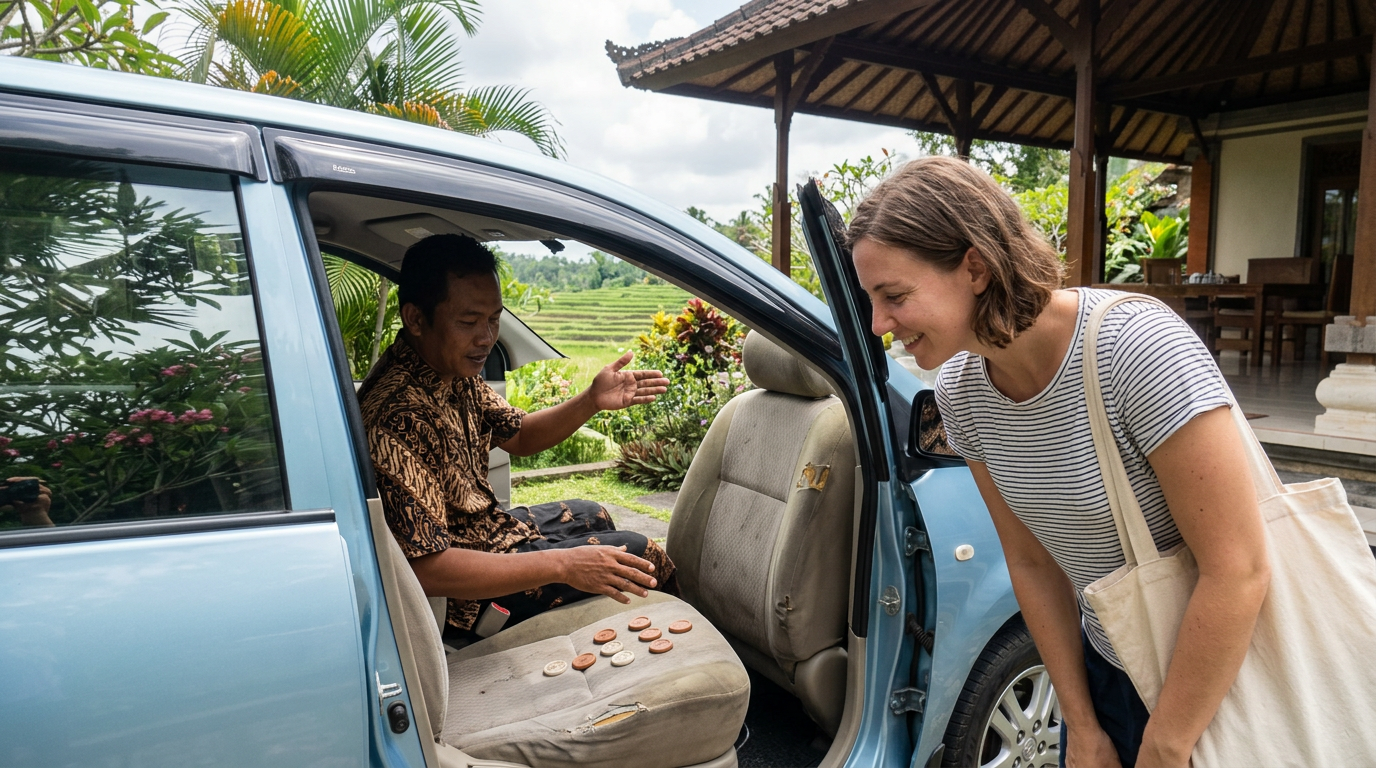
Grab car rates per kilometer in Bali explained 2026
Bali's roads are busy, distances vary and choosing the right transport can save time and money. This guide explains how Grab fares are calculated, compares Grab to other local options and offers practical tips for using the app, handling airport pickups and staying safe. Read on to understand the numbers and decide which option suits each trip.
How Grab fares are calculated and per-km pricing in Bali
Grab fares in Bali combine a few fixed elements so the price shown in the app is predictable. The final fare equals the base component plus a distance charge plus any time-based charges and booking or location surcharges. Below are the main pieces broken down so you can read the estimate and know what drives the cost.
Base fare and per kilometer charge
Standard GrabCar in Bali typically applies a base fare of IDR (Indonesian Rupiah) 7,500 that covers the initial pickup and the first kilometer. After that the per kilometer rate is IDR (Indonesian Rupiah) 3,800 for standard cars. A minimum fare applies so short trips rarely fall below IDR (Indonesian Rupiah) 20,000 even if the meter calculation is lower.
Time based charges and waiting fees
Travel time in slow traffic is billed at IDR (Indonesian Rupiah) 200 per minute and this is added to the distance total. When a driver waits at your pickup there is a free two-minute grace period and then a waiting fee of IDR (Indonesian Rupiah) 2,000 per minute. The app also shows a small booking fee of IDR (Indonesian Rupiah) 3,000 which appears on every ride receipt.
Surge pricing and airport or event surcharges
When demand is high the app applies a visible surge multiplier that increases the total fare. Surge events commonly raise the total by 20 percent to 150 percent depending on demand. Bali Airport pickups include a fixed pickup surcharge of IDR (Indonesian Rupiah) 5,000 in addition to the fare from the pickup point to your destination.
Always check the fare estimate shown in the app before confirming a ride; that figure already combines base, distance, time and any active surcharges so you will know the expected amount before you book. With that foundation, next we'll compare Grab's per-kilometre costs to other common options on the island.
Compare Grab per-kilometre costs with taxis, private drivers and scooters
Understanding the true per-kilometre cost helps you choose the right transport for each trip in Bali. Below are typical, on-the-ground figures you will encounter in 2026 so you can compare value and convenience for short rides, airport transfers and full-day tours. These numbers combine base fares, distance charges and common surcharges; always confirm the app estimate or driver quote before you depart because traffic and waiting time materially affect the total.
- Grab car Standard GrabCar usually shows a base around IDR (Indonesian Rupiah) 7,500 and then about IDR (Indonesian Rupiah) 3,800 per km (kilometre) after the first kilometre, plus a small booking fee. This makes Grab one of the most predictable options for trips between 3 and 20 km (kilometres).
- Metered taxi Official taxis commonly start at about IDR (Indonesian Rupiah) 7,000 and charge roughly IDR (Indonesian Rupiah) 6,500 per km (kilometre) as the meter runs, with airport or terminal surcharges added. Taxis become cost competitive on very long nonstop journeys or when you have large luggage.
- Private driver Day hire is usually quoted by the day rather than per km (kilometre), for example IDR (Indonesian Rupiah) 600,000 to IDR (Indonesian Rupiah) 800,000 for eight hours including driver and fuel, which equates to roughly IDR (Indonesian Rupiah) 6,000 to IDR (Indonesian Rupiah) 9,000 per km (kilometre) on typical itineraries. The premium covers flexibility, waiting time and local guidance.
- Scooter options Renting a scooter costs about IDR (Indonesian Rupiah) 70,000 to IDR (Indonesian Rupiah) 100,000 per day with fuel around IDR (Indonesian Rupiah) 500 per km (kilometre), while app or street ojek rides average IDR (Indonesian Rupiah) 2,500 to IDR (Indonesian Rupiah) 4,000 per km (kilometre). Scooters are the cheapest per kilometre but suit solo, confident riders only.
In short, Grab offers a clear middle ground between metered taxis and scooter rides for most urban trips. Choose a private driver when you value convenience and a fixed itinerary, and pick a scooter if your priority is the lowest per-kilometre cost and you are comfortable riding. With these comparisons in mind, the following section covers practical app tips and airport pickup rules to keep your rides smooth.
Using Grab in Bali, app tips, airport pickups and surge pricing
Grab is the most convenient option for many trips across Bali when you know how to use the app and how pickup rules work. A few practical steps will save waiting time and unexpected costs during busy periods and at the airport.
Prepare the app and pickup details
Create a profile with your phone number and add a payment method before you need a ride. Always confirm the vehicle model, license plate and driver name shown in the app and message the driver if you cannot see them at the pickup point. Use the map pin to set an exact pickup coordinate rather than a vague address. At hotels and complex beachfront areas suggest a clear landmark in the notes so the driver finds you quickly.
- Airport pickups At Ngurah Rai passengers must follow the app instructions to the designated ridehailing zone outside arrivals. Expect a small airport surcharge and meet your driver at the ridehailing curb to avoid long walking times and confusion.
- Handling surge pricing Surge is shown in the fare estimate before you confirm. Peak windows are typically weekday mornings 7 to 9 am and evenings 5 to 8 pm plus weekends and public holidays. If surge is high, wait 10 to 20 minutes and prices often drop.
- Ride confirmations and safety Confirm the plate before entering the car and share trip details with a friend. If a driver cancels, move to the next estimate rather than waiting for a long match time which can trigger a higher fare.
Following these steps helps keep rides predictable and stress free. Next, learn the key safety checks and in-app features to protect yourself on every trip.
Safety checks and features for Grab car rides in Bali
Before you enter any Grab car take a moment to match the driver name and vehicle plate shown in the app with the person and car at the curb. The app provides a driver photo and vehicle details so use those to confirm identity. Check the visible condition of the car and that seatbelts are available for every passenger. Review the driver rating in the app and read any recent comments if you feel unsure. Use the message function to let the driver know a clear pickup landmark and share your live trip with a trusted contact so someone else can monitor your route. Decline to board if the plate or driver do not match the app and request a new machine. At airports follow the designated ridehailing pickup points to avoid confusion and unnecessary walking after dark.
During the ride keep an eye on the route displayed in the app and speak up if the driver deviates without explanation. Grab includes an in-app emergency button for immediate help and a support channel you can contact after the trip to report issues. Opt for cashless payment through the app if you prefer fewer interactions and keep your trip receipt for records. If you feel unsafe ask the driver to stop at a busy, well lit location and exit promptly. Finally use the rating and feedback tools after each ride to help maintain driver standards and protect future passengers. With safety in mind, the next section outlines when alternatives may be the better choice.
When to choose alternatives, renting cars, hiring drivers or taking an ojek
Choose a rental car when you value complete independence for multi-stop itineraries or you are travelling as a family of four or more with luggage and children and expect to cover long distances in a day; modern small SUVs (sport utility vehicle) and sedans typically rent for IDR (Indonesian Rupiah) 350,000 to IDR (Indonesian Rupiah) 800,000 per day depending on model and season and fuel adds roughly IDR (Indonesian Rupiah) 10,000 to IDR (Indonesian Rupiah) 20,000 per 10 kilometres. Opt for a hired driver when you want local knowledge and zero navigation stress for a full-day island tour or transfers to remote temples; a typical private driver rate sits between IDR (Indonesian Rupiah) 600,000 and IDR (Indonesian Rupiah) 900,000 for eight hours including driver and fuel which often works out cheaper than a series of point-to-point rides and includes waiting time. Pick an ojek for short, solo journeys in congested areas where lane filtering saves time and cost per kilometre is low, usually IDR (Indonesian Rupiah) 2,500 to IDR (Indonesian Rupiah) 4,000 per km (kilometre) on app or street fares, but only if you are confident on two wheels and travelling light. Use Grab or metered taxis when you need a single straightforward trip across town or from a dinner spot at night because they remove the need to park and often show an upfront fare estimate.
Consider safety and legality for self-drive or motorbike hire and carry the correct licence and documents to avoid fines and ensure insurance covers you. Factor in traffic, parking availability and the number of passengers when you choose. For sightseeing with flexibility but no driving stress a driver is best. For the lowest transport spend per kilometre and fast point trips an ojek wins for solo riders. For privacy, luggage and full control over your schedule rent a car and book through trusted local services. If you’re arranging accommodation and local transfers, consider checking options and booking details at https://www.balivillahub.com/en to make planning easier and to compare trusted providers.