How Do Bali Villa Rental Contracts Usually Work?
Bali Villa Hub
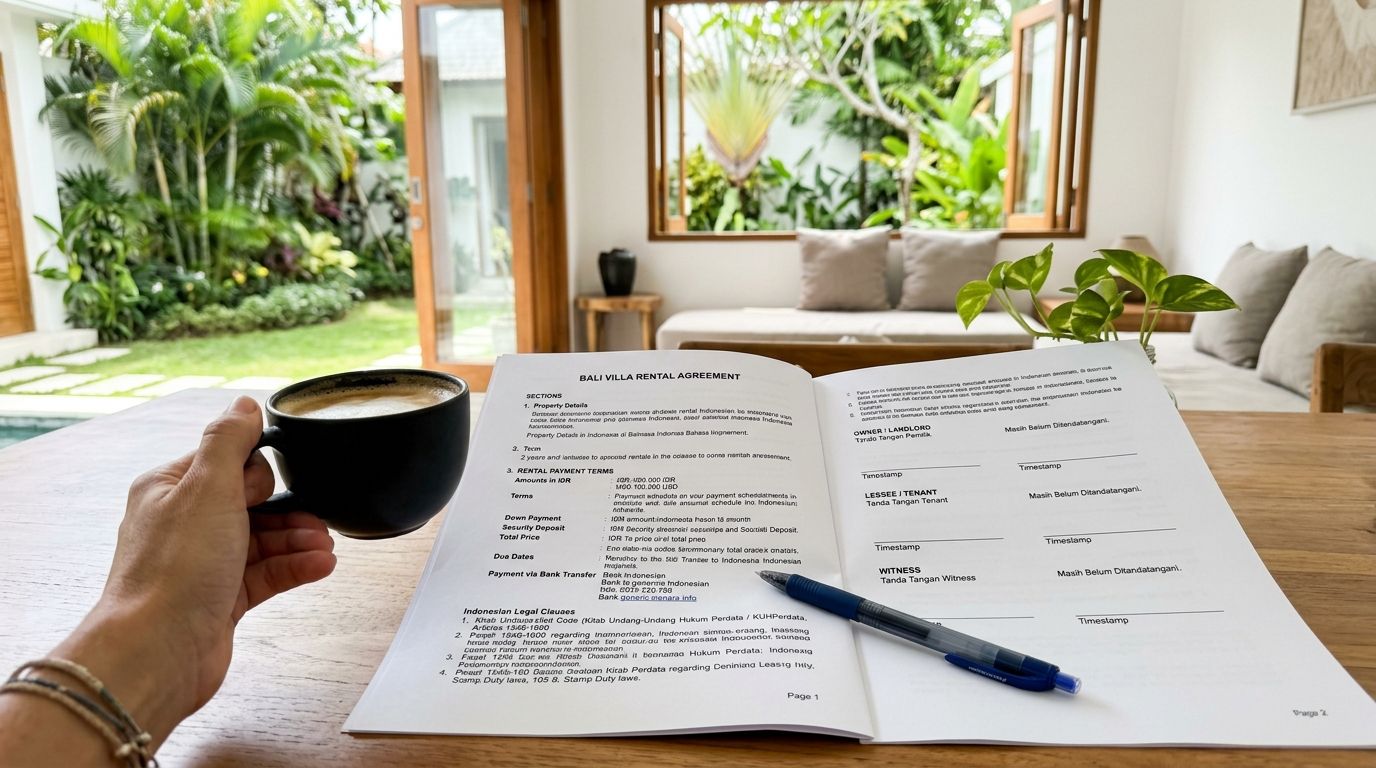
Imagine you found the perfect Bali villa, signed what you thought was a straightforward rental paper, and then realized the contract expects the full annual payment upfront, plus a security deposit, plus clarity on who pays for utilities and maintenance. That moment is stressful, especially when you were expecting a simple "pay monthly, stay, and enjoy." In Bali, the details can matter more than the headline price.
What you're dealing with usually comes down to one big difference: the rental structure. Many situations start as short-to-medium residential rentals (often yearly), where the payment rhythm and responsibilities are spelled out for that rental period. Other setups are more long-term and use a leasehold-style structure called Hak Sewa, which is built around a fixed contract period and extension options.
Here's the part that catches people off guard. With yearly rentals, contracts often require the entire year's rent upfront, and the deposit plus utilities need to be handled exactly as written. With Hak Sewa, the arrangement is contract-based and not registered at BPN, so the legal protection largely depends on the quality of the notarized agreement, especially around extension terms. Extensions are typically not automatic, and expiry often triggers a default outcome unless the contract clearly covers what happens next.
Before you sign anything, it helps to understand the contract type you're in, how money moves at the start, and which clauses create your real risk later, particularly extension and expiry terms. When you know what to look for, a Bali contract can be navigated safely and with much less uncertainty.
Once you know what kind of agreement it is, the "rules" become much clearer, so the next step is mapping the contract types you're most likely to encounter.
You show up thinking you're just renting a villa, but halfway through the paperwork you realize the real contract type changes everything, including whether your deposit matters, how renewals work, and what happens when time runs out.
If you want a practical checklist to match the contract to your exact situation, Balivillahub.com is ready to guide you on what to verify before you pay.
Short-term or yearly rentals have a familiar timeline
For many private villa stays, the contract follows the "year in advance" rhythm. You usually pay the rental period upfront, along with a security deposit, and the agreement spells out who covers day-to-day costs like utilities and minor upkeep. The big practical expectation is straightforward: the contract ends when the rental term ends, unless you negotiate a new deal.
In this setup, there's less of the long-term machinery and fewer moving parts around extension rights, but you still need to read carefully. The exact clauses about deposits, utilities, maintenance, and termination decide whether check-out is smooth or becomes a negotiation.
Leasehold (Hak Sewa) is a right to use
With Hak Sewa, you're not simply booking a stay. It's a contract-based right that lets you use privately owned Indonesian land for a fixed period, often with an initial term around 25–30 years and extension options that can bring the total closer to 70–80 years. The buildings are treated as yours during the lease period under the horizontal separation idea, while the land remains under the landowner's freehold title.
The practical consequence is huge: Hak Sewa is not registered at BPN, so your protection depends heavily on what's written in the notarized agreement. Extensions are not automatic, and if the contract doesn't clearly lock in extension terms and pricing mechanics, you may have to renegotiate from scratch at expiry.
Hak Pakai is registered, but comes with conditions
Hak Pakai is the more "title-like" alternative because it is BPN-registered. In practice, it's tied to residency requirements, meaning foreigners generally need a valid KITAS or KITAP to hold it. It also differs in how it's meant to be used, tending toward personal residential use rather than the same flexible commercial approach.
The day-to-day takeaway is that your eligibility and usage scope are more constrained by residency and legal structure. You also need to understand what that means for the way your contract plays out over time, especially if your plans change.
Rental-business usage is about permits and cooperation
Even if your contract says you can rent the villa, commercial usage (think short-term guest hosting) often depends on permits and landlord cooperation. Commercial licenses typically require the freehold landowner's signature and active involvement, so the landlord-lessee relationship can affect what you can legally do in practice.
This is why the "permission" clause in your rental contract matters. When the contract includes landowner obligations related to permits, you have more leverage operationally. Without it, you can end up with a technically functioning contract that still blocks the business side of your plans.
Once you identify which contract type you're dealing with, the next big question becomes how payments and deposits are handled after signing, and that leads directly into the money flow from contract to keys.
How payments, deposits, and handover work
1. Agree on rent type and timeline
What happens when you miss the basics about rent timing? You often find out the cost later, not at the signing table. First, make sure the contract clearly states whether you're on a yearly lease or a shorter rental period, because yearly leases commonly require paying the full year upfront.
Use the contract to lock in start and end dates, and confirm what that means for notice periods, termination, and renewal discussions. When the timeline is explicit, there's less room for "we meant something else."
2. Pay the annual rent upfront
With many yearly villa rentals, the default expectation is simple: you pay the full rental amount for the period upfront when you sign. The contract should specify the total rent, currency (often USD or IDR), and the exact payment schedule, including any installments if they exist.
This step protects you from surprises like "the landlord updated the price after we already agreed." If the paperwork doesn't match what you verbally agreed, treat that as a red flag before any money changes hands.
3. Set and handle the security deposit correctly
How do security deposits work in Bali, and why do disputes happen? The most common confusion is expecting the deposit to function like the last month of rent automatically. In reality, the security deposit is primarily for damages and unpaid costs, then returned after checkout inspection based on what the contract says.
Your contract should spell out how deductions are calculated and when you'll get the deposit back. If you don't have that clarity, you might end up negotiating after the fact, when emotions run high and evidence is gone.
4. Confirm utilities and operational costs
Who pays for electricity and day-to-day running costs can make or break your monthly budget. Many rental agreements place utilities and operational costs on the tenant, including electricity (often through prepaid tokens), water, internet, and community-related fees like banjar charges.
Connect each cost directly to a clause. Don't rely on assumptions. If it's not written as tenant-paid or landlord-paid, you're the one who will feel the impact when bills arrive.
5. Do handover with inventory and condition proof
Handover is where deposits get settled fairly or painfully, so document it. Before or at key handover, insist on an inventory list of furniture and items, and take thorough photos or videos of existing conditions. The goal is to show what was working and what was already damaged at the start.
When both sides acknowledge the condition in writing, you reduce disputes later. And because long-term setups can involve extension mechanics, strong documentation also supports smoother negotiations if the contract reaches extension discussions.
Once money and handover are clear, the contract clauses decide what happens later, especially extension and expiry.
The clauses that decide your risk level
Your contract is only as strong as its clauses. That sounds obvious, but in Bali it turns into a real-life difference: extension disputes, expiry losses, and permit problems are often caused by one missing or vague sentence.
Parties and property details set the identity check
This clause tells you who is legally involved and exactly which property is being leased, including identification details and land description. It's the "this is the right person and the right land" anchor of the agreement.
If these details are vague or mismatched, you lose leverage when something goes wrong. A dispute can become about basic identity, not rental performance, and that's when negotiations get slow and expensive.
Duration and start end dates control your timeline
The duration clause defines when your rights begin and when they end. For lease-style setups, it often reflects the initial term and how the total period is supposed to work with extensions.
If the dates are unclear, you may accidentally assume you're covered longer than you really are. At expiry, the default outcome depends on the contract clarity, so uncertainty here creates avoidable risk.
Extension clause wording changes everything
This is the clause that either protects your future or leaves you negotiating from scratch. The key distinction is between a guarantee for extension (jaminan perpanjangan) and priority for extension (prioritas perpanjangan): "guarantee" creates a contractual obligation, while "priority" is only a first right if terms can be agreed.
Pricing mechanisms matter too. Extensions can be structured as fixed price, market-rate valuation, formula-based calculations, or older arrangements linked to gold price, which have caused disputes when the price moved sharply. If extension terms are vague, missing, or "to be agreed later," you are vulnerable at the exact time you need certainty most.
Extension pricing mechanisms and notice timing
Even with the right language, timing affects outcomes. The practical approach is to start extension discussions about 3–5 years before expiry, because waiting until the last months weakens your position.
Also make sure the contract specifies the notice period and how extension pricing is calculated. If the process is not spelled out, "market rate" disagreements or valuation disputes can become the new bottleneck.
Termination and expiry outcomes follow a default rule
Your termination and expiry clause defines what happens when the agreement ends. The important reality is that when a lease expires, land and permanent structures revert to the landowner by default unless your contract includes compensation, transfer, or removal rights.
Without clear expiry protections, you can end up paying the price of improvements you made. That's why "what happens at expiry" is not a minor detail, it's often the biggest financial risk in the contract.
Improvements and building ownership shape your losses at expiry
These clauses clarify whether you own the buildings and structures during the contract period and what compensation applies afterward. Under the horizontal separation concept, land and buildings are treated differently, so the contract must reflect who owns improvements and fixtures.
If the contract doesn't address improvements properly, the default expiry outcome can leave you with little or no compensation. You may also struggle to remove fixtures if the agreement is silent, even when you invested in the property's value.
Transfer and sublease rights determine exit options
This section tells you whether you can assign the agreement or sublease to another party. If transfer or sublease is allowed under clear conditions, you gain flexibility for resale or repositioning your plans.
If rights are restricted or require the landowner's consent with unclear standards, your exit can become dependent on someone else's willingness. That can reduce your buyer pool and lower the value of the remaining term.
Permits and landowner cooperation for rentals
Commercial usage is often tied to permits and signatures. The contract should include landowner obligations to cooperate with permit processes such as building approval and licensing for tourism or accommodation purposes.
If cooperation is not written into the agreement, your ability to operate can stall. Even when the rental deal looks fine on paper, the business side can break if the freehold landowner does not cooperate.
Dispute resolution and governing law set expectations for enforcement
This clause explains which law governs the contract and how disputes are handled. Indonesian law is typically the governing framework, and the contract may specify the jurisdiction or dispute mechanism.
If this is missing or unclear, you face more uncertainty when you need enforcement. In practice, pursuing disputes through the legal system can be lengthy and unpredictable, so clarity helps you avoid wasting time on the wrong forum.
Notarization by authorized authority affects enforceability
Notarization matters because it is part of how the contract gains formal standing. In lease-style setups, the notarized deed is critical since Hak Sewa is contract-based and not registered at BPN, so there's no "registered title safety net."
Be careful about who notarizes it. A PPAT (authorized land deed officer) must be authorized for the property's relevant kecamatan. If an unauthorized authority is used, enforcement can become difficult even when the paperwork looks complete.
All these clauses reduce risk only if they're written with precision. Otherwise, common traps appear later, which is exactly what we'll cover in the next section's watch-outs.
If you want help translating contract clauses into practical next steps, explore our services overview and align your plan with what matters most at Balivillahub.com.
What to watch out for before you sign
Bali rental contracts are like home
Most people compare Bali to their usual home-country lease experience. The catch is that local contract practices and Indonesian law shape the payment rhythm and responsibilities in ways that can feel surprising, especially with upfront annual payment expectations for yearly rentals.
If you assume it works like a typical Western rental, you may under-budget or miss clause differences around deposit handling, utilities, maintenance, and termination. The result is avoidable financial stress and disputes when the contract expects something else.
Is an English translation legally enough
That sounds safe, because you can read the English version. But the Indonesian contract copy is the legally binding one, so misunderstandings happen when the English translation leaves out nuance or you rely on it instead of the Indonesian text.
When a dispute arises, the details you didn't focus on can become the exact issue. Double-check the Indonesian terms, especially around extension, expiry, and who pays for what.
Priority for extension guarantees renewal
Priority language sounds like a promise. The reality is that priority for extension (prioritas perpanjangan) usually means you get first consideration, not an obligation to extend.
If you don't have a guarantee for extension (jaminan perpanjangan), renewal can fail when price or conditions aren't agreed. Then you're stuck with expiry consequences instead of a secured plan.
Deposit automatically equals last month's rent
People often expect the deposit to work like a simple prepaid last payment. In Bali, the security deposit is mainly for damages and unpaid costs, then returned after checkout inspection based on the contract.
If you treat it like last-month rent without checking the clause, you can end up in a disagreement about deductions and what you still owe.
You can Airbnb without permission
It's tempting to assume a rental equals permission to operate. But subletting and commercial usage are typically restricted unless the contract explicitly allows it and the required permits and landlord cooperation are in place.
If you run a short-term hosting setup without permission, you risk breaking the agreement. That can lead to termination pressure and operational shutdowns when approvals don't align.
A notarized contract makes everything safe
Notarization can feel like a safety seal. Still, it doesn't validate underlying facts like the property details, the landowner's situation, or whether the parties and authority were handled correctly.
Without proper due diligence, you can have a notarized agreement that is harder to enforce in practice. The real protection comes from clause precision plus correct execution.
Leasehold is registered at BPN
Many assume leasehold-style arrangements show up like a registered title. But Hak Sewa is contract-based and not registered at BPN, so you don't get the same "registered title" comfort.
Your main protection is what's written and formalized in the contract, especially around extension and expiry. If those clauses are weak, registration won't save you.
Any notary or PPAT can do it
That sounds practical, but authority matters. A PPAT must be authorized for the property's relevant kecamatan, and using the wrong authority creates enforceability risk.
When the paperwork is executed outside the proper authorization scope, disputes get messier. It's one of those issues that often looks fine at first and becomes a problem later.
Once you know these traps, the next step is turning that knowledge into smarter preparation.
Next steps to rent with confidence
"Confidence comes from what you can verify, not what you hope is in the contract."
Before you commit, treat this like a quick checklist run. It's about catching the big risks early, then planning for how things move when extension or expiry becomes real.
Verify the people and authority
Start by confirming the agreement is executed by the right parties with the right authorization. This prevents enforceability headaches later.
- Check landowner identity matches what's written
- Confirm the PPAT is authorized for the relevant kecamatan
- Don't rely on the idea that notarization alone fixes authority issues
Verify the property and details in writing
Make the contract match the property you inspected. Clear identification is what keeps disputes from turning into "which property is this" arguments.
- Verify land description references the correct title details
- Document starting condition with inventory and condition proof
- Keep notes showing what existed before you move in
Lock the extension and expiry language
This is the clause set that shapes your future, especially in leasehold-style setups. Extension and expiry wording can be the difference between staying smoothly and scrambling.
- Insist on guarantee for extension (jaminan perpanjangan) not just priority
- Make pricing mechanism and notice timing explicit
- Start extension discussions 3–5 years before expiry
- Ensure the contract states what happens at expiry for improvements
Get money handling and handover documented
Clear money terms reduce deposit fights and checkout surprises. Documentation is your best backup when memories differ.
- Confirm annual rent payment timing matches the contract
- Clarify the security deposit purpose and refund conditions
- Make utility responsibilities match what you will actually pay
Plan your exit or future extension timeline
Leasehold value can depreciate as time runs down, so your exit plan should be built early, not invented late. Also remember that enforcement through courts can be costly and uncertain, which makes clarity and good faith practical protection.
- Factor remaining term into resale expectations
- Be realistic if there is fewer than about 20 years remaining
- Plan how you'll handle improvements when the term ends
With the right clauses and documentation, you can move from uncertainty to control with a calm, informed plan for what comes next.
Want to sanity-check your rental contract before anything is final? Reach out to Balivillahub.com and let the team help you spot extension, expiry, and deposit risks early.