How Strict Is Indonesian Immigration When Arriving in Bali
Bali Villa Hub
2/27/2026
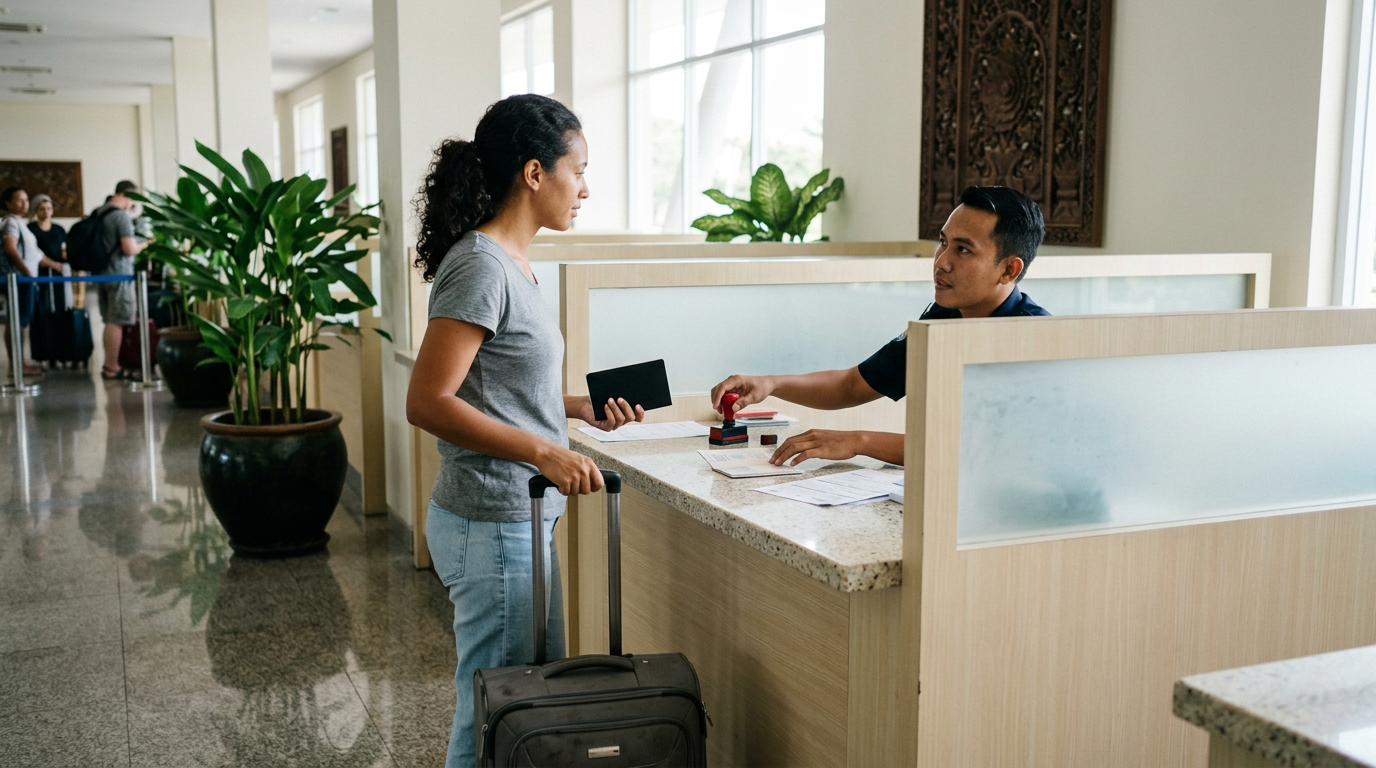
How Strict Is Indonesian Immigration When Arriving in Bali
Arriving in Bali usually runs smoothly for prepared travellers, but Indonesian immigration enforces clear technical and documentary standards. This guide explains how checks are conducted, what rules matter most, and practical steps to avoid delays or refusal. Read on to learn what to expect at Ngurah Rai and how to prepare your passport and supporting documents for a hassle-free entry.
How Bali immigration enforces passport and document checks on arrival
On arrival at Ngurah Rai immigration officers follow a clear two-tier process to verify identity and entitlement to enter. First there is a visible, fast-paced check at the primary counter where passport details are scanned and cross-checked against the airline manifest and electronic immigration systems. If anything looks irregular, a secondary process begins for closer review. Understanding these steps helps you respond calmly and keep the line moving.
Primary arrival inspection
At the initial desk officers verify the passport photo against the traveller, scan the machine readable zone and data page, and read visa endorsements. They confirm passport validity and the presence of at least one unused visa page for entry stamps. Officers will also verify any e VOA (electronic Visa on Arrival) or VOA (Visa on Arrival) entries against the national database. Simple issues are resolved here and travellers proceed to baggage claim.
Secondary checks and questioning
When documents or travel details raise questions, travellers are directed to a secondary area for additional checks. Staff may request onward tickets, proof of hotel booking and evidence of sufficient funds. Questions typically focus on length of stay and purpose of visit. Officers may photograph the traveller again and re-scan documents to rule out forgery or inconsistencies.
Consequences and appeal options
If a passport is damaged, expired, or flagged for irregularities, entry can be refused and the traveller may be held for processing until return travel is arranged. Officers will generally explain the reason and provide written instructions for appeal or return. Any costs for removal or deportation are the traveller’s responsibility and must be settled before departure. Preparing documents properly in advance is the most reliable way to avoid these outcomes.
Presenting a clean passport valid for travel, clear proof of onward plans, and calm, cooperative answers will usually ensure a smooth immigration clearance. With that in mind, the next section explains the key passport validity requirement that many travellers overlook.
The six-month passport validity requirement explained
Indonesia requires visiting passports to be valid for at least six months beyond the traveller’s arrival date, and this is enforced both at airline check-in and at Ngurah Rai immigration. Calculate six months forward from your landing date and confirm the passport expiry falls after that day — for example, arriving on 1 March 2026 means your passport should be valid through at least 1 September 2026. Airlines frequently refuse boarding when validity is short, so renewing before travel is the most reliable option.
Immigration considers passports expiring within the six-month window as non-compliant and may deny entry even if you hold a valid visa or e VOA. Very limited exceptions exist, such as official diplomatic travel, but routine tourists and business travellers should not expect leniency. If your passport approaches the six-month threshold, arrange an expedited renewal with your issuing authority and travel with the new document; appointment confirmations or renewal receipts do not guarantee boarding or entry. If you discover short validity while abroad, contact your embassy for emergency travel documents, but be aware these are not always accepted for Visa on Arrival.
Practical steps to avoid problems include checking the expiry date when booking flights, renewing when fewer than six months remain, and ensuring your passport has at least one unused visa page for stamping. Being proactive prevents being turned back or placed on a return flight at your own cost.
With validity addressed, the condition of the passport itself is the next major factor immigration officers review.
Why damaged or altered passports can lead to entry refusal
Immigration officers evaluate not only the details in your passport but also its physical integrity. Damage or visible alterations raise immediate concerns about identity verification and document authenticity, and that can be enough for officers to refuse entry.
Small defects can have large consequences because modern border control relies on readable security features and the MRZ (machine readable zone). If a page is torn, soaked or shows signs of alteration, the officer cannot confirm your identity or travel history with confidence.
- Unreadable machine readable zoneIf the MRZ is smudged, torn or water-damaged, automated scanners fail and manual checks take precedence, often triggering further inspection.
- Altered personal informationHandwriting additions, taped repairs over text, or mismatched fonts near the data page signal tampering and prompt refusal until provenance is proven.
- Obscured or replaced photoA photograph that is peeled, cut or glued in place prevents reliable facial comparison and undermines the primary visual identity check.
- Missing or detached data pageIf the biographical page is loose or missing, key identifiers cannot be verified and entry will likely be denied.
- Damaged security featuresTorn holograms, warped laminates or a damaged chip on biometric passports remove safeguards officers rely on to detect forgeries.
Consequences range from secondary questioning to refusal of entry and an enforced return at the traveller’s expense. Presenting copies or explanations does not guarantee acceptance. Inspect your passport before travel, replace it if any security element is compromised, and store it in a protective sleeve — proactive renewal is the simplest way to ensure a smooth arrival in Bali.
Next, learn the specific technical passport standards officers check that are often overlooked by travellers.
Technical passport rules including blank pages and machine readable zones
Border control in Bali follows strict technical passport standards to ensure secure, fast processing. Officers verify more than name and expiry date; they confirm the passport meets specific layout and data standards so scanners and staff can confirm identity and travel entitlement without delay.
Blank page and stamping requirements
Immigration requires at least one full unused visa or endorsement page for entry and exit stamps; the inside cover does not count. If all suitable pages are filled, travellers risk refusal or being asked to show an alternative travel document. Airlines commonly enforce the same rule at check-in and will deny boarding if no blank page is available, so plan ahead by counting visa-style pages and renewing if necessary.
Machine readable zone and scanner compatibility
The MRZ (machine readable zone) must be intact and legible. This two-line data block allows automated systems to extract biographic details and the passport number quickly. Smudges, tears or stickers over the MRZ lead to manual checks and may trigger secondary inspection. Biometric passports include chips that must be readable; ensure the data page is flat and avoid magnetic protectors that can interfere with chip reading during arrival.
Photo page integrity and security features
Officers check the photo area for signs of replacement, alteration or tampering. Holograms, laminates and microprinting are used to verify authenticity and must not be obscured. A loose or damaged data page undermines these security checks. Keeping your passport clean, undamaged and with the necessary blank pages and readable MRZ reduces the risk of delay. If in doubt, arrange renewal or consult your issuing authority well before travel to Bali.
Having covered passport standards, the next section outlines why temporary travel papers are frequently restricted for Visa on Arrival processing.
Why emergency and temporary passports are often ineligible for Visa on Arrival
Emergency and temporary travel documents are issued to help people return home or continue urgent travel when an ordinary passport is lost or stolen. Despite their usefulness, these documents lack several features that immigration authorities rely on for Visa on Arrival processing. As a result, travellers holding these documents may find airlines refuse boarding or Indonesian immigration deny the VOA (Visa on Arrival) at the counter.
Practical reasons explain the restriction. Emergency passports frequently have short validity periods that do not meet the six-month rule and may lack a full set of visa pages or a readable MRZ. Many are printed on simplified stock with fewer security elements and no biometric chip, which reduces the ability of automated systems to confirm identity and detect fraud. When officers cannot verify a document quickly, they escalate to secondary checks or refuse entry.
Policy and database limitations also matter. Standard passport series are encoded in international systems that allow quick cross-checks against visas and immigration records. Temporary documents sometimes use different coding or lack the travel history authorities expect. Some countries specifically require a standard passport for VOA issuance, so travellers with emergency papers may need a visa obtained prior to arrival.
To avoid last-minute problems, renew your full passport well before travel whenever possible. If you must travel with an emergency or temporary document, contact your issuing embassy and the Indonesian consulate for guidance and obtain a visa in advance if advised. Present clear evidence of your travel plans and cooperate calmly with airline and immigration staff to reduce the chance of refusal and costly return travel.
With document readiness covered, the final section explains what to expect at the airport itself.
What to expect at Ngurah Rai DPS airport during immigration
After you disembark, follow signs to the immigration hall at DPS (Ngurah Rai International Airport) where counters are often arranged by nationality and visa type. Counters will scan the MRZ and verify any e VOA or preapproved visa entries against the national system. Be prepared to present your passport, the passenger arrival card if required, and any printed e VOA receipt or onward ticket. Officers perform a visual identity check and may photograph you or record biometric data depending on nationality and visa. If everything is in order you will usually receive an entry stamp on a blank visa page; having documents ready speeds the process considerably.
Queue times vary with flight schedules, from about 15 minutes during quiet periods to more than 90 minutes after large international arrivals. If an officer has questions you may be directed to a secondary interview area for further document checks or to show proof of accommodation and funds. In rare cases travellers with irregular documents can be refused entry and arranged for return travel at their cost. To reduce risk, arrive with a passport valid beyond six months, at least one unused visa page, proof of onward travel and clear hotel bookings. Staying calm and cooperative, answering questions concisely, and following officer instructions generally results in a smooth clearance through Ngurah Rai immigration.
If you want help arranging local accommodation or airport transfer options to minimize arrival stress, consider browsing https://www.balivillahub.com/en for villa listings and local services that match your itinerary. Planning your arrival logistics in advance complements document readiness and makes for a much smoother start to your Bali stay.