How to avoid high currency exchange fees in Bali?
Bali Villa Hub
2/23/2026
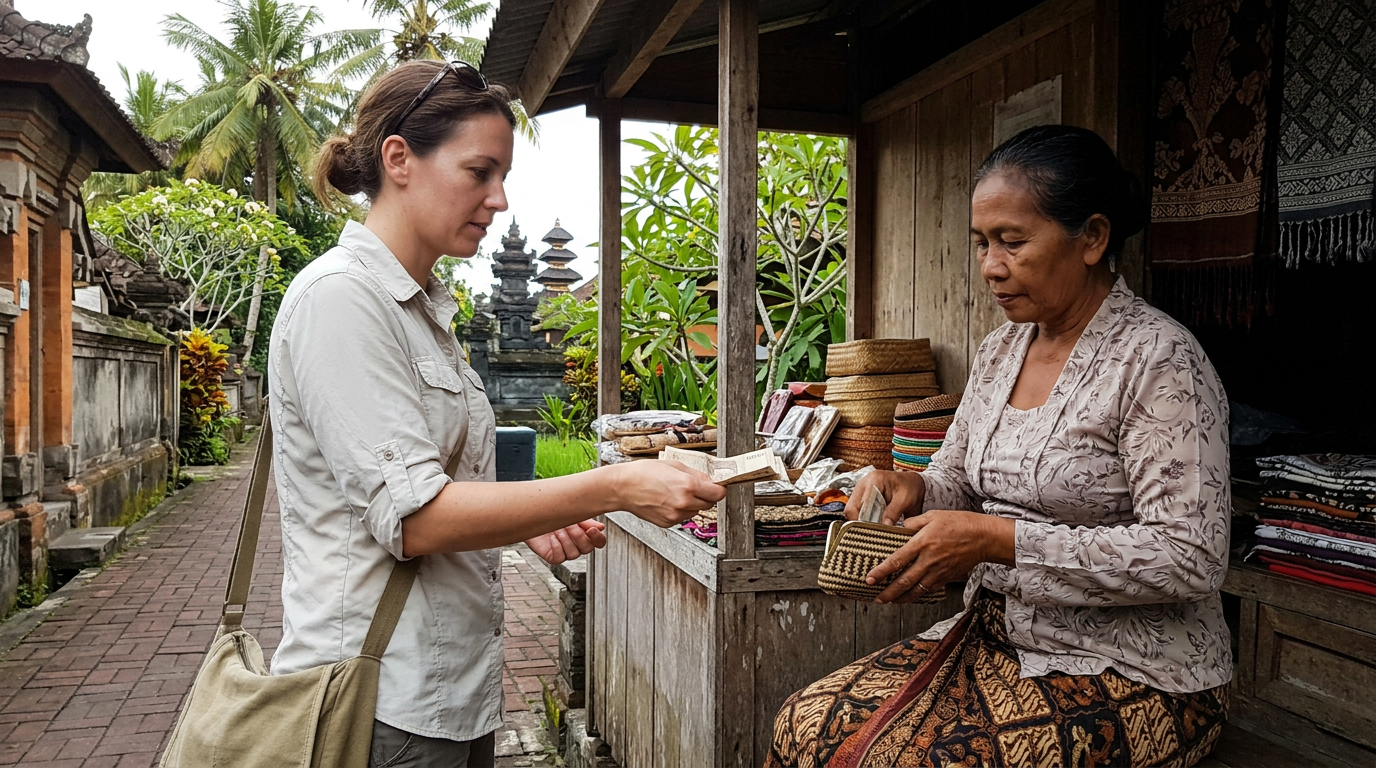
How to avoid high currency exchange fees in Bali?
Traveling to Bali can be a joyful experience, but unexpected currency exchange fees quickly chip away at your budget. This guide outlines practical steps to reduce those costs, explains where to change money, and highlights safety precautions so you keep more rupiah in your pocket while enjoying the island.
Which currency is used in Bali and why it affects exchange costs
The official currency in Bali is IDR (Indonesian rupiah), used for nearly all everyday transactions. Common banknotes include 1 000, 2 000, 5 000, 10 000, 20 000, 50 000 and 100 000 rupiah; coins cover small change. The notes are issued by Bank Indonesia, and visitors arriving with foreign banknotes or cards will typically convert to local cash for taxis, markets and many local services.
Bali’s currency has limited global circulation, which affects exchange costs. Outside Indonesia liquidity is lower, allowing banks and retail money changers to widen the spread between buy and sell rates. Local preferences for cash and the need for small denominations mean travelers often exchange money more frequently, increasing the total paid in fees and commissions.
How you convert money also adds to practical costs. Airport exchanges usually include built-in markups, while ATM (automated teller machine) withdrawals can incur fixed fees plus possible percentage charges from your home bank. Card payments may add foreign transaction fees or be subject to dynamic currency conversion, where merchants offer to charge in your home currency at an inflated rate. These layers stack up, making small purchases more expensive unless you plan ahead.
To reduce costs, focus on obtaining rupiah efficiently: exchange larger sums at reputable authorised money changers or withdraw sensible amounts from ATMs to lower per-transaction fees. Keep a mix of payment methods and carry small denominations for markets and tipping. Understanding IDR (Indonesian rupiah) and these conversion mechanics will help you limit unnecessary charges and stretch your travel budget further.
With that context in mind, next we look at the common places to exchange money and the pros and cons of each option.
Where to exchange money in Bali and the pros and cons of each option
There are several practical ways to obtain Indonesian rupiah, each with trade-offs in convenience, cost and safety. Below are the main options so you can combine methods that suit your priorities.
Airport and hotel exchange counters
Pros: These counters are open on arrival and require minimal effort—handy for immediate small needs. Cons: They usually apply steep markups and offer poorer rates than other providers. Exchange only a small emergency amount at the airport and avoid hotels for larger conversions unless you accept paying extra for convenience.
Authorised money changers and exchange bureaus
Pros: Reputable bureaux in tourist areas often provide the best mid-range rates when they display buy and sell prices and operate without hidden fees. Look for busy shops with clear signage, count notes on the spot and insist there is no commission. Cons: Less reputable stalls and street vendors may offer tempting rates that hide charges or risk scams.
Avoid unmarked street stalls and anyone offering a rate that looks too good to be true. Bring smaller denominations to reduce the need for change, and carry identification if required for larger transactions.
ATMs, banks and card payments
ATMs generally give access to local currency at interbank rates but can charge fixed withdrawal fees and trigger foreign bank charges. To reduce costs, withdraw larger amounts less often while keeping safety in mind. Credit and debit cards are widely accepted at hotels and restaurants but may attract foreign transaction fees and dynamic currency conversion. Always choose to be charged in local currency when given the option.
In practice, balancing a small airport exchange, one visit to an authorised money changer and selective ATM withdrawals will often minimize fees. Keep a mix of payment methods, carry small denominations, and verify every transaction to avoid surprises.
Next, learn practical habits for using ATMs and cards that further reduce costs and risk.
How to use ATMs and cards in Bali while minimizing fees
ATMs and cards are convenient ways to access cash and pay in Bali, but fees and poor conversion choices can quietly erode your travel budget. A few practical habits will sharply reduce the cost of withdrawals and card purchases while keeping money accessible and secure.
Common fee sources include a fixed charge per ATM withdrawal, foreign transaction fees on card purchases, and the terminal option to be charged in your home currency at an inflated rate. Knowing these traps makes it simple to avoid them and keep more money for experiences.
- Notify your bank and review fees. Tell your bank you will travel to Indonesia and confirm the specific charge for foreign ATM withdrawals and point-of-sale purchases to avoid surprises.
- Use ATMs at bank branches and well-lit locations. Bank-owned machines tend to be better maintained and less likely to add extra third-party surcharges than standalone machines in tourist spots.
- Withdraw larger amounts less often. Each withdrawal may carry a fixed fee, so taking out enough cash for several days reduces the total cost. Keep copies of receipts for safety and tracking.
- Always accept charges in local currency. When offered a choice to pay in your home currency, decline and let the merchant charge in IDR (Indonesian rupiah) to avoid poor conversion rates imposed at the till.
- Carry a backup payment method. Have one debit or prepaid card for ATM use and a second card for purchases so you can switch if fees or acceptance become an issue.
Combine selective ATM use with card payments where appropriate and monitor your spending via your banking app or receipts to spot unexpected fees quickly. These small adjustments will noticeably lower costs during your stay.
Having covered ATM and card tactics, the next section explains which foreign currencies to bring to reduce conversion charges.
Which foreign currencies to bring to cut conversion charges
Bringing the right foreign notes can save meaningful money when converting to IDR (Indonesian rupiah). Widely accepted, liquid currencies reduce the spread money changers apply and limit intermediate conversions. Below are practical choices and tips for preparing your notes.
Best universal currencies to bring
USD (United States dollar) and EUR (euro) are the most accepted and easiest to convert in Bali. Money changers commonly offer the tightest rates for clean USD and EUR notes. Bring higher denominations such as 50 and 100-unit bills to reduce handling fees; small notes often attract worse rates.
Make sure notes are crisp and free of heavy marks, tears or tape. Old series or damaged bills are often refused or heavily discounted. Keep denominations in separate clear sleeves so the exchanger can count and verify quickly.
Regional currencies that reduce conversion steps
AUD (Australian dollar) and SGD (Singapore dollar) are good alternatives for travelers coming from those countries. Bali sees many visitors from Australia and Singapore, which boosts local liquidity and keeps rates competitive. If you already hold AUD or SGD, bringing them can avoid an intermediate conversion to USD or EUR.
Always compare the on-the-spot rate at authorised money changers before trading and avoid hotels or street stalls for larger sums. A single conversion to rupiah at a reputable bureau will usually beat converting twice through an intermediate currency.
Notes to avoid and practical preparation
Avoid low-demand or thinly traded currencies such as Indian rupees and South African rand, as they can be rejected or converted at poor rates. Traveller cheques are rarely accepted. Carry a mix of cash and a backup card, and keep a copy of your passport for larger transactions.
In short, bring USD or EUR as primary options and AUD or SGD if convenient; keep notes in excellent condition and change larger amounts at authorised counters to cut conversion charges.
Now that you've chosen what to bring, it's important to follow safety rules to avoid scams and ensure fair exchanges.
Top safety rules and scams to avoid at Bali money changers
Vigilance and simple routines protect your money and peace of mind when exchanging cash in Bali. Scammers often target rushed arrivals, tired travelers and language gaps. Follow clear safety rules and learn common tricks so you avoid losing value and handle exchanges with confidence.
Common scams and how to spot them
One common trick is the switched calculator or altered total: the exchanger shows a favorable number but hands over fewer rupiah. Short changing using old or damaged notes is another tactic because those bills are hard to exchange back. Some operators advertise no commission but add hidden fees at the point of exchange. Be suspicious of aggressive offers that look much better than nearby shops—extreme rates are usually bait for additional charges.
- Choose authorised, busy money changers only. High foot traffic and visible shop signage reduce the chance of fraud and provide a public place to resolve disputes if needed.
- Count every note yourself before leaving the counter. Insist staff recount with you and verify the final amount using a calculator or your phone before walking away.
- Refuse dynamic currency conversion at card terminals. Always opt to be charged in IDR (Indonesian rupiah) to avoid inflated conversion rates applied by the card reader.
- Reject offers that require you to go offsite or meet privately. Scammers use offsite exchanges to switch notes or apply last-minute deductions without witnesses.
Stick to these practices and keep transactions small at risky locations such as airports or night markets. A calm, methodical approach will keep your cash secure and help you get fair value for every exchange.
For practical travel planning, accommodation options and local tips that can make managing money easier during your stay, consider visiting https://www.balivillahub.com/en for trusted villa listings and helpful local information.
By understanding the local currency, choosing the right places and methods to exchange money, using ATMs and cards wisely, and staying alert to common scams, you can significantly reduce currency exchange costs and enjoy Bali without unnecessary financial stress.