How to Report Issues With a Bali Villa Rental
Bali Villa Hub
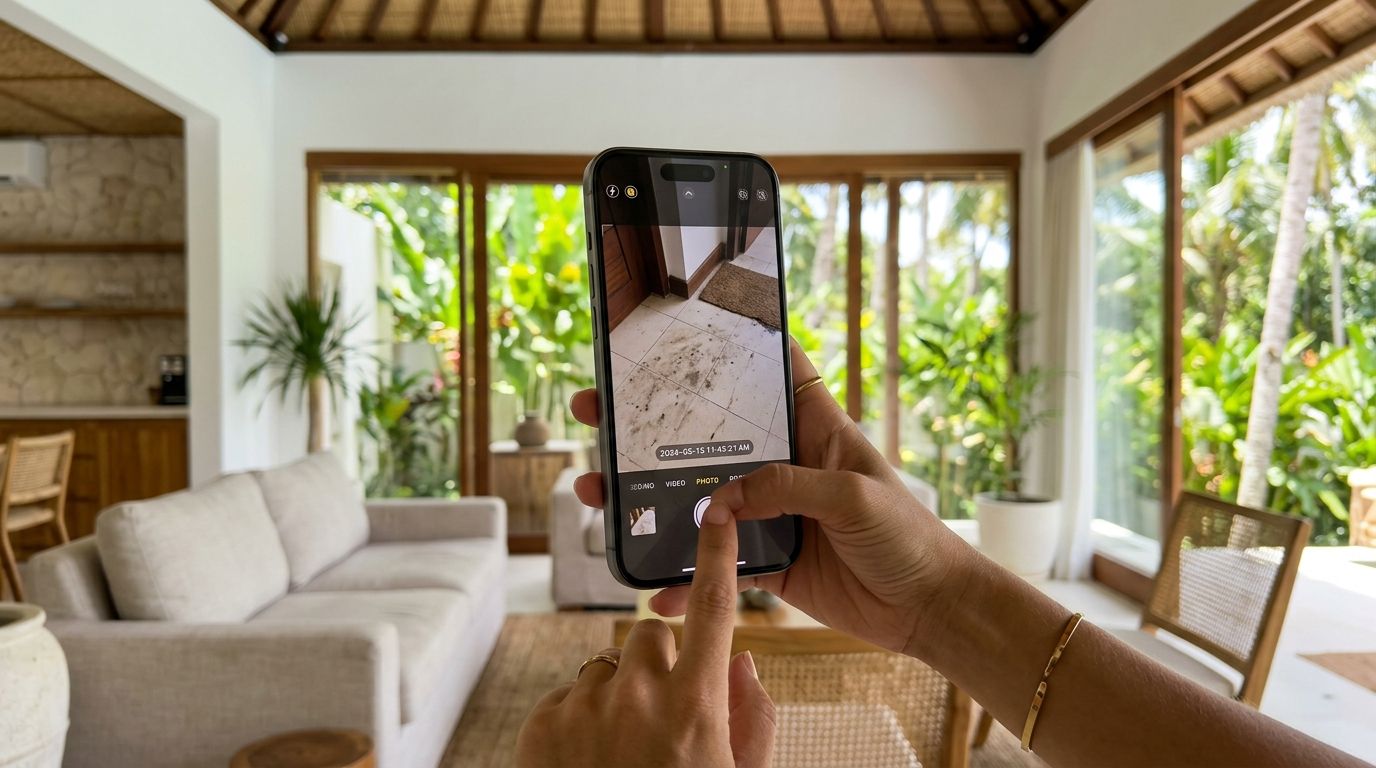
Imagine you land in Bali, drop your bags, and step into your villa expecting a chill break. Then the air conditioning won't cool, the Wi-Fi keeps dropping, or the staff simply won't respond. In that moment, it's easy to think the only option is to complain loudly and hope someone fixes it.
Here's the shift this article helps you make: reporting an issue is not just venting. It's a clear trail of what happened, who you told, and what you asked for. When you document the problem, communicate in writing, and escalate when needed, you turn confusion into action and protect the outcome you're aiming for, whether that's repairs, a cleaner place, or a fair resolution.
You'll learn a practical workflow that fits real travel stress: document what's wrong, notify the right contact, escalate if it stays unresolved, and take steps that help protect your payment and your position. Along the way, you'll also see why Bali-specific issues can escalate faster than people expect, including permit or legal complications and how force majeure situations may affect what happens next. Next, we'll define what "reporting" actually means in a villa context, so you know exactly what to do before you send your first message.
If you want a smoother handle on villa issues from day one, consider using Balivillahub.com to reduce miscommunication and speed up resolution.
What reporting a rental issue really is
Reporting as an evidence trail
Reporting is what you do when you turn a messy situation into something others can actually act on. It means collecting evidence, communicating clearly, and escalating at the right moment. A "complaint" is noise. An evidence trail is a timeline people can trust.
Think photos and videos of what's wrong, written messages with the dates, and proof of what you paid. When you share that, you make it easier for staff or a platform to confirm the issue and propose a fix. It also helps prevent deposit and refund arguments from turning into guesswork.
The right party matters
In Bali villa stays, the people involved can be split across roles. You might contact an onsite manager, a housekeeping team, a property management contact, or the booking intermediary you used. Reporting works best when your message lands with the right decision-maker, not just the nearest phone number.
This is why your first communications should be specific about the problem and request a remedy. If the onsite contact does not respond, you escalate with the same evidence. Keeping that thread consistent helps avoid the slow "tell the story again" loop.
Bali's compliance reality
Some issues are not only about service quality, but about permits and compliance. Bali has rules around renting properties to tourists, and those rules can affect what can legally happen during a stay. If a villa is operating without proper tourism-related permissions, the severity of the situation can shift quickly.
That's why reporting sometimes needs a different level of seriousness. For suspected scams or uncertain compliance, you are not just asking for a cleaner room. You are seeking verification and protection through the appropriate escalation path.[1]
Contracts shape outcomes
Your rental agreement and its clauses matter because they set expectations for what happens when things go wrong. This includes how disputes are handled and what outcomes are possible. A well-written contract also often addresses unpredictable events through a force majeure concept.
So when you report, you're not only asking for help. You're also aligning your evidence with the process your agreement anticipates, including how cancellations, refunds, or rebooking may work in exceptional circumstances.
Once you understand what reporting is, the next step is figuring out which problems are worth escalating quickly and which ones need a calmer, more targeted approach.
Maintenance failures that ruin your stay
When basic systems break, you need action fast. Think air conditioning that doesn't cool, electricity outages, plumbing problems, or anything that makes the villa unsafe to use normally. These issues are escalatable because delays often turn a fixable repair into a whole-day disruption.
Report them to the onsite contact right away, and ask for a clear remedy and timeline. If they are unresponsive or the situation keeps worsening, escalate with your evidence so the next party can verify urgency and handle the resolution.
Cleanliness and pest problems that keep spreading
Dirty floors, bad odors, or visible pests are not just "minor inconveniences." They affect health and comfort, and they tend to get worse if they are ignored. That's why they deserve escalation when initial requests don't lead to immediate improvement.
Send photos or short videos with the time and date, and request a specific next step like deep cleaning or pest treatment. If the villa manager doesn't respond, escalate with the same evidence trail rather than starting over.
Unreliable service or staff who won't show up
Sometimes the villa is fine, but support is not. If cleaning doesn't happen, repairs are repeatedly delayed, or you can't get help when something breaks, your experience becomes unpredictable. That's exactly the kind of problem reporting is meant to surface.
Keep the messages factual and chronological, and ask what can be done and when. If the issue stays unresolved, escalate to the booking intermediary with your proof, because persistence without action is a key signal.
Noise and neighbor complaints that escalate fast
If other people's complaints start to affect your stay, the risk isn't only annoyance. Noise issues can trigger conflict, and in extreme cases they can lead to serious consequences. Reporting helps stop the problem early, before it becomes a "wait until it gets worse" situation.
Make your report clear: note the time, describe what happened, and mention any relevant house rules. You'll usually need the onsite contact to enforce quiet hours, or the right channel to address neighbor-related concerns.
Property damage risks and unfair deposit claims
Damage disputes can feel random, but many start with poor documentation. If something breaks and you don't record the condition, you may later face deposit deductions or accusations. Reporting is escalatable here because it protects you from guesswork.
Document the situation immediately, including arrival condition and any incident details. When a dispute appears, escalate with your evidence bundle so the other side can review what actually happened.
Scams or fraud indicators before and during check-in
Suspicious behavior deserves quick escalation because time matters. Examples include fake "agents," requests for payment outside the agreed process, or vague promises with no proof of legitimacy. Even if you're not sure it's a scam, reporting what you observed helps others verify and act sooner.
Use the reporting path that matches your booking setup and keep every message. If you suspect fraud, escalate promptly with screenshots and payment proof rather than relying on verbal explanations.[2]
Suspected illegal operation and compliance red flags
Some problems hint that a villa may not be operating within tourism-related rules. When the facts you're seeing do not match what you were told, the situation can escalate beyond normal service complaints. Permit or compliance issues can also change how seriously the matter is handled.
In these cases, reporting should focus on verification and protection through the appropriate escalation channel, not just on getting repairs. If it feels like compliance is unclear or questionable, escalate according to severity so the right authorities or processes can evaluate it.
Whatever the problem, reporting works best when your evidence is ready. Once you have that foundation, the next step is understanding how evidence-backed reporting changes the odds of a fair outcome.
Why your evidence matters so much
"Good evidence turns a debate into a decision."
No evidence vs clear evidence
Without evidence, a problem becomes a story that can be argued about. Your messages may be dismissed as personal impressions, and deposit or refund conversations often stall because nobody can clearly verify what happened.
With a clear evidence bundle, the other side can see the facts quickly. Photos, videos, dates, and payment proof help management or a platform confirm the issue and move toward repairs, cleaning, or a fair resolution instead of going in circles.
Late documentation vs immediate documentation
When you document after the stay, details blur and it becomes harder to prove timing. Even if you're right, delayed evidence makes it tough to connect a specific incident to a specific request and response.
Capturing condition on arrival and documenting issues as they occur makes your timeline strong. It helps prevent "it was like that already" arguments and supports deposit handling decisions based on the condition before and after you stayed.
Oral promises vs written proof
Verbal assurances are easy to misunderstand, especially when multiple people handle the situation. If you only rely on chat and spoken explanations, you may later face contradictory versions of what was agreed.
Written proof gives everyone the same reference point. Messages that clearly state what's wrong, what you asked for, and when you reported it create a consistent narrative across channels, which is exactly what platforms and management need to act.
One-off message vs consistent thread
A single message can get overlooked. If you send it once and disappear, the request may not be treated as urgent, and follow-up actions may not happen on time.
Keeping a consistent thread, with the same dates and evidence, signals that you're monitoring the situation. That "trust loop" matters because responsiveness and resolution behavior often influence the outcome, including how deposit issues get handled and what gets recorded for later review.
Next, let's get practical with what to capture and how to organize it with timestamps, so your evidence is ready when you need to escalate.
Build a paper trail with timestamps
Do you want your evidence ready in minutes, not hours? Start by taking quick arrival condition photos so you can show what the villa looked like when you checked in.
Make one simple habit of capturing the condition that matters most to your issue, like floors, bedding, bathrooms, doors, and any visible wear.
When something goes wrong, record it immediately with problem-occurrence photos or short videos. Include the exact area, plus anything that helps explain the situation, like broken equipment or cleanliness problems.
Try to avoid "I'll record later." The longer you wait, the harder it is to prove timing and responsibility.
Write down dates and timestamps in your notes as the incident happens. Even a few lines like "AC stopped at 2:10 PM" can make your timeline clear later.
Keep it simple and factual, and record what you reported and to whom. This helps build a clear evidence bundle for escalation.
Save screenshots of messages and payment proof so you can show the full story. Payment confirmations, transaction records, and booking details help connect the issue to your booking and deposit expectations.
If a security deposit comes into play, these records reduce confusion and make the deposit handling discussion more grounded.
Pull screenshots or copies of your contract terms that relate to remedies, timelines, cancellation, and dispute handling. You don't need to quote everything, but having the relevant parts ready prevents delays when you escalate.
When you later ask for a resolution, pointing to the agreement terms makes your request easier to evaluate.
Create a simple evidence folder on your phone or cloud, so you can send everything quickly. Keep one folder for "arrival," one for "during stay," and one for "payment and contract."
Label files clearly and keep them in date order. Organization is what turns evidence into a usable escalation packet.
Once your evidence is ready, you're not only helping repairs happen. You're also giving yourself protection if the security deposit is questioned, which is the next thing to cover.
Picture this: you arrive at your Bali villa, and the place looks fine at first. An hour later, the air conditioning stops working, and you notice a slightly stained towel in the bathroom. You text the onsite contact, but you also think, "I'll sort it after lunch," and you don't document anything beyond a quick complaint.
Later, when you check out and the team says the AC issue caused extra work, they also claim some damage or request additional cleaning. You're surprised, but the timeline is fuzzy and the condition before and after is not clearly recorded. Without arrival or departure documentation, deposit handling can turn into a debate over wear and tear versus damage, and you lose leverage because nobody can verify what was there on day one.
Now switch the ending. The same AC failure happens, but you capture arrival condition photos, then record the broken unit and the affected area the moment it fails. You also note times in your messages so your report is chronological. When the dispute comes up, you can show what changed during your stay and why the claim should be judged fairly based on evidence, not memory.
That's the core lesson: once deposit expectations become a dispute, strong reporting is what keeps the conversation grounded. With evidence in hand, you're ready for the actual on-stay workflow, where timely documentation and clear communication can prevent problems from growing.
How to report a problem during your stay
1. Notify the onsite contact in writing
When something breaks, don't wait and hope it fixes itself. Send a message to the onsite contact or property manager as soon as possible, and keep it in writing so you can prove timing later.
Use simple wording like: "Hi, the air conditioning stopped working at [time] today. I've attached photos/video. Can you send someone to check it, and please confirm the ETA?" Keep one issue per message so it's easy to act on.
2. Request a specific remedy and a timeline
Your report should include what you want, not just what's wrong. Ask for a specific remedy such as repair, deep cleaning, pest treatment, or enforcement of quiet hours after a certain time.
Try a line like: "Please confirm the repair plan and the time when it will be done. If it can't be fixed today, what is the alternative solution?" Clear requests reduce misunderstandings and speed up resolution.
3. Keep the communication thread consistent
Once you start reporting, avoid resetting the story. Reply in the same thread and refer to the same photos, dates, and incident details so the other side can follow what you've already shared.
If you send updates, add new evidence for new changes only. Simple notes like "still not cooling at 6:30 PM" keep your timeline strong without getting emotional.
4. Escalate to the booking platform if unresolved
If the onsite contact is unresponsive or the problem continues despite your requests, that's your trigger to escalate. Move to the booking platform or agency route with your evidence bundle, not just a new complaint.
Use wording like: "We reported this on [date/time]. No confirmed remedy yet. Attached are arrival condition photos, problem evidence, and message history." A consistent narrative across channels helps the next party verify urgency and move toward a fair outcome.
The most important lever is your first message, because it sets the timeline. Next, we'll cover how to craft that first note so it gets action instead of silence.
"Hi, the air conditioning stopped cooling at 2:10 PM today. I've attached photos and a short video. Can you send someone to check it, and confirm the ETA today"
That kind of message is what gets action. Your goal is to make it easy for the onsite contact to understand the problem instantly, without guessing or digging through details.
Include what's wrong and where it is
State the issue plainly and mention the location. For example: "AC not cooling in the master bedroom," "Bathroom sink leaking under the cabinet," or "Noise from the pool area after 9:30 PM."
When you keep it specific, you reduce back-and-forth and speed up repairs or other solutions.
Add when it started and what you already tried
Next, include the timing and any steps you took. You can write: "It started after the power flickered" or "I restarted the unit at 2:25 PM, but it didn't change." This shows you're reporting responsibly.
Even short details help create a clear timeline, which matters later if deposit handling or refunds are discussed.
Attach the right evidence without overloading
Finally, reference the evidence you attached. Keep it tight: one or two arrival photos, then the clearest problem-occurrence images or short clips. Add a line like, "Photos attached: arrival condition and current issue."
Do not accuse anyone or threaten legal steps in your first message. Stay calm and solution-focused, so the response you get is more likely to be practical.
Use quick templates for common issues
For AC not cooling, send: "Hi, AC is not cooling in [room]. It stopped at [time]. I tried [restart/thermostat adjustment]. Photos/video attached. Can you confirm the ETA and fix plan?"
For cleanliness problems, try: "Hi, the villa has [specific issue] in [area]. I noticed it at [time]. Photos attached. Can you arrange deep cleaning today, and confirm when staff will arrive?"
Request a remedy and a realistic time estimate
End your note by asking for a specific remedy and a believable timeline. Example: "Please confirm whether it will be repaired within 2-3 hours, or what the alternative solution is if not."
Once you send this, you'll be in a good position to escalate only if it stays unresolved, with a consistent narrative across channels.
If you'd rather reduce the back-and-forth, check how Balivillahub.com handles guest communication and maintenance for faster resolution and clearer processes.
Escalate only after a clear attempt
Most people think escalation is the first move, but actually it's the next step after you've given the onboard team a real chance. It's like troubleshooting a phone before calling the manufacturer. You start with the most direct fix, then you escalate once you can clearly show what you tried and what didn't work.
This is your practical timing rule: report to the onsite contact first, keep asking for a remedy, and wait for a confirmed response. If you get no action, or the problem keeps failing despite updates, that's when escalation to the booking platform or agency makes sense.
When you do escalate, stay consistent. Use the same dates, reference the same evidence, and keep the communication thread calm and chronological. If your story changes across channels, it gets harder for anyone to judge the situation fairly, especially if deposit or refund issues come up.
Make the escalation evidence-based, not emotional, and avoid repetitive messages that don't add new facts. Once you've escalated based on documented non-response or persistent failure, the situation will move into the next, more serious phase when things get worse.
Who to contact if things get worse
When severity goes up, your contact route should change fast. A "more serious" problem usually needs a different channel than a normal maintenance request.
Onsite manager or management
Pros: This is the fastest route for repairs, cleaning, noise rules, and day-to-day fixes. When they respond, you can get outcomes quickly without adding extra steps.
Cons: Limitations show up when they are slow, unavailable, or unable to make decisions. If nothing improves after you've reported with evidence, don't keep sending the same message hoping it suddenly works.
Booking platform or agency escalation
Pros: This route helps when onsite support is unresponsive or when you need a documented dispute trail. Platforms and agencies can review your claim and push for resolution based on your evidence bundle.
Cons: The process may take longer than quick onsite fixes. If your messages are vague or your timeline changes, it becomes harder to get a fair outcome.
Tourism or official complaint for severe matters
Pros: Use this when you need a stronger, formal route, such as suspected scam behavior or suspected illegal operation signals. It's also a good option when permit or compliance questions are part of the problem.
Cons: It may not deliver immediate repairs. Think of it as a severity step that triggers investigation or official review, not instant comfort fixes.[1]
Local authorities for safety or criminal threats
Pros: This is the right path for criminal matters or urgent safety threats. If someone is injured, threatened, or a serious incident occurs, authorities are the appropriate first response.
Cons: It is not ideal for ordinary service disputes. For non-criminal issues, using this route too early can distract from the evidence-based resolution process you need.
If a force majeure event is involved, treat it like a special handling case by checking what your rental agreement says about cancellations, refunds, or rebooking logic. Routing alone is not enough, though, and avoiding common reporting mistakes is what protects your outcome next.
What to watch out for when reporting
Police first for every issue
Many people assume the quickest path is to call authorities immediately. It feels safer, and it sounds like it would force fast action.
For everyday rental problems, that usually delays resolution. Start with the onsite contact and escalate through the booking route with evidence. Use authorities only for criminal matters or urgent safety threats.[3]
Platforms automatically resolve everything
It's tempting to believe a booking platform will handle the whole dispute the moment you message them. After all, they are designed for reservations and support.
Platforms often mediate, but your claim still depends on your evidence and timeline. Without photos, screenshots, and a consistent narrative, outcomes can stall. Keep documentation ready and escalate only when needed.
Oral promises are enough
When you're on vacation, written communication can feel extra. A quick conversation seems faster than preparing a detailed message.
Verbal agreements are hard to verify later. A clear written report with timestamps and evidence is what supports repairs, cleaning requests, and deposit handling decisions.[3]
If it's listed, it must be legal
Some guests assume "listed on a major platform" equals compliance. Listing creates a false sense of security about how a property operates.
A villa can still have compliance gaps, and that can change how seriously authorities or officials treat the matter. If you suspect scams or illegal operation signals, report with urgency through the appropriate escalation path.[1]
Booking protections replace evidence
People sometimes rely on protections and dispute policies while skipping documentation. They assume support will fill in the missing details.
Protections can't replace evidence. Your evidence bundle is what makes your story believable and verifiable, especially if the discussion turns to deposits or refunds.
My home country's laws automatically apply
When you're away from home, it feels natural to expect your familiar consumer rules to follow you. That expectation reduces stress in your mind.
Rental outcomes are shaped by local rules and your contract terms, including how force majeure is handled. Treat your report as part of the contract-aligned process and support it with documentation.
Deposit claims are always straightforward
Many people think deposits are returned automatically if nothing "big" happened. It feels fair, so it feels guaranteed.
Deposit disputes often hinge on wear-and-tear versus damage, and timing matters. Without arrival and departure documentation, it's easy for claims to become unfair. The safer approach is evidence-first reporting from day one.[3]