How to verify a Bali villa listing’s authenticity safely
Bali Villa Hub
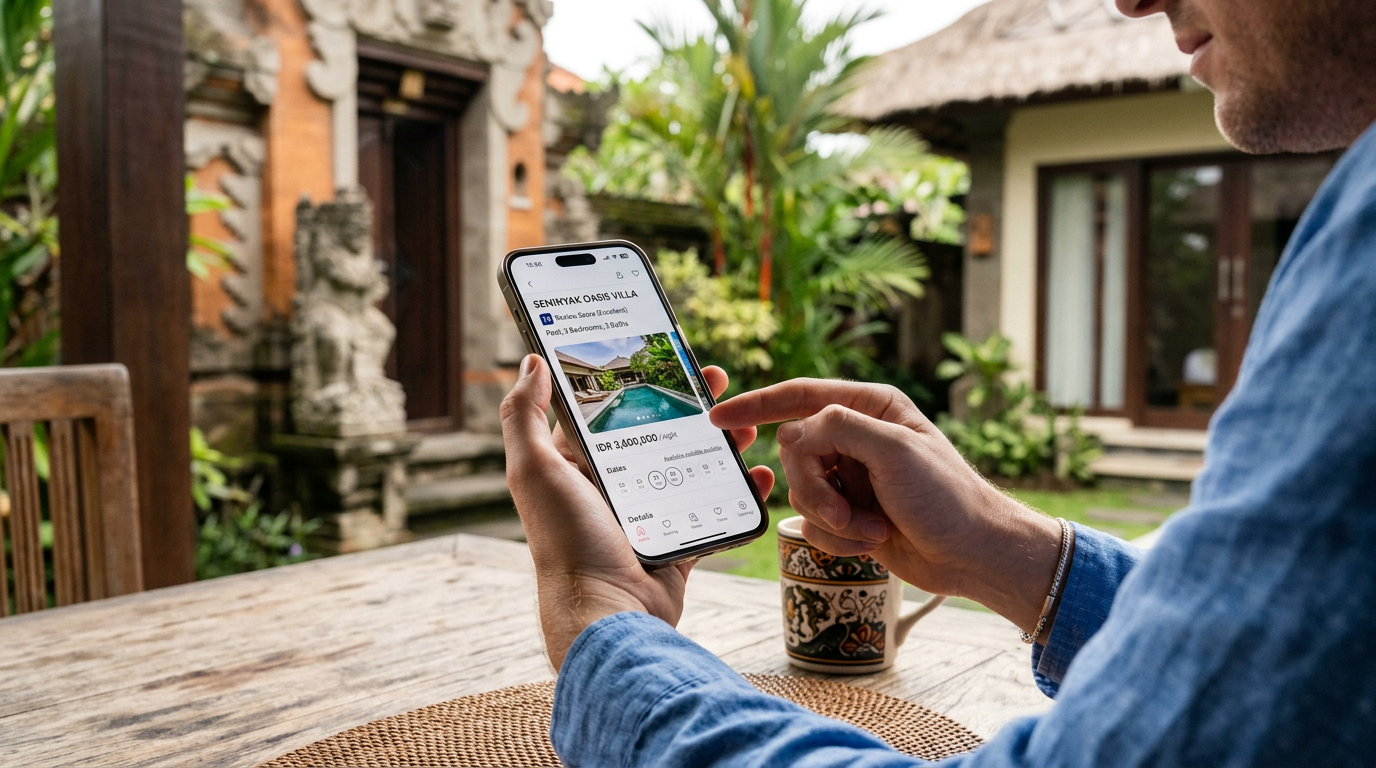
Imagine you find a stunning Bali villa online, you’re already picturing morning coffee by the pool, and the host suddenly says, “Pay now, limited dates.” A few days later you notice the photos don’t quite match what you see, the location details feel fuzzy, or you’re asked to wire money off-platform. That moment of doubt is exactly what authenticity verification is meant to prevent.
In practical terms, verifying a Bali villa listing’s authenticity means confirming three things: the villa actually exists, it matches what’s shown in the listing, and the person contacting you has authorized control to rent it out. A photo that looks great is just marketing. Authenticity is about proof that connects the property, the operator, and the booking terms into one consistent story [Indo Property Hub].
Bali is a high-scam target because listings move fast and details are easy to copy. Scammers can reuse scraped photos, clone a listing under a different operator account, and manufacture urgency so you feel like you’re “running out of time.” Then they push the next step off-platform, often through WhatsApp or bank transfer, where you lose key protections and recovery options [Indo Property Hub].
The good news is you don’t have to rely on vibes. In the next section, you’ll break authenticity into four concrete things you can verify, starting with the property itself, then the operator/control, and finally the documents and payment safety. After that, you’ll get a step-by-step workflow you can follow every time.
Want a safer place to start? Browse villa options on Bali Villa Hub and use the checklist below to verify anything you shortlist
Authenticity verification is not “trust me.” It’s proof. When you’re booking a Bali villa, authenticity means you can tie one physical place to one real operator, with the right paperwork, using a payment path that still gives you options if something goes wrong [Indo Property Hub].
The four things you must verify
Start with four checkable targets: (1) the villa exists and matches the listing, (2) the operator actually has control over the property and can confirm check-in, (3) the seller/agent has legitimacy or rights to rent it (not just a “we can manage it” claim), and (4) the payment method gives you recourse instead of locking your money into a dead end. If any one of those is missing, you don’t really have authenticity, even if the villa looks perfect in the photos [Indo Property Hub].
Why Bali scammers focus on listings
Scammers win because villa content is easy to steal and reuse. They can post scraped imagery, copy descriptions, and clone listings or availability so the property looks bookable while it’s really not connected to the person you’re talking to. Then they add urgency, often asking you to move to WhatsApp and pay off-platform, which reduces your ability to escalate through the original platform’s dispute process [Indo Property Hub].
Recourse depends on how you book
This is the part people underestimate. If you pay in a way that bypasses platform protections, your options after a problem are dramatically smaller. That’s why the report keeps coming back to secure booking steps and written documentation like an itemized invoice and clear cancellation terms, instead of relying on chat screenshots or “send bank transfer now” pressure [Villa Kinaree Estate].
Once you understand these four targets, everything becomes easier to verify. Next, let’s turn those targets into a simple workflow.
How to Verify It Step by Step
Start with the listing context
If you’re getting pushed to pay fast, stop and check where the listing lives. Is it on a reputable booking platform or coming through DMs and WhatsApp? Scams often start on a real-looking page, then move you off-platform once they think you’re committed [Indo Property Hub].
Before you ask for anything else, decide your baseline. A listing you can’t verify through a secure channel is a risk you’re choosing on purpose, not by accident.
Validate the photos before you trust them
Use reverse image search on the villa’s main photos. If the same images show up on other pages, or they look like they come from a different property, you’ve found your first crack in the story [Indo Property Hub].
Then sanity-check details that are hard to copy perfectly, like unique layouts, exterior angles, and consistent design elements across the photo set. Scraped imagery is usually “almost right,” not fully right.
Confirm location with the exact pin
Ask for the full address and the exact GPS pin you should use for arrival. Then cross-check that pin against nearby context on a map, not just the villa name in the caption [Indo Property Hub].
If the host avoids the exact address or keeps giving vague directions, treat that as a practical red flag. You can’t verify a bait-and-switch if you can’t even locate the target.
Get a live video walkthrough
Request a live video walkthrough that shows the entrance, the street context, and the key rooms. This step exists because a real villa leaves a real-time trail, while stolen photos don’t [Indo Property Hub].
During the call, ask the host to point to specific features that appear in the listing photos. If they can’t match what you’re seeing, don’t “hope” it will be correct when you arrive.
Confirm operator control and authorization
Find out who will actually handle check-in and who controls access to the villa. A legitimate operator should be able to explain the arrival process clearly and consistently, with proof they’re authorized to manage the stay [Indo Property Hub].
If they act like you’re asking too much, or they dodge responsibility for meeting you, that’s not a personality issue. It’s an authenticity issue.
Verify booking terms and invoice details
Ask for an itemized invoice with cancellation terms and the full legal entity details, not a “screenshot agreement” that can’t be verified. Written terms matter because they reduce ambiguity and prevent last-minute pressure [Villa Kinaree Estate].
If the host refuses to issue proper documents or can’t explain payment steps clearly, you’re not just losing convenience. You’re losing protection.
Pay only after security checks
Only pay after the property, the operator, and the documentation all line up. Prefer secure and recognized payment paths tied to your booking, and treat any “send money now to this account” request as a stop rule [Indo Property Hub].
A common scam pattern is bank-detail changes mid-chat. If that happens, pause, re-check everything, and don’t continue based on the same thread.
Decide when to stop and walk away
Set your own “no exceptions” moment. Stop if you only get screenshots, if they avoid live video, if the pin doesn’t match, or if they resist giving invoices and terms [Villa Kinaree Estate].
When the story fails any one of the core checks, walk away. The cost of backing out early is always smaller than the cost of getting bait-and-switched on arrival.
Mini-summary: you’re validating Property + operator + documents + payment security. Now you’ll be ready for question scripts that force verifiable answers.
If you want an extra layer of safety, talk to the team at Bali Villa Hub before you send deposits
“Proof that can be verified beats ‘trust me’ every single time.”
Ask who can legally authorize the rental
Copy-paste prompt: “Who is the legal owner or authorized manager, and what document proves you can rent it?” A legitimate host should answer with a clear authorization trail, not vague reassurance. You’re looking for proof that links the person you’re paying to the right to manage the villa [Indo Property Hub].
If they dodge documents, avoid direct answers, or only offer screenshots, treat it as an authenticity warning. In this scam pattern, evasiveness is the signal you need.
Request the exact address and location pin
Use this prompt: “What is the full address and location pin you want guests to use for arrival?” Then compare what they provide to what you see on a map. Authentic listings should let you verify that the arrival location matches the advertised villa, not a random nearby place or a “close enough” area [Indo Property Hub].
If they won’t share the exact pin or keep changing the details, don’t negotiate with the red flag. Stop and re-check before you move further.
Get an itemized invoice with cancellation terms
Ask directly: “Can you send an itemized invoice with cancellation terms and the payment steps?” A real invoice should include stay dates, itemized charges, and cancellation terms in a format you can keep and later reference. The key point is that this is proof, not a chat screenshot [Villa Kinaree Estate].
If they refuse to provide an invoice or rush you to pay before it exists, silence counts as an answer too. “We’ll send it later” is a classic path to getting stuck.
Before you pay anything, request these documents and details while you’re still using a verifiable channel, not after you’ve moved to personal chats or deposits.
If you want to be extra safe, know the red flags people miss.
Red Flags and Common Mistakes
“A major platform means you’re safe”
Most people assume a big platform automatically equals safety. The catch is that scammers can still clone listings or contact you to move payment off-platform, which weakens the protections you rely on [Indo Property Hub].
If you see “pay by transfer to me” pressure, it’s often the moment the scam tries to take over the process.
“Positive reviews alone prove authenticity”
That feels true because reviews look like solid proof. In practice, review “dumps,” repetitive phrasing, and missing specific details can make reviews misleading, especially when combined with scraped imagery or cloned pages [Indo Property Hub].
Relying on reviews only makes you skip the checks that actually confirm the same villa exists.
“WhatsApp is harmless if they’re responsive”
It’s easy to trust a fast replier. But WhatsApp is also a common tool to shift you away from verifiable records and secure dispute paths, pushing you toward bank transfers and untraceable changes in payment details [Indo Property Hub].
The mistake is treating responsiveness as identity proof.
“Photos and an address guarantee it”
It’s tempting to believe pictures and a pin mean the villa is real. Scammers often reuse scraped photos and then pull a bait-and-switch when you arrive, meaning the location or the actual property doesn’t match what you booked [Villa Kinaree Estate].
If you don’t verify live, you’re trusting someone else’s visuals.
“An official-looking document means it’s real”
Documents look credible at first glance. The problem is that official-looking files can be outdated, incomplete, or even fabricated, and you still need proof that the person offering the rental is truly authorized [Indo Property Hub].
Skipping independent verification can trap you with no real leverage.
“Credit card payment fully protects you”
Many people think credit cards solve everything. They help, but they’re not a magic shield, and prevention still matters because scams aim to get you to pay fast and move off the safest channel [Indo Property Hub].
The mistake is relaxing verification steps because you have a chargeback option.
“Low price is just a deal”
That bargain impulse is exactly what scammers count on. Unusually low pricing, combined with urgency and pressure, is a classic lure that pushes you to pay before you can confirm existence and control [Indo Property Hub].
Paying quickly can turn a “deal” into a total loss.
“Any villa rental must be legal”
It sounds reasonable to assume most rentals are properly compliant. But not every villa is necessarily operating with the right permissions and legitimacy, so “available to book” doesn’t automatically mean “legally safe” [Indo Property Hub].
The mistake is booking without verifying the operational legitimacy of the listing.
Next, here’s what to do if something doesn’t add up.
If Something Feels Off, Do This Next
Act fast. The speed matters because banks and platforms have better chances to pause, dispute, or investigate when you move quickly after the first red flag appears [Indo Property Hub].
Stop the transaction immediately
Don’t debate or “wait for the next message.” If bank details change, if they refuse documents, or if they push you toward more off-platform payment, freeze the process now [Indo Property Hub].
- ✅ Cancel further payments and stop sending money
- ✅ Refuse new bank details or new payment requests
- ✅ Pause any deposit discussions until proof aligns
Collect evidence while it’s still fresh
Gather everything you can. Scammers rely on delays and missing context, so keep records while the details are still easy to retrieve [Indo Property Hub].
- ✅ Save transaction IDs and payment references
- ✅ Export chat logs and collect the listing URLs
- ✅ Record bank details used and screenshots of promises
Notify the right parties
Contact your bank or payment provider first, then notify the booking platform. Do it immediately so they can review the transaction while it’s still within action windows [Indo Property Hub].
- ✅ Call or message your bank right away to dispute
- ✅ Report the listing and the host to the platform
Report through proper channels
Then file formal reports so there’s an official trail. The report specifically points to lodging complaints with resources like Scamwatch/ReportCyber and making a local police report when needed [Indo Property Hub].
- ✅ Submit scam reports and keep your case IDs
- ✅ File a local police report if you’re in Bali
Prevention reminder: verify first, pay second. Save this checklist, share it with a travel partner, and use the question scripts before paying any deposit.
To double-check your shortlist before you commit, reach out to Bali Villa Hub and ask for guidance on the fastest verification steps