Is Bali strict on dress code?
Bali Villa Hub
2/26/2026
Is Bali strict on dress code?
Bali balances warm hospitality with strong cultural traditions, and what you wear can affect how smoothly your visit goes. A few simple clothing choices show respect, help you avoid awkward moments, and let you enjoy temples, villages, beaches, and nightlife with confidence. The sections below explain everyday expectations, temple-specific rules, where beachwear is acceptable, official guidance and enforcement, and practical packing tips to keep your trip comfortable and considerate.
Bali dress etiquette and local expectations
Bali welcomes visitors but expects a level of cultural sensitivity in dress. Understanding these basic expectations helps you blend in, avoid unintentional offense, and enjoy authentic experiences—from village walks to temple visits.
Respectful daily attire
For everyday sightseeing, choose lightweight clothing that covers the shoulders and midriff in public spaces. Beachwear like short shorts and crop tops is common on the sand but is less appropriate in markets and local villages, where modesty is appreciated.
Men should avoid sleeveless gym tops in community areas, and women may prefer knee-length skirts or trousers when entering shops or attending local gatherings. These small adjustments reduce the chance of causing offense and make interactions with locals smoother.
Temple and ceremony expectations
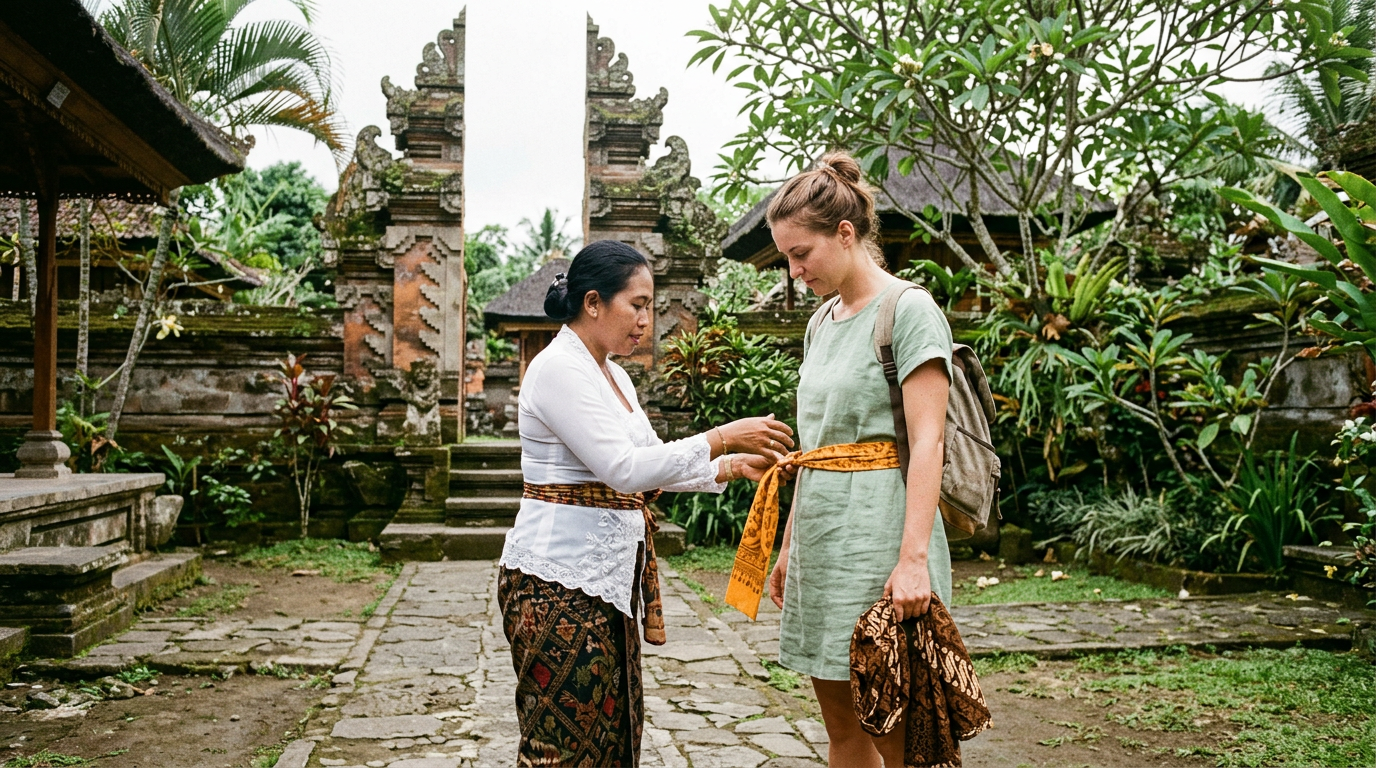
Temples require fuller coverage and a conservative silhouette. Bring or rent a sarong and sash to wrap around the waist; shoulders should be covered and long trousers or a long skirt are recommended for both men and women.
Footwear is removed before entering inner temple grounds. Avoid loud patterns and revealing cuts when attending ceremonies or photographing rituals. Following these norms helps you show proper respect and participate in sacred spaces without disrupting worship.
Practical interactions and local norms
Carry a lightweight scarf to cover shoulders quickly when needed and choose breathable natural fabrics for comfort in the humidity. When unsure about appropriate attire, follow the lead of locals or ask politely—most people appreciate the effort to respect their customs.
With daily etiquette in mind, the next section explains the specific dress rules you should follow when visiting temples and attending religious ceremonies.
Dress rules for temples and religious ceremonies
Visiting a Balinese temple is both a cultural and spiritual experience; dress communicates respect more clearly than words. A few clear rules will help you enter sacred spaces appropriately and avoid disrupting ceremonies.
Basic attire requirements
Cover shoulders and knees for both men and women. Long trousers or long skirts are preferred, and sleeved shirts are safer than tank tops. Avoid sheer fabrics and low-cut garments. Children should follow the same standards as adults when entering inner temple courtyards.
Sarongs sashes and ceremonial garments
Most temples expect a sarong wrapped around the waist plus a sash tied firmly above the hips. If you do not bring one, you can usually rent or borrow a sarong at the entrance for a small fee. For formal ceremonies women often wear a kebaya blouse and men may wear a traditional udeng headcloth when participating in rituals.
Conduct footwear and photography
Remove shoes before stepping past the outer shrine boundary and follow signage or local direction about where footwear must be left. Do not step over offerings placed on the ground and avoid standing on temple thresholds. Always ask permission before photographing worshippers or priests and refrain from using flash during rituals.
Respectful dress and modest behaviour allow you to witness ceremonies comfortably and be welcomed by locals. A lightweight sarong and a scarf are easy to carry and make a big difference when visiting multiple temples in one day. With temple rules clear, the next section looks at where beachwear and resort clothing are acceptable.
When beachwear and resort clothing are acceptable
Beachwear and relaxed resort clothing are perfectly fine in many parts of Bali. On sandy beaches, around hotel pools, and inside private villas you can dress for sun and comfort while being mindful of local sensibilities when you step away from those areas.
Keep a lightweight cover-up or sarong handy for quick transitions from shore to street. When moving into public spaces such as markets, temples, or village streets, switch to clothing that covers shoulders and knees to show respect.
- Beach and surf zones are the primary places for bikinis, board shorts, and rash guards. These garments are acceptable while sunning, swimming, or learning to surf; avoid topless sunbathing in public areas.
- Hotel pools and private villas welcome relaxed attire for lounging and poolside dining. If you head to a hotel restaurant or shared lobby, add a shirt or cover-up for a neater appearance.
- Beach clubs and seaside bars generally allow smart-casual beachwear in daytime and more refined casual wear after sunset. Check dress notes for upscale venues and carry a light shirt or dress to meet entrance expectations.
- Boat trips and island excursions suit swimsuits and quick-dry shorts paired with sun-protective layers. For landings in villages or visits to small temples near beaches, put on a sarong and a top that covers shoulders.
- Spa, yoga, and wellness sessions at resorts accept sportswear, shorts, and fitted tops designed for movement. Bring modest wrap clothing for arrival and departure to respect shared resort spaces.
Simple choices let you enjoy beaches and resort life while avoiding surprises when you leave them. Next, read about how these expectations are supported by official guidance and local enforcement.
Official guidelines and recent enforcement measures
The Balinese provincial government and local customary councils have clarified expectations for visitors with formal guidance that stresses modesty in public spaces and respect at places of worship. Official statements remind tourists to cover shoulders and knees when entering temples and village zones and to avoid public nudity or overtly sexual behaviour that disturbs local communities. Enforcement blends formal law and customary practice with desa adat regulations maintained by village councils and temple committees. Practical measures include visible signage at temple entrances and tourist hubs, mandatory sarong and sash requirements for inner temple courtyards with affordable rental options on site, and routine checks by pecalang and local authorities during major ceremonies. Nightlife and beach areas are also subject to oversight where venue management and police can refuse entry to patrons wearing offensive or indecent clothing and can remove those who do not comply. Recent actions have emphasized communication first and fines or administrative measures second. Visitors who persistently ignore rules may face fines imposed by local governments or temporary bans from certain venues and events while serious offences that involve disorderly conduct can lead to police involvement. The combined approach aims to protect sacred rituals and community life without deterring tourism. For visitors the implications are straightforward and practical: keep a clean sarong or scarf in your bag, accept rental sarongs when offered, observe no-photography zones, and follow instructions from temple stewards and security staff.
Understanding official guidance helps you pack and plan appropriately. The final section offers practical packing and outfit tips for common activities so you can move smoothly between different settings.
Practical packing and outfit tips for common activities
Pack with intent so you can move easily between Bali beaches, temples, hikes, and evenings out. Choose lightweight, breathable pieces that layer well and include a few specific items that solve the most common dress issues on the island.
Core items to bring and how to use them
Bring one sarong and one sash for temple visits and quick modesty when entering village areas. Pack two shirts that fully cover the shoulders, one pair of long lightweight trousers, one pair of shorts for the beach, and a smart-casual outfit for dinners. Include one pair of closed-toe hiking shoes and one pair of sturdy sandals that slip off easily at temple steps.
Carry a small day bag with a compact rain jacket, a foldable scarf for shoulder coverage, reef-safe sunscreen, and a dry pouch for electronics. Store the sarong and scarf near the top of your bag so you can change before stepping into markets or sacred sites.
- Temple visits: tie the sarong and sash above the hips and wear a shoulder covering. Avoid sheer fabrics and keep shoes off inner courtyards.
- Beach to street: use a light cover-up or shirt over swimwear and quick-dry shorts. Swap flip-flops for sandals with a heel strap when terrain becomes uneven.
- Active adventures: choose breathable trousers, a sun hat, and closed-toe shoes with good grip. Pack an extra pair of socks and a small blister kit.
- Evenings and dining: wear a neat casual outfit such as a cotton dress or linen shirt and trousers, and keep a lightweight scarf to add coverage if needed at family-run restaurants.
These deliberate pieces keep packing light while ensuring you are prepared for Bali etiquette and varied activities. A compact toolkit of a sarong, scarf, one smart outfit, and suitable footwear covers almost every situation. If you are arranging accommodation that respects local customs and offers practical advice for visitors, consider checking https://www.balivillahub.com/en for villa options and local guidance to make your stay comfortable and culturally aware.
With a few thoughtful choices, you can enjoy Bali comfortably while honoring local expectations—helping you connect more meaningfully with the island and its people.