Is Eating Out in Bali Affordable for Travelers and Expats?
Bali Villa Hub
2/25/2026
Is Eating Out in Bali Affordable for Travelers and Expats?
Bali balances incredible culinary variety with a range of prices that suit backpackers, long-term expats and luxury travellers alike. This article walks through typical meal and drink costs, how prices change by region, where to eat for every budget and practical tips to get the best value. Read on to plan realistic daily budgets and make confident choices while dining on the island.
Average meal costs in Bali from warungs to restaurants
Eating out in Bali can be remarkably affordable while still offering excellent flavour and variety. Below are typical prices you can expect at the main types of places locals and visitors prefer so you can budget with confidence.
Warungs and street food
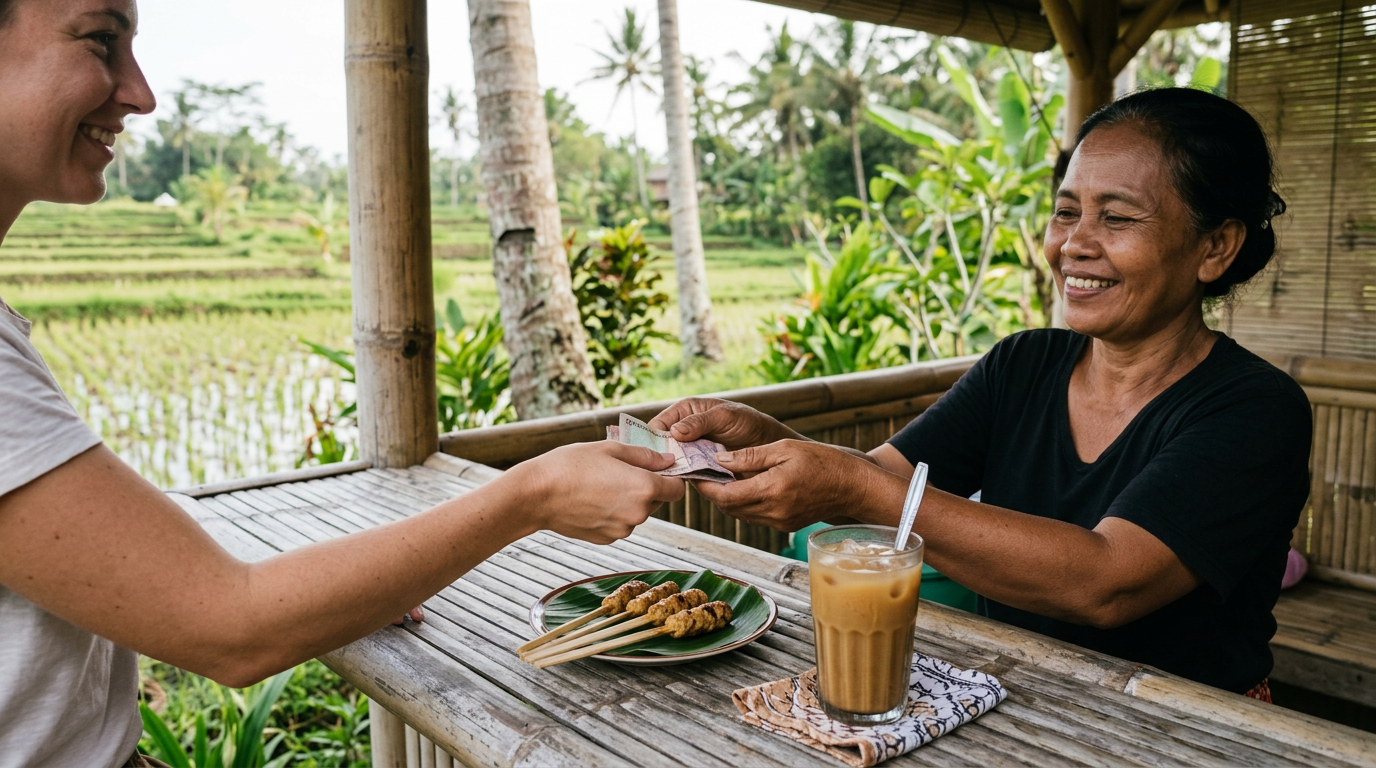
Local warungs serve the most economical meals. A simple plate of nasi campur or mie goreng usually costs IDR (Indonesian rupiah) 15,000 to IDR 40,000 per serving, roughly 1 to 3 US dollars. Snacks and street items like pisang goreng and small satay sticks often fall between IDR 5,000 and IDR 20,000.
Cafés and mid range restaurants
Cafés and mid‑range eateries that cater to tourists and locals charge more for greater variety and comfort. Expect main courses from IDR 45,000 to IDR 120,000 (about 3.50 to 8.50 US dollars). Shared appetizers, salads and a coffee each can make a casual meal cost around IDR 80,000 to IDR 180,000 for two people.
Fine dining and special experiences
Fine dining and tasting menus present a different scale. A multi‑course meal at an upscale restaurant will typically start at IDR 250,000 per person and can reach IDR 1,000,000 per person for signature tasting menus. Many beachfront and hotel restaurants add value with views and service but reflect those higher prices.
In short, you can comfortably eat well on IDR 50,000 a day if you mix warungs and cafés, or choose to spend more for occasional fine dining. Most visitors find Bali offers consistent value for money across all budgets. How much you pay, however, depends strongly on location, which the next section outlines.
How food prices vary across Bali's regions and towns
Bali is not a single price zone. Proximity to beaches, tourist demand, local purchasing power and transport costs all shape what you pay for a meal. In general the busiest coastal districts are the most expensive and the island interior and the remote north and east coast tend to be cheaper.
In Kuta, Seminyak and Canggu expect the highest everyday prices. A local rice plate at a simple warung will typically be IDR 25,000 to IDR 60,000 while a café main dish commonly falls between IDR 70,000 and IDR 180,000. Evening meals at popular beachfront or western‑style restaurants usually run from IDR 150,000 up to IDR 600,000 per person depending on setting and imported ingredients.
Ubud and the central highlands sit in the middle. Traditional markets and local eateries keep costs low with staple dishes from IDR 15,000 to IDR 45,000. Boutique cafés and wellness‑focused restaurants that cater to visitors charge more with mains from IDR 50,000 to IDR 150,000. Denpasar and Sanur offer a mix where local choices are inexpensive while tourist‑facing venues raise the average spend.
The north and east, including Lovina, Amed and Karangasem, are the most economical for everyday dining. Warung meals commonly cost IDR 10,000 to IDR 35,000 and seafood grills in small coastal towns offer fresh plates at lower prices than southern tourist hubs. As a planning rule of thumb, typical daily food budgets for most travellers range from IDR 100,000 to IDR 300,000 depending on how often you choose cafés or fine dining and which parts of the island you visit. Next, consider how drink pricing differs from food.
What drinks and alcohol cost at local venues
Drinks show a wider spread than food when it comes to pricing in Bali. You can enjoy very cheap soft drinks and local beer at small warungs or pay premium prices at beachfront clubs and hotel bars with views and live music. Below are typical price ranges you will see in local venues, with notes on where to find the best value and when to expect a premium charge.
- Bottled water and soft drinks are inexpensive at local stalls, commonly IDR 3,000 to IDR 15,000. Convenience stores and cafés charge toward the upper end, and bottled mineral water in tourist areas can reach IDR 25,000.
- Cafés and coffee shops serve regular black coffee from IDR 10,000 to IDR 30,000 while specialty espresso‑based drinks range from IDR 30,000 to IDR 60,000. Cold drinks and smoothies typically sit in the IDR 35,000 to IDR 80,000 band.
- Local beer in warungs is often IDR 25,000 to IDR 50,000 per bottle or glass. Trendy bars in Seminyak and Canggu commonly charge IDR 50,000 to IDR 120,000 for a beer depending on whether it is local or imported.
- Cocktails at mid‑range bars are usually IDR 70,000 to IDR 150,000 each. Beach clubs, rooftop bars and hotel lounges typically price cocktails from IDR 150,000 up to IDR 300,000 when service and ambiance are included.
- Spirits and local distilled drinks vary widely. A small bottle of local spirit can cost IDR 30,000 to IDR 100,000 while imported spirits and wine in supermarkets start around IDR 150,000 and rise for premium labels in hotel outlets.
To keep costs down, choose local venues, look for happy hour offers and buy mixers or bottles at supermarkets if you plan to drink more. If you prioritise atmosphere you should expect to pay more for the view and service, but Bali still offers good value across the range. The following section shows where to find the right setting for your budget.
Where to eat on any budget - street food, cafés and fine dining
Bali serves outstanding food for every wallet. This guide breaks down practical options so you can decide when to save and when to splurge while experiencing authentic flavours and memorable settings.
Street food and local warungs
For the lowest prices and the purest local flavours choose warungs and street vendors. A plate of nasi campur or mie goreng typically costs IDR 10,000 to IDR 40,000. Look for busy stalls near markets, temple grounds and transport hubs where turnover is high and ingredients are fresh. Small snacks and satay are ideal for tasting many items without spending more than a few thousand rupiah per piece.
Cafés and casual restaurants
Cafés and mid‑tier restaurants offer comfort and menu variety with mains from IDR 45,000 to IDR 150,000. Expect higher prices in Seminyak, Canggu and popular parts of Ubud. Coffee culture is strong so a specialty coffee and a cake will often total IDR 50,000 to IDR 120,000. These venues are a good compromise when you want ambiance and reliable hygiene at a reasonable price.
Fine dining and special experiences
Upscale dining and tasting menus begin at about IDR 250,000 per person and can exceed IDR 1,000,000 for signature experiences. Beachfront restaurants and hotel dining add service flair and premium ingredients. Be aware that many higher‑end restaurants add a service charge and government tax with a combined effect often around 15 to 21 percent of the bill.
Mix and match to get the most from Bali. Eat local for everyday meals and choose one or two refined dinners to celebrate an occasion. The next section offers practical tips to save without missing out on the island's best flavours.
Tips to cut costs and get the best value when dining out
Dining well in Bali does not require overspending. With a few practical habits you can enjoy authentic flavours while keeping your daily food bill reasonable. The following advice helps you recognise genuine value and avoid tourist premiums without losing the pleasure of eating out.
Smart timing and ordering
Choose lunch over dinner when possible. Many restaurants reduce prices at midday and offer set plates that are smaller and cheaper than evening mains. Look for daily specials written on boards or ask staff about cheaper options that use local produce.
Share plates and order from the local section of the menu. Local dishes use ingredients grown nearby so they tend to be fresher and less expensive than imported choices. Be aware that many higher‑end places add a service fee and government tax which together often total about 15 to 21 percent of the bill.
- Eat at warungs for everyday meals. A reliable warung gives you a full plate of local food for a fraction of café prices while supporting local cooks and markets.
- Use lunch sets and early dinner menus. Set meals and prix fixe options reduce per person cost and let you sample several items without a large tab.
- Buy water and mixers at supermarkets. Purchasing bottles or mixers and combining them with a local beer or two cuts bar bills significantly when you plan to drink more.
- Pick busy places and avoid the main tourist strip. High turnover usually means fresher food and fairer prices while quieter beachfront venues are often pricier for the same dish.
Mix local meals with a few well‑chosen splurges to balance cost and experience. If you are planning a longer stay or want easy access to both affordable dining and higher‑end options, consider browsing villa and area guides at https://www.balivillahub.com/en to find accommodation near the neighbourhoods that suit your budget and dining preferences.
With these tips and a flexible approach to where and when you eat, Bali offers excellent food at almost any price point. Enjoy the island's flavours and plan a mix of local meals and special dinners to get the best value from your visit.