Is eye contact rude in Bali / Indonesia?
Bali Villa Hub
2/26/2026
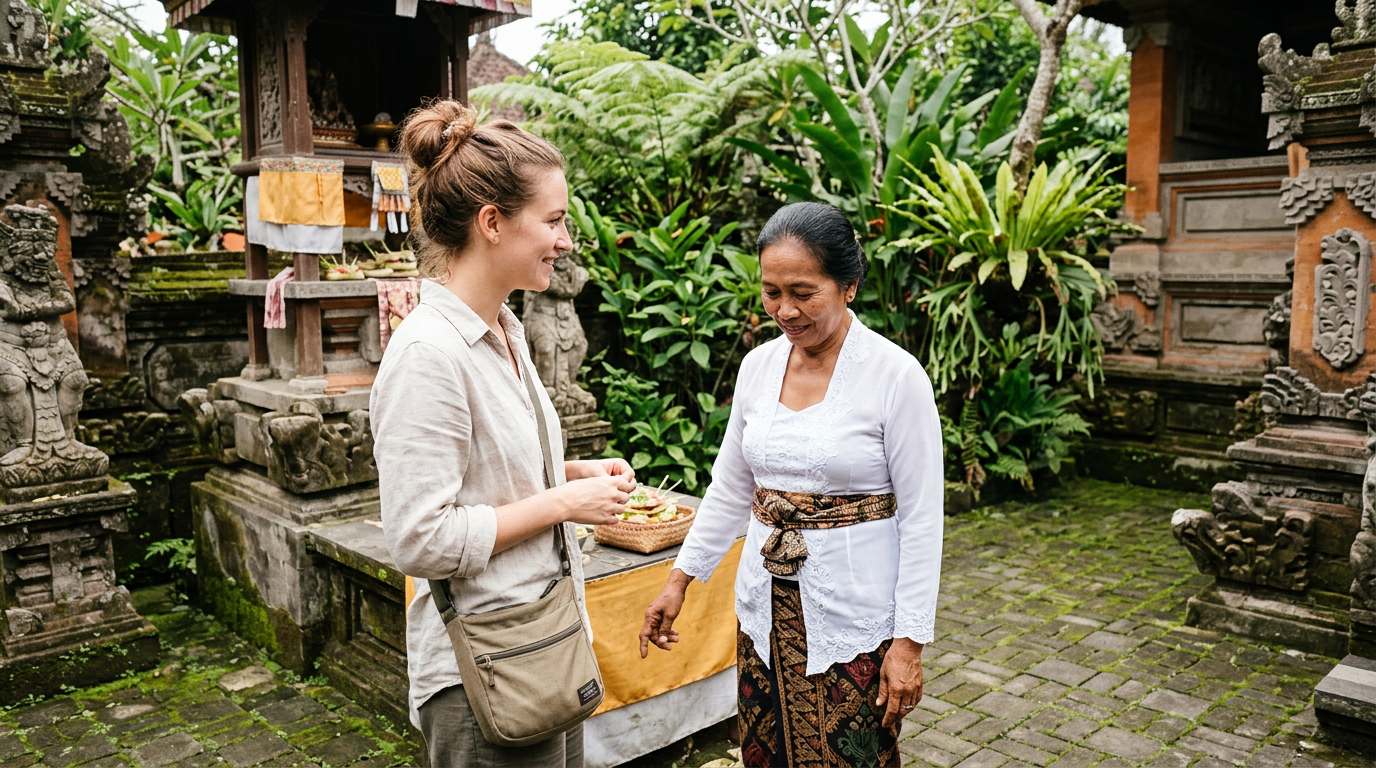
Is eye contact rude in Bali / Indonesia?
Eye contact can send different messages in different cultures. In Bali, where courtesy, ritual, and community life shape everyday interactions, the meaning of a glance depends on context, age, and setting. This article walks through local expectations about staring and personal space, highlights core etiquette and traditions, offers practical tips for cross-cultural interactions, and explains a common local phrase you may hear when exploring the island.
Staring
In Bali a deliberate stare often carries more weight than a passing glance. Direct eye contact can feel intrusive in some contexts and respectful in others, so recognizing subtle cues will help you avoid awkward moments and show a willingness to adapt to local social norms.
Local norms and meaning
Prolonged direct gaze at strangers may be seen as rude or challenging, especially when directed at elders or people in formal situations. Children may stare out of curiosity rather than rudeness. In village settings quiet observation is common, and privacy is valued even when people are friendly and open.
Contexts where eye contact is acceptable
During conversation, steady but relaxed eye contact signals engagement and sincerity. In shops and service interactions it is normal to meet someone’s eyes briefly while speaking. At ceremonies and religious sites, watch how locals behave and follow their lead when it comes to where and how long to look.
Polite alternatives and practical tips
If you are unsure, lower your gaze slightly and offer a gentle smile or nod to convey respect. Aim for brief eye contact of around one to two seconds when greeting, then glance away. Before taking photos or recording, ask permission to avoid making someone uncomfortable. In close encounters keep your expression soft and avoid staring without blinking.
Adjusting your eye contact is a small change that makes a big difference. By observing local behavior and choosing a softer approach, visitors show respect and open the door to warmer interactions. When in doubt, mirror the person you are with and let curiosity be guided by courtesy.
Moving from eye contact to physical distance, the next section explains how Balinese people balance openness with privacy.
Sense of personal space / privacy
Balinese social life blends warm openness with a clear respect for private moments. In public places like markets and beaches people are comfortable moving within close quarters, yet they rarely linger in someone else’s household space without invitation. When you meet a local, keep roughly one arm’s length between you and the other person as a polite default and give elders slightly more room. Avoid initiating touch unless you know the person well and never step uninvited into a compound or courtyard. During family gatherings and temple ceremonies, sensitivity to private rituals is important, so observe from a respectful distance and follow the lead of hosts. Photos of people in their homes or during personal rites require a simple verbal request first to prevent discomfort.
Practical gestures help you fit in quickly. Always wait to be offered a seat when entering a home and lower your voice when conversations move indoors. If someone draws a curtain or closes a door, take that as a clear sign they want privacy. When in doubt, mirror the way locals position themselves and use a soft smile rather than an intense stare to bridge unfamiliarity. These small adjustments create warmer exchanges and preserve local boundaries.
With these basics of space and gaze in mind, the next section outlines key etiquette and traditions you’ll commonly encounter across Bali.
Etiquette, Customs, and Traditions in Bali
Bali weaves Hindu ritual, village customs, and everyday courtesy into a social fabric that rewards observation and quiet respect. Learning a few basic practices will make interactions smoother and more meaningful. Below are essential customs to notice when you move through temples, villages, and family spaces.
Temple Etiquette
Temples are active places of worship rather than tourist stages. Remove shoes at the entrance and wear modest clothing that covers shoulders and knees. Many sites provide a sarong and sash at the gate. Do not step over shrines or offerings and avoid sitting with your feet pointed toward sacred objects or people.
Follow the flow of ceremonies and keep voices low. If you wish to photograph a ritual, ask permission first and respect any indication that photography is not allowed. Simple deference to participants preserves both the ritual and local dignity.
Daily Rituals and Offerings
Small palm-leaf offerings, known as canang sari, appear on sidewalks and thresholds each morning. These are personal acts of devotion and should not be moved or stepped on. When walking in neighborhoods, watch your step; if you accidentally disturb an offering, pause and show a polite gesture of apology.
Dress and Gestures
Modesty and gentle manners matter. Avoid touching someone on the head, which is considered intimate. Use the right hand or both hands when handing over items and refrain from prolonged direct staring. Respect for elders is shown by slightly lowering your body or voice in conversation.
Observing these practices requires little effort and yields warm reciprocation. When in doubt, follow the example of locals and let courtesy guide your choices.
Now that you understand core behaviors, the next section offers practical tips to help you navigate cross-cultural interactions with confidence.
Tips for Cross-cultural Interaction
Small thoughtful moves make a big difference when engaging with people in Bali. Begin by watching how locals greet each other and how they use eye contact and touch so you can respond in kind. Approach every exchange with modesty and curiosity rather than certainty; a calm tone and patient listening create immediate goodwill and reduce misunderstandings.
- Learn basic greetings — Use simple phrases like selamat pagi or terima kasih to show effort and respect, and use them appropriately rather than constantly repeating them.
- Match eye contact to the situation — Hold gentle eye contact during conversation but look away briefly to avoid seeming confrontational, especially with elders and officials.
- Ask before photographing — Always ask permission before taking photos of people or ceremonies, and accept a polite refusal without pressing for explanations.
- Use the right hand when passing items — Offer objects with your right hand or both hands to show courtesy, and avoid using the left hand for eating or giving gifts.
- Respect local boundaries — Step around small offerings on the ground and keep a respectful distance in private spaces, waiting to be invited when entering compounds or family areas.
Simple preparation and a willingness to adapt will remove many social hurdles. Practicing these tips will help you enjoy warmer, more authentic connections while traveling.
If you’re planning a stay and want locally informed options for accommodations and neighborhood advice, consider visiting https://www.balivillahub.com/en for practical listings and guidance that can help you choose a respectful home base.
These measures of courtesy tend to be reciprocated; even small gestures can turn a single encounter into a lasting positive impression.
Hey Bule
The phrase Hey Bule is a common way locals may address foreigners in public spaces. Depending on tone and setting it can express warm curiosity, playful banter, or a simple call for attention. Understanding the intent behind those two words helps visitors respond with ease and avoid misreading a harmless interaction as rudeness.
Context and how it lands
In crowded markets, beaches, and tourist areas, Hey Bule often springs from genuine curiosity. Children and vendors may use it to get attention or start a friendly exchange. In quieter neighborhoods the same phrase can feel intrusive, especially when said loudly or accompanied by pointing.
Age and familiarity matter: younger people tend to be more casual and playful when they say it, while elders or officials who use the phrase usually combine it with a polite gesture. Pay attention to body language as well as words.
- Respond with a smile — A gentle smile and a nod signals you are approachable and defuses awkwardness while keeping the encounter light.
- Use a short local greeting — Saying selamat or terima kasih shows respect and often turns curiosity into a pleasant conversation.
- Set a boundary politely — If you feel uncomfortable, say sorry I am not available today and step away calmly to avoid escalation.
- Ask a simple question — If curious about their intent, ask Are you asking for directions or a photo? to clarify the situation politely.
Hey Bule rarely signals hostility and usually opens a chance to connect. By reading tone and matching it with a calm, friendly reply you keep interactions positive and show respect for local habits.
In summary, a blend of attentive observation, modesty, and small courteous gestures will serve you well in Bali. Respect local cues about eye contact and personal space, follow the simple etiquette outlined here, and you’ll find most encounters become warmer and more rewarding.