Is it illegal for hotels in Bali to have two-way mirrors?
Bali Villa Hub
2/27/2026
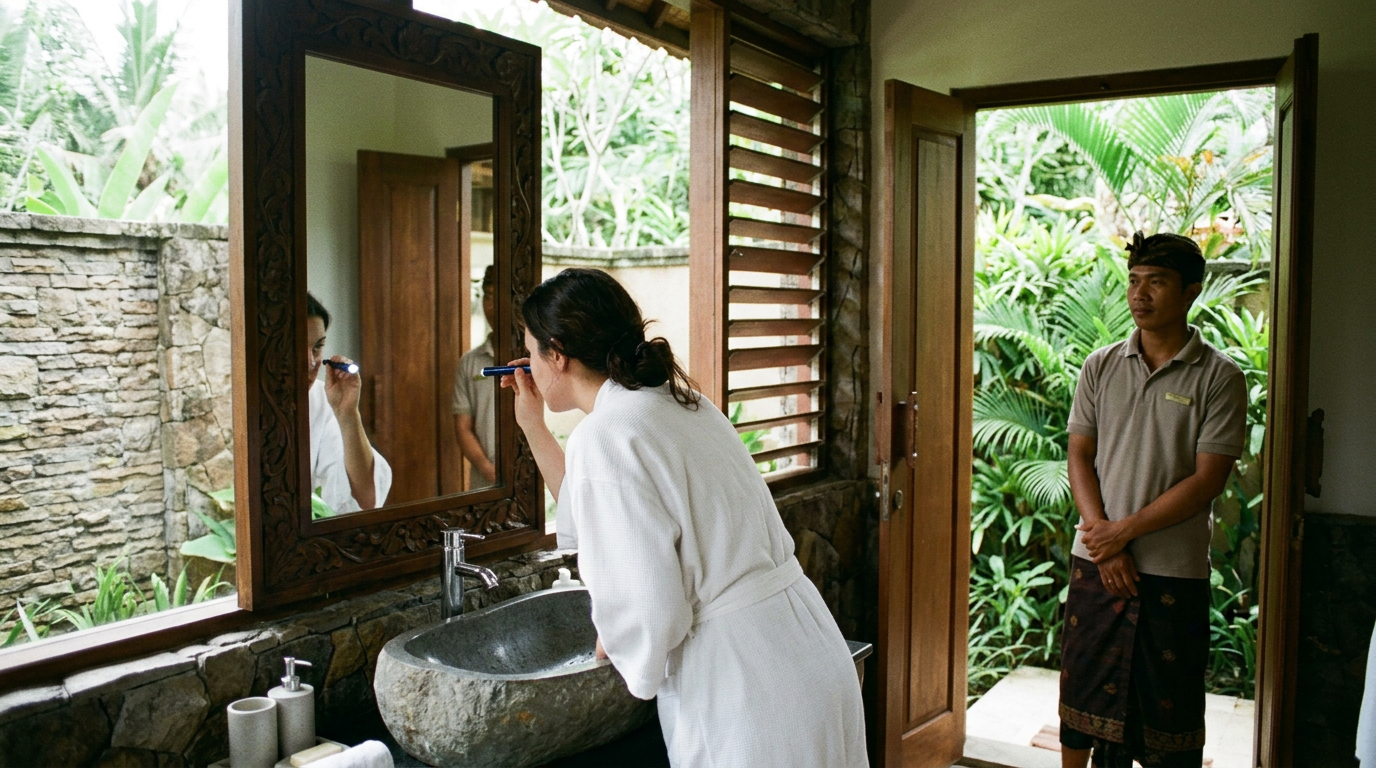
Is it illegal for hotels in Bali to have two-way mirrors?
Privacy concerns in accommodation are a growing worry for travelers everywhere, and Bali is no exception. This article explains practical steps visitors can take if they suspect two-way mirrors or hidden cameras in hotel rooms, how local social and legal norms relate to privacy, and what property laws mean for long-term rights. Read through the guidelines and detection tips so you can act calmly and confidently if you encounter a suspicious situation.
Guidelines for Foreign Tourists
When staying in Bali, be proactive about your personal privacy and comfort. Simple room checks and clear, calm steps can prevent an uncomfortable situation and help you resolve any concern quickly. These guidelines outline practical actions to take if you suspect a two-way mirror or hidden device in your accommodation—document everything before making formal complaints.
- Visual inspection Observe mirrors and glass panels for unusually dark panels or small perforations around edges. Turn off lights and shine a bright phone flashlight across the surface to reveal gaps or light leakage that should not be present.
- Touch test Place a fingertip against any suspicious mirror and note the distance to the reflection. If you see a clear gap between your finger and its reflection it is likely a normal mirror; if there is no gap, a two-way installation is a possibility.
- Smartphone checks Use your phone camera to look for infrared light from active lenses by pointing a TV (television) remote at the camera while activating a button. Photograph and record suspected devices as time-stamped evidence.
- Preserve evidence and request a change Take clear photos and note room numbers and times before you move items or confront staff. Ask for a different room or an immediate refund while keeping original items in place for inspection.
- Report and follow up Notify the property manager and request a written statement of action. If the issue is not resolved, file a police report at the nearest station and keep copies of all documents and correspondence.
Keep a calm tone and a record of steps taken. If you feel unsafe, leave the room and seek assistance from hotel security or local authorities. These practical checks protect your privacy and make any formal complaint easier to support with clear evidence.
Public Behavior and Social Laws
Understanding local social norms and legal expectations reduces the risk of misunderstandings and helps protect your rights. Bali places strong emphasis on respect for religion and community life, and local law includes protections around privacy and public decency. The next subsections explain how that affects everyday conduct and how to respond if your privacy is violated.
Respectful conduct in public
Always dress modestly when entering temples or attending ceremonies; cover shoulders and knees and follow directions from temple attendants. Avoid loud or disruptive behavior in sacred areas and during processions. What may be acceptable elsewhere can offend here, so observe how locals behave and mirror that conduct.
Privacy and consent rules
Photographing people without permission is discouraged in markets, temples and private spaces. Many Balinese find being filmed without consent disrespectful. If you suspect your privacy has been violated in accommodation or elsewhere, gather clear evidence—such as time-stamped photos or video—and avoid confronting anyone alone.
Penalties and how to report
Invasion of privacy and voyeuristic activity are treated seriously under local law and can lead to criminal charges and deportation. If an incident occurs, request a written statement from the property manager and file a report at the nearest police station. Keep copies of all records and consider contacting your embassy for guidance if you need legal assistance. Simple preventive habits—locking doors, respecting local dress codes, and documenting concerning incidents—reduce risk significantly.
Property Ownership Laws
Before considering property-related remedies or long-term stays, it helps to understand local ownership rules. Foreigners cannot hold Indonesian freehold title known as Hak Milik. In practice, non-Indonesian buyers rely on long-term lease contracts or other legal mechanisms rather than outright ownership. Typical market practice uses lease agreements with initial terms of around 25 years and contractual extension clauses negotiated up front with clear renewal procedures.
Hak Pakai is a formal right that can be granted to foreigners in specific circumstances such as residency tied to work permits or marriage to an Indonesian citizen. Another route is ownership through a foreign investment company registered in Indonesia, which can obtain Hak Guna Bangunan for development projects. Both routes carry legal conditions and registration requirements, so documentation must be verified carefully before any transaction.
Nominee arrangements that appear to transfer title to an Indonesian partner are illegal and carry a high risk of dispute and loss. Always obtain and review the land certificate type together with recent PBB (Pajak Bumi dan Bangunan) tax receipts and a valid IMB (Izin Mendirikan Bangunan) building permit where applicable. Engage a licensed Indonesian notary known as a PPAT (Pejabat Pembuat Akta Tanah) to perform a full land search and confirm there are no encumbrances or ongoing disputes recorded against the property.
Practical due diligence reduces risk significantly: request copies of sellers' national identity documents and corporate papers when relevant, obtain certified translations of all paperwork, and register long-term leases at the local land office to secure rights. If you need professional help, consult a reputable Bali property consultant for guidance on compliant structures and to assist with paperwork and local introductions.
How to Detect a Two Way Hotel Mirror
Knowing how to spot a two-way mirror helps protect your privacy and gives you confidence to act if something feels off. These checks are low-tech and quick to perform when you first enter a room. Begin with non-invasive methods that create clear evidence—photos and time-stamped notes—so you can escalate appropriately if needed.
Simple principles to keep in mind
A two-way mirror allows light to pass from a darker side through to a brighter side, so tests focus on light behavior and visible gaps. Stay calm and systematic so you can gather clear observations without disturbing the scene.
Try these straightforward tests before escalating the issue:
- Flashlight sweep Turn off room lights and shine a strong phone flashlight across the mirror surface at an angle. Look for light bleeding through or small dark cavities that indicate one side is darker than the other.
- Fingernail gap test Place your fingertip gently against the glass and note the reflection. A visible gap between your finger and its reflection indicates a regular mirror; direct contact without a gap is a red flag.
- Phone camera and remote check Use your phone camera to film the mirror while you press buttons on a TV (television) remote toward the surface. An infrared light or lens glow seen on camera suggests an active recording device behind the glass.
- Frame and wiring inspection Look for out-of-place screws, electrical conduit or unusual seams around mirror edges and nearby fixtures. Any visible cabling or oddly deep recesses should be photographed and reported.
If tests raise concern, take photos, note times and room details, and ask to be moved immediately. If the hotel does not act, file a police report and preserve all evidence for authorities.
These cameras can be hidden in plain sight
Covert surveillance devices are small and often disguised as everyday hotel objects so they blend into a room. Common disguises include smoke detectors, alarm clocks and wall outlets that conceal tiny lenses behind a perforated face plate, as well as lamps, photo frames and decorative plants where a small hole or gap may hide a lens. Other forms include USB (Universal Serial Bus) chargers, mirror frames and even clothing hooks with micro cameras built into their base. Many of these devices are battery-powered and wireless, so they do not require obvious cabling and can be placed on shelves or inside vents. To spot them, look for tiny pinhole openings, unusual seams or screws, irregular wiring and small dots that do not match surrounding surfaces. A lens will sometimes reflect light, so angling a flashlight or using your phone camera to record while you press a remote control can reveal active infrared LEDs. Pay attention to objects facing beds or showers and to items that seem newer or out of place in an otherwise uniform room. If you find a suspected device, photograph it carefully, note the time and location and avoid handling it to preserve potential evidence. Report the find to management, request an alternative room and, if the response is inadequate, file a police report and keep copies of all documentation.
For peace of mind, perform a quick sweep on arrival focusing on mirrors, vents, clocks and decorative pieces and consider asking the property for a written privacy assurance. If you prefer local, professional assistance to assess a suspicious situation or to navigate reporting and follow-up, https://www.balivillahub.com/en can provide guidance and connection to trusted local contacts.
Staying informed, documenting concerns calmly, and knowing how to detect and report potential privacy violations will help protect your safety and make any formal complaint more effective.