Is it inappropriate to say “Namaste†in Bali?
Bali Villa Hub
3/5/2026
Is it inappropriate to say “Namaste†in Bali?
When visiting Bali, many travellers wonder whether familiar greetings from other parts of Asia will be appropriate on the island. Namaste is widely recognised in yoga studios and spiritual contexts around the world, yet Bali has its own salutation traditions shaped by language, religion and ritual. This article explains the origins and meaning of Namaste, outlines Balinese greetings and gestures, compares Namaste with Om Swastiastu, and offers practical guidance for visitors who want to greet respectfully.
Origins and meaning of Namaste in South Asia
Namaste is both a spoken salutation and a gesture that developed over centuries across South Asia. Rooted in classical languages and devotional practice, it functions as a concise expression of greeting, respect and mutual recognition. Its use spans everyday social life, formal rituals and spiritual practices.
Etymology and linguistic roots
The term derives from Sanskrit where namas means bow or reverence and te means to you, so the phrase is a compact way to offer respect. Variants such as namaskar and pranam appear in regional languages and classical texts, demonstrating a long history of polite salutation in both vernacular speech and liturgy.
The gesture and its symbolism
The spoken word is most often paired with the anjali mudra: palms pressed together at chest level with a slight bow. This posture signals humility and the meeting of two hearts. In many traditions the gesture is explained as acknowledging the divine spark in the other person rather than asserting personal superiority.
Historical and religious contexts
Namaste appears across Hindu, Buddhist and Jain settings where it frames interactions between devotees, teachers and community members. It is used during temple worship, in blessings and as a respectful way to address elders. Over time it crossed social and regional boundaries so that it now functions as a polite everyday greeting from city streets to village courtyards.
Today the phrase and gesture remain widely understood across South Asia; their core meaning of respect and recognition endures whether the context is secular, ceremonial or spiritual. To understand how this South Asian greeting sits alongside Balinese practice, we next look at the island's own common salutations and their cultural roots.
Common Balinese greetings and their cultural roots
Balinese daily speech blends the local language with national Indonesian in ways that reflect religion and custom. In public and private life people choose greetings to match setting and relationship: formal ritual contexts favour sacred phrases and gestures, while markets and cafes use simple Indonesian phrases that are easy for visitors to learn.
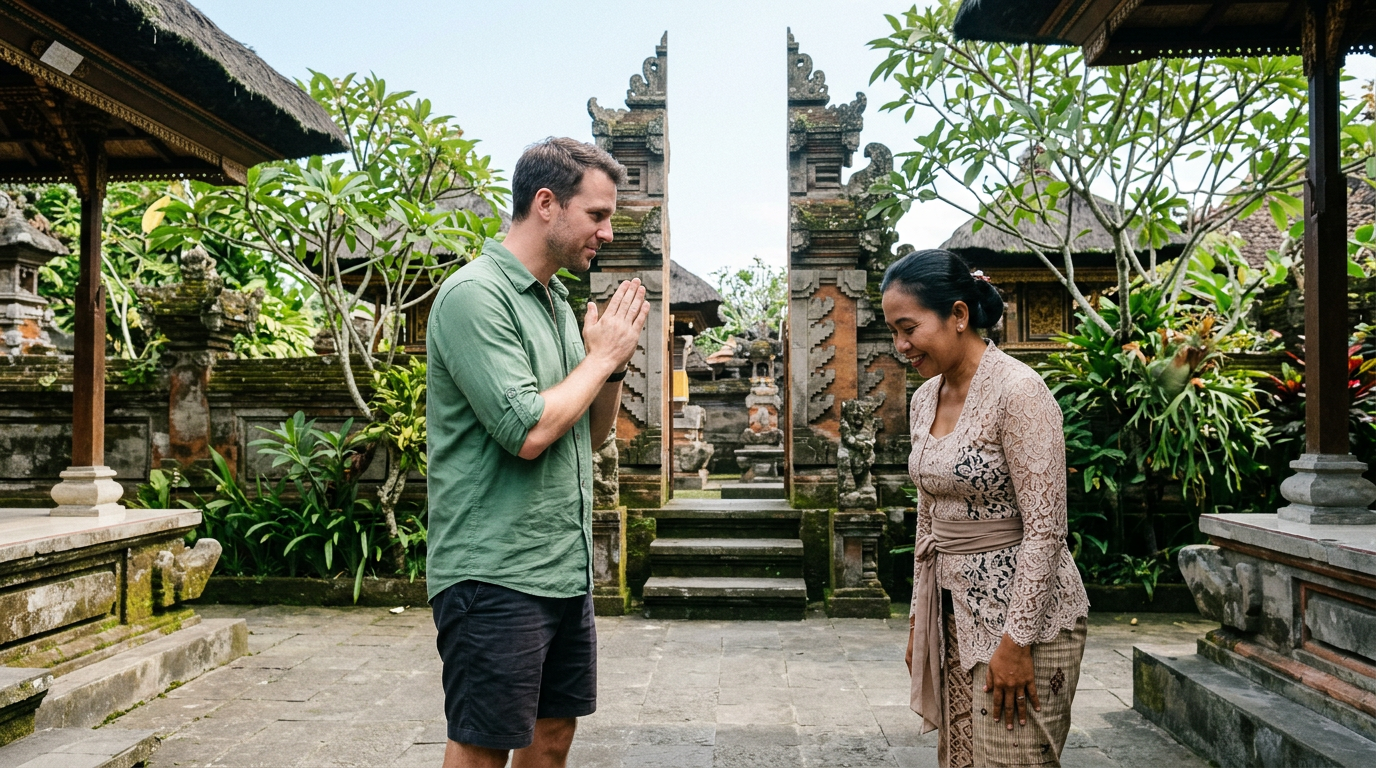
Om Swastiastu is the most recognisable Balinese salutation associated with Hindu ritual life. It is often offered with the sembah gesture, which brings the palms together at chest level with a slight bow. This combination expresses a wish for well being and acknowledges spiritual connection rather than asserting status. The gesture itself traces to temple ritual and to a broader Austronesian tradition of greeting with open hands.
Everyday interchange on the island tends toward practical Indonesian greetings such as selamat pagi for morning and selamat siang for midday. At the same time many Balinese use native words like suksma to say thank you during polite or ceremonial exchanges. Language choice signals respect for custom and for the other person, interpreted through age, social role and religious involvement.
Understanding these patterns helps visitors move beyond literal translation to appreciate why some phrases feel more fitting in temple courtyards while others belong on the street. Paying attention to whether a situation is formal or casual and matching the tone with a small nod or the sembah gesture will convey respect more clearly than literal copying of foreign greetings. With that cultural background in mind, the next section compares Namaste directly with Om Swastiastu.
How Namaste compares with Bali's Om Swastiastu
Namaste and Om Swastiastu occupy similar social space as greetings that convey respect and goodwill, yet they emerge from distinct linguistic and ritual traditions. Both are often paired with a hands-together gesture and a slight bow, but their everyday use and cultural meanings differ in ways visitors should understand. The points below outline key similarities and distinctions to help you greet thoughtfully.
Shared gesture and underlying intention
Both practices commonly use palms pressed together near the chest and a modest bow to signal recognition of the other person. In each case the physical motion expresses humility and an acknowledgement of shared humanity or inner worth. That shared body language makes the gestures feel familiar across cultures and helps bridge basic social interaction.
Differences in language and ritual role
Namaste comes from Sanskrit-rooted traditions across South Asia and is widely used in secular and spiritual settings. Om Swastiastu is a Balinese Hindu salutation with specific formulaic wording tied to local temple practice and communal ritual life. The phrasing, cadence and sacred associations of Om Swastiastu carry particular weight in ceremonial contexts that Namaste may not fully convey.
Practical implications for visitors
Using Namaste in Bali will rarely offend when offered sincerely in casual encounters, but it may feel out of place in formal temple rituals where Om Swastiastu is customary. The safest approach is to observe what locals do, mirror the sembah gesture and accompany it with the Balinese phrase when in a temple or during religious ceremonies. Intent and respectful behavior matter more than precise vocabulary.
In short, Namaste and Om Swastiastu share a gentle ethic of respect while differing in cultural specificity. Learning to recognise and adapt to those differences will make your interactions on the island more considerate and rewarding. The next section outlines practical guidance on when Namaste is appropriate for visitors.
When visitors can politely use Namaste in Bali
Namaste is polite to use in casual, nonritual situations where people are likely to recognise the greeting. It works well at yoga classes, wellness centres, guesthouses and international gatherings where teachers and visitors already share the phrase. Use it when greeting a yoga instructor in Ubud, thanking a spa therapist after a treatment or saying hello to fellow travellers at a hostel. Pair the word with the hands-together gesture at chest level and a small bow to communicate sincerity. When the other person looks puzzled, a quick switch to a simple Indonesian greeting such as selamat pagi will smooth the interaction.
Exercise caution in temples, during ceremonies and when interacting with religious elders. In those settings use the Balinese salutation Om Swastiastu and the sembah gesture instead. If you are unsure, observe locals and copy their approach before speaking. Above all, keep your tone respectful and unhurried: a sincere, quietly delivered Namaste will rarely offend in informal settings, but adapting to Balinese phrases and gestures shows extra care and cultural sensitivity. To finish, here are practical alternatives you can use across situations, followed by a helpful suggestion for planning a respectful stay.
Respectful alternative phrases and gestures to use
When in doubt, choose Balinese or simple Indonesian expressions paired with a respectful gesture. Small adjustments to how you greet someone signal awareness of local custom and are often more appreciated than perfect pronunciation.
Below are practical alternatives that work across everyday encounters and more formal situations. Each item explains when to use the phrase or motion so you can match tone and setting with confidence.
- Om Swastiastu with the sembah gesture Use this salutation in temples, during ceremonies and when addressing elders. It directly communicates a wish for well being and aligns closely with Balinese ritual language.
- Selamat pagi or selamat siang These Indonesian greetings are appropriate for markets, restaurants and casual conversations with shopkeepers and hosts. They are neutral, widely understood and fit most nonreligious settings.
- Sembah gesture without words Offer palms pressed together and a small bow when you wish to be discreet or when language might cause confusion. The silent gesture still conveys respect and is accepted across ages and contexts.
- Suksma or terima kasih to express thanks Say suksma in Balinese or terima kasih in Indonesian after receiving help or a service. A short nod or smile while speaking reinforces sincerity and politeness.
- Gentle nod and soft smile Use this in casual encounters when a verbal greeting feels unnecessary or when others do not initiate speech. It is unobtrusive and shows friendliness without presuming familiarity.
Observe how locals combine words and gestures and mirror their approach when possible. Small acts of attentiveness will make your interactions on the island feel natural and respectful.
If you are planning a trip to Bali and want a comfortable base from which to learn and practise local customs, consider browsing villas and local guides at https://www.balivillahub.com/en to find respectful accommodations and helpful local contacts.
Adapting your greetings with sensitivity—whether that means using Namaste in informal, international settings or Om Swastiastu in temples—will help you connect respectfully with people across Bali.