Is One Million Rupiah Enough for Bali Expenses?
Bali Villa Hub
2/24/2026
Is One Million Rupiah Enough for Bali Expenses?
Planning a trip to Bali often raises a common question: how far will your money go on the island? This guide walks through the currency you’ll use, when to carry cash versus cards, safe ways to exchange money, practical ATM and card tips, common money mistakes to avoid, and clear steps to take if you lose cash or cards. Read on to make smarter budget choices and travel with greater confidence.
Understanding Bali currency and common exchange rates
Bali uses the Indonesian rupiah as its legal tender. For visitors it helps to know the typical value of the rupiah in relation to major currencies and how to translate that into daily spending power. Below are clear examples and practical points you can use when budgeting for accommodation food transport and activities.
The Indonesian rupiah and common banknotes
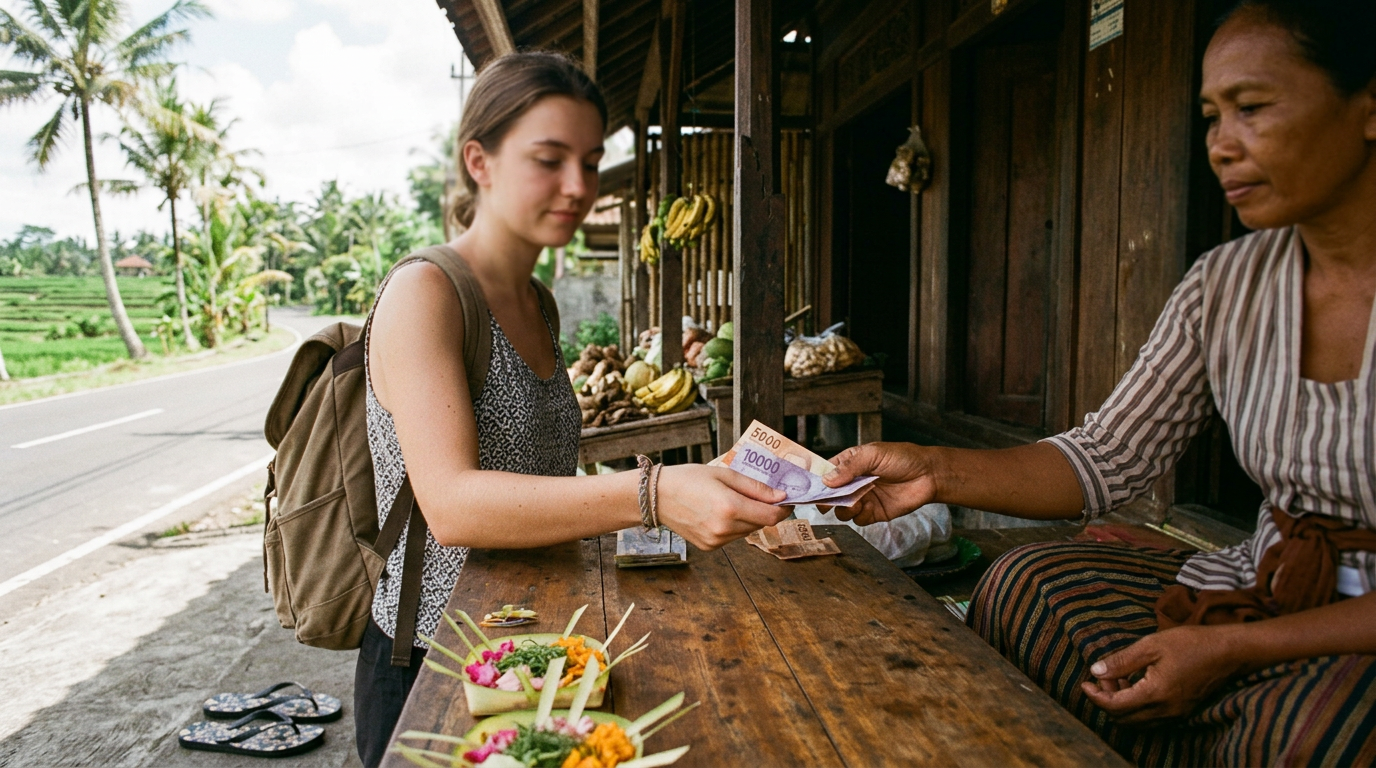
The currency code is IDR (Indonesian rupiah) and banknotes run from 1 000 to 100 000 rupiah. Most vendors and taxis prefer smaller notes for exact change so carry a mix of 10 000 20 000 50 000 and 100 000 bills. Coins are rarely used for larger transactions but handy for small purchases.
Typical exchange rates and everyday conversions
A reasonable working rate to use while planning is 1 United States dollar equals about 15 000 rupiah. At that level 1 000 000 IDR converts to approximately 66.70 USD (United States dollar). Using similar rounded rates 1 000 000 IDR is roughly 60 euros and about 93 Australian dollars depending on daily movement.
How to read the numbers and factor in variation
Rates move daily so treat the examples as practical estimates not guarantees. When converting mentally divide the rupiah amount by 15 000 to get a quick dollar figure. For cash budgeting think in increments of 100 000 IDR which equals about 6.70 USD at the example rate.
With these concrete conversions and a handful of common notes you can estimate costs quickly and avoid overpaying. Always confirm the live rate before major exchanges and keep small bills for routine purchases. With currency basics covered, the next section explains when cash is essential and where cards are accepted.
When cash is necessary and where cards are accepted
Cash remains an essential part of daily life in Bali even though cards are widely used in tourist areas. Knowing exactly when to pay with banknotes and when plastic is fine will save you time and avoid awkward situations at checkout.
For practical planning carry enough small notes to cover immediate needs and incidents. A sensible baseline is 300 000 to 500 000 IDR per day for modest meals transport and small purchases while 1 000 000 IDR will comfortably cover several days if you plan to shop at markets and eat at local warungs.
- Local warungs and street food — Small family run eateries commonly accept only cash, so have small denominations for quick orders and exact change.
- Traditional markets and street vendors — Bargaining requires cash in hand, especially at markets for souvenirs fresh produce and clothing where cards are rarely available.
- Transport and scooters — Tiny taxi runs and scooter rentals often expect cash payment on the spot, and drivers may not have card readers or stable internet.
- Hotels restaurants and larger shops — Most mid to high end hotels restaurants supermarkets and beach clubs accept major cards, though some add a small fee or request a minimum spend for card use.
- Rural areas and temples — Outside main towns ATM (automated teller machine) availability and card acceptance drop sharply, so plan cash when you head inland or to less developed beaches.
Always carry a mix of 10 000 20 000 and 50 000 IDR notes to make change easy and avoid holding up transactions. Withdraw from bank branch ATM (automated teller machine)s during daylight hours and check fees before you confirm a withdrawal. Balancing cash and cards keeps you flexible, secure and ready for both a market bargain and a comfortable dinner at a nicer restaurant. Now that you know where to use cash, here are safe ways to exchange rupiah while in Bali.
How to exchange rupiah safely while in Bali
Exchanging cash safely in Bali means choosing official channels and checking everything before you walk away. For the best combination of rate and security use bank branches and licensed money changers that display their buy and sell rates clearly and issue a printed receipt for every transaction. Bring your passport because some exchanges require it for larger amounts and staff may record your details. When you receive notes count them in front of the cashier and check for obvious damage and the security thread by holding the bill to the light. If a rate looks unusually generous walk away because it is often a bait to shortchange customers. Airport booths are convenient but usually give poorer rates so exchange only a small amount there to cover immediate transport and then change larger sums in town. ATM (automated teller machine)s typically offer close to market rates but carry a withdrawal fee and occasionally a local surcharge so withdraw in sensible chunks to reduce fee impact and use machines inside banks or shopping centres rather than street facing units. Protect your card by covering the keypad when entering your PIN (personal identification number) and inspect the slot for signs of tampering before inserting. Always keep the exchange receipt until you have spent or deposited the cash because some banks may request proof of the source for big transactions. Avoid accepting offers from drivers or hotel staff to change money unless they use an official till and provide a receipt. Finally split your cash between a safe place and a daily wallet to reduce loss risk and check the live rate on a trusted currency tool before you trade so you know whether the offer is fair. Following these steps keeps your money secure and your travel budget predictable while you enjoy the island.
Beyond exchanging cash, using ATMs and cards properly reduces costs and improves security. The next section offers practical, actionable tips for everyday use.
Practical tips for using ATMs and cards on the island
Using ATMs and cards in Bali is convenient but requires simple precautions to keep costs low and your funds secure. Follow a few concrete habits when withdrawing cash and paying with plastic to avoid surprise fees and common scams.
Choose secure machines and limit withdrawal frequency
Use ATMs located inside bank branches or shopping centres during daylight hours to reduce tampering risk. Many Indonesian machines limit a single withdrawal to around 1 000 000 to 2 000 000 IDR so plan to withdraw in multiples rather than many small withdrawals. Expect local ATM fees in the range of 7 500 to 20 000 IDR per withdrawal and your home bank may add a foreign transaction or withdrawal fee of around 1 to 3 percent. With that in mind withdraw 1 000 000 to 3 000 000 IDR at a time to balance fee impact and cash safety.
Protect your card and PIN at all times
Inspect the card slot for loose parts or glue before inserting your card. Cover the keypad with your hand when entering your PIN (personal identification number) and decline any offered assistance. Keep dual notification on with your bank so you receive SMS or app alerts for transactions and set a modest daily withdrawal limit before you travel to limit exposure if a card is lost.
Bring backups and know when to use cards
Carry two cards from different networks and keep them in separate places so one loss does not leave you stranded. Use cards for hotels larger restaurants and reputable shops where a 2 to 3 percent surcharge may apply rather than accepting dynamic currency conversion. Keep small denominations for markets taxis and local warungs where cash remains essential.
These measures reduce cost and stress while staying flexible on the island. Plan withdrawals, protect your PIN, and split your payment options to move around Bali with confidence. Next we cover common money mistakes travelers make and how to avoid them.
Common money mistakes travelers make and how to avoid them
Money missteps can turn a smooth trip into a stressful one quickly. The most frequent errors are simple to prevent with a few deliberate habits and a small amount of preparation. Read the practical fixes below and adopt the ones that suit your travel style.
What usually goes wrong and why it matters
Visitors often assume card acceptance is universal or that the first exchange booth they see offers a fair rate. Others keep all cash and cards in one place or withdraw tiny amounts frequently which increases fees. These behaviours lead to unexpected costs, lost time and avoidable risk.
- Using airport exchange booths for large sums — Airport counters give convenient service but generally poor rates. Change only enough to cover transport and then use a licensed money changer or bank in town.
- Not splitting cash and cards — Storing everything together risks losing all funds at once. Keep a daily wallet with small spending money and a separate stash in a locked safe or money belt.
- Ignoring ATM and card fees — Withdrawing small amounts multiplies fixed fees. Aim to withdraw 1 000 000 to 3 000 000 IDR per withdrawal depending on your comfort with carrying cash to lower total cost.
- Accepting dynamic currency conversion — Paying in your home currency usually includes a poor exchange rate plus extra fees. Choose local currency when given the option and check the merchant total before confirming payment.
Preventing these mistakes is mainly about planning and simple checks. Count notes at the till, inspect ATM (automated teller machine)s before use and enable transaction alerts with your bank. With those habits you keep more of your money for experiences on the island rather than avoidable fees and stress. If you need help arranging accommodation or advice on safe neighbourhoods, consider browsing villa and booking options at https://www.balivillahub.com/en for practical choices that match your budget and travel style.
What to do if you lose your card or cash in Bali
If you discover a card or cash is missing act calmly and act fast. Retrace your steps and ask staff where you last used the card or paid cash and check nearby premises for CCTV (closed-circuit television) or lost and found. If a card is missing block it immediately via your bank app or by calling the issuer using the emergency number on the back of your card and record recent transactions and time of loss for any dispute. Use a second card if you carry one and withdraw from an ATM (automated teller machine) inside a bank or shopping centre for safety. If you only carried cash ask a trusted friend or family member to send funds by bank transfer to a local branch and speak to your accommodation for a temporary solution or safe holding while you arrange replacements.
Report theft or loss to the local police and obtain a police report number since banks and insurers usually require it for claims or chargebacks. Contact your travel insurance provider and follow their emergency instructions and contact your embassy if your passport was lost for help with temporary travel documents. After resolving the immediate issue take steps to prevent a repeat keep backup cards in separate places store copies of key documents in secure cloud storage enable transaction alerts and set modest withdrawal limits before you travel. These measures restore access to funds quickly reduce financial exposure and let you get back to enjoying the island.