Is the traffic bad in Uluwatu in Bali?
Bali Villa Hub
3/7/2026
Is the traffic bad in Uluwatu in Bali?
Uluwatu’s dramatic cliffs, world-class surf and compact coastal roads make it one of Bali’s most visited corners—and that popularity shows up on the roads. This guide explains why congestion happens, which transport choices work best, when you can expect the worst delays, what long-term fixes are being planned, and practical steps you can take to keep journeys smooth during your stay.
Main causes of traffic congestion in Uluwatu
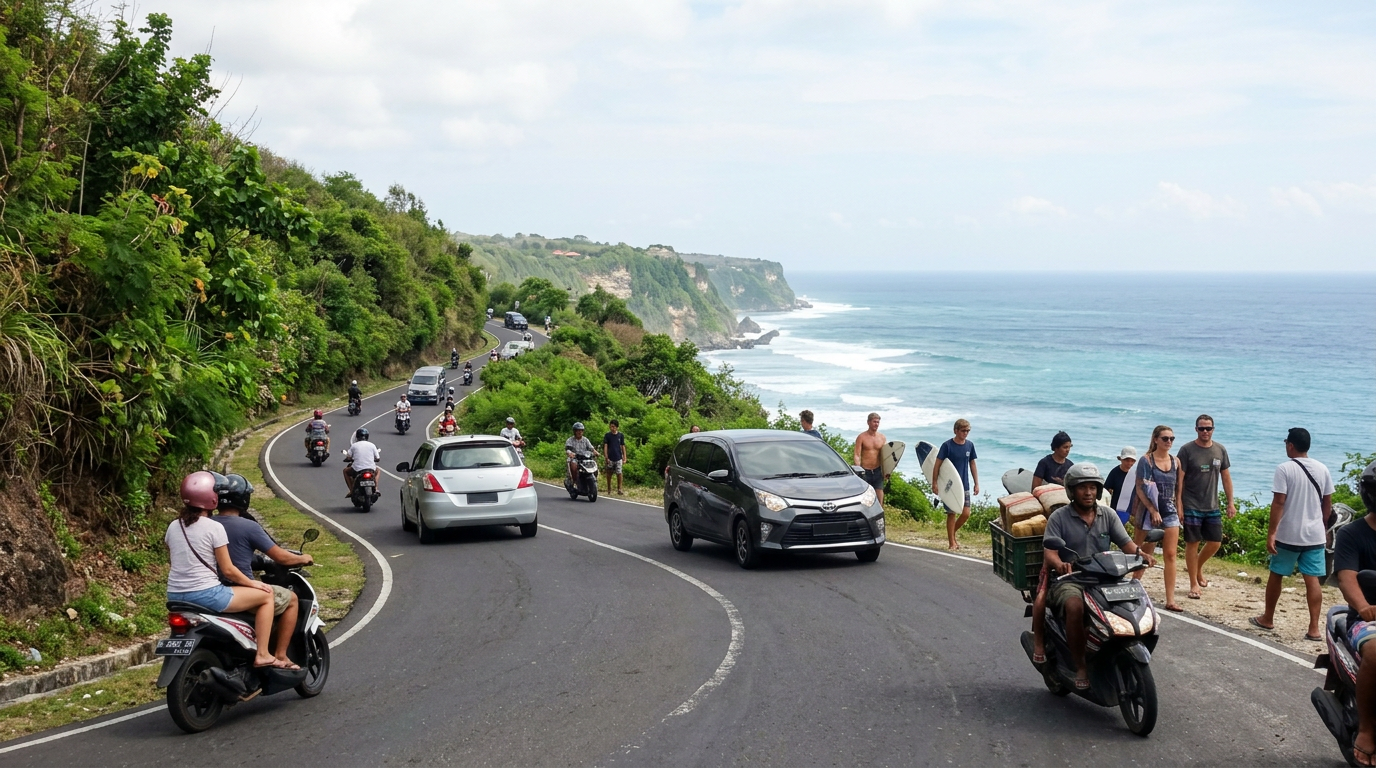
The mix of spectacular scenery and a limited road network drives most of the local congestion: narrow routes, a growing number of visitors and a handful of concentrated attractions funnel traffic onto the same arteries.
Knowing the main causes helps with planning and avoids needless delays.
- High tourist concentration at a few attractions — Uluwatu Temple, cliff-top sunset viewpoints and popular beaches like Padang Padang and Bingin attract sharp surges of visitors, especially in the late afternoon and early evening.
- Limited road capacity and challenging topography — Most roads on the Bukit peninsula are two-lane and wind along steep terrain; any slowdown quickly produces long queues and there are few practical detours.
- Mixed traffic of cars and motorbikes — Private cars, rented scooters and ride-hailing vehicles increase the number of road users per trip and complicate flow at tight bends and intersections.
- Parking strain and roadside stopping — Small parking areas at beach clubs and temples often overflow, prompting drivers to stop on main roads for drop-offs and pickups and reducing through lane capacity.
- Construction and service vehicles — Ongoing villa construction, road repairs and frequent delivery vehicles can temporarily reduce lane availability and cause daytime slowdowns.
These factors combine to create predictable congestion patterns—most notably around sunset and on weekends—so factor extra time into any transfers to and from Uluwatu. Understanding the causes also makes it easier to choose the right mode of transport, which we cover next.
Transport options and getting around Uluwatu
With the causes of congestion in mind, pick the transport that best matches your comfort level, schedule and destinations. Narrow roads and sunset crowds affect every option, so timing and familiarity with local routes matter more than distance.
Scooters and motorbikes
Renting a scooter is the most common choice for solo travellers and couples; it’s often the quickest way to reach nearby beaches and cafes, with typical rides of 10 to 25 minutes between major spots.
Only competent riders should use scooters here: roads can be steep, uneven and visibility drops quickly after dark. Limit rides to daylight hours and always wear a helmet.
Private cars and local drivers
For groups or anyone preferring comfort, hire a private car with a local driver. This gives door-to-door service and more predictable arrival times—handy if you have fixed schedules for surf lessons or sunset dinners.
Taxis and ride-hailing apps operate in the area but expect longer waits at peak times and occasional difficulty with pickups near busy beach clubs and temple entrances. Allow extra time for airport transfers.
Shuttles, walking and cycling
Many villas and beach clubs run scheduled shuttles that simplify short transfers and avoid time spent searching for parking. Walking between cliff-top viewpoints and nearby cafes is often faster than waiting in traffic when distances are short.
Cycling is possible for fit riders but remember steep climbs and mixed traffic conditions. Final access to many beaches involves stairs or short footpaths that do not accept vehicles.
Choose your transport to match the route and time of day, and you’ll spend less time on the road and more time enjoying the scenery. With transport options set, timing becomes the next key consideration.
Peak hours and best times to visit Uluwatu
Uluwatu follows a reliable daily rhythm, so planning around it makes visits far more enjoyable. The sharpest congestion occurs in the late afternoon as visitors converge on cliff-top viewpoints and the famous temple for sunset—typically between 4 pm and 7 pm, with the absolute peak in the hour before sunset. Weekends and public holidays intensify queues and can easily double travel time on the main Bukit roads. Mornings are generally calmer: the quietest window runs from first light until about 9 am, which is the best time for beach access, surf sessions and uncluttered temple visits. Late mornings through early afternoons see steady local movement as beach clubs and cafes fill, but traffic is usually more manageable than at sunset, especially on weekdays. Surfers should note that dawn patrols concentrate local traffic near the breaks from about 5 am to 8 am, and there can be a second surge around midday when conditions pick up. For scheduled transfers to or from Denpasar airport or to Seminyak, allow an extra 30 to 60 minutes during non-peak hours and at least 90 minutes for journeys that overlap with weekend sunsets. Arriving at Uluwatu Temple at least 45 minutes before sunset usually secures parking and avoids the worst of the cliff-top crowd; alternatively, plan for an early-morning visit for photos and a quieter atmosphere. Travelling between sites in the mid-afternoon, around 2 pm to 3 pm, often avoids both the busy lunch period and the sunset crush and offers the best balance of light, activity and traffic. Small timing adjustments will usually cut commute stress and leave more time to enjoy Uluwatu’s coastline and food scene.
Planned roadworks and long term solutions for Uluwatu traffic
Local authorities and stakeholders are rolling out a phased approach to ease congestion in Uluwatu. Actions range from targeted repairs that reduce daily bottlenecks to strategic projects designed to redirect through traffic away from the Bukit peninsula while preserving coastal views and community access.
Immediate road upgrades and junction fixes
Short-term works focus on resurfacing key stretches, stabilising slopes and improving drainage to prevent washouts during the wet season. Priority junctions near popular beaches and the temple are being reprofiled and parking layouts formalised to prevent roadside stopping that currently reduces lane capacity. Most of these interventions are expected within 12 to 24 months and are scheduled for daytime windows to minimise disruption to sunset traffic.
Major infrastructure and bypass proposals
Long-term proposals include peripheral links that would let vehicles bypass the most congested cliff-road sections and small-scale flyovers at chronic pinch points. These projects require environmental studies, land acquisition and multi-year funding, so realistic timelines range from three to seven years. If implemented, they should significantly reduce through traffic and improve journey reliability.
Traffic management and modal-shift measures
Complementary measures emphasise better parking management, designated drop-off zones for tour buses and expanded shuttle services from consolidated car parks. Trials of digital traffic monitoring and timed access for the temple and major beach clubs aim to smooth peak surges. Stronger enforcement of loading rules and a push for shared transfers seek to reduce vehicle trips per visitor.
These combined efforts will not eliminate all delays but should make travel around Uluwatu more predictable over the next few years. For practical updates and local travel advice, check reliable local resources and official project notices before you travel.
Practical tips to avoid jams and save travel time in Uluwatu
Small changes to timing and transport choices pay off. Focus on avoiding the cliff-top sunset surge, using consolidated parking and prearranged pickups, and picking routes that match the time of day.
Time your journeys and combine stops
Avoid travelling through Uluwatu between late afternoon and early evening when visitors head to the temple and viewpoints. Schedule airport or inter-area transfers for mornings or mid-afternoons, and combine nearby activities into a single trip to reduce round trips on narrow roads.
If you must travel at peak times, book a driver in advance so they can use local shortcuts and legal drop-off points. Drivers familiar with the Bukit peninsula can often save 15 to 30 minutes on typical routes by avoiding common bottlenecks.
- Use villa or club shuttles — Many properties run scheduled shuttles to key beaches and dining areas, bypassing parking searches and using reserved drop-off zones for faster access.
- Park once and walk between sites — Choose a central parking point near cliff-top cafes or the temple and walk to nearby attractions rather than moving the car for each stop; this avoids reentry queues.
- Travel early for surf and beaches — Arrive before 9 am to use quieter roads and available parking, and to avoid competition for limited bays later in the day.
- Agree fixed pickup points with drivers — Set clear, small meeting spots that do not require roadside stopping and tell your driver the preferred access lane so pickups are swift and legal.
Adopt two or three of these measures and you will noticeably cut travel time. For tailored, up-to-date local advice—including current roadwork information, shuttle schedules and recommended pickup locations—visit https://www.balivillahub.com/en to help plan your transfers and make journeys smoother.
With a little planning—timing your trips, choosing the right transport and using local services—you can avoid the worst jams and spend more time enjoying Uluwatu’s beaches, cliffs and dining scene.