Lighten Your Luggage for Bali with Smart Packing Tips
Bali Villa Hub
2/23/2026
Lighten Your Luggage for Bali with Smart Packing Tips
Traveling light to Bali makes transfers smoother, saves on baggage fees and leaves more energy for exploring. These practical adjustments—starting with your suitcase choice and ending with smart folding—help you cut weight without sacrificing comfort. Read on for concise, actionable steps that fit island travel.
Choose an ultra-light suitcase or soft bag
Starting with the luggage itself is the easiest way to shave kilos off your trip. A lighter shell immediately increases how much you can pack without breaching airline allowances and makes every transfer across Bali less tiring.
Think in terms of materials and empty weight rather than brand names. Aim for practical durability so the bag stays light without falling apart on hot, humid roads.
- Set a clear weight target Try to keep the empty weight of a carry on under 3 kilograms and a checked bag under 4.5 kilograms so you have breathing room for essentials.
- Prefer soft bags for flexibility Soft luggage typically saves half a kilogram to one kilogram and fits into tight trunks and scooters more easily than rigid cases.
- Choose light technical fabrics Ripstop nylon or coated polyester balance low weight with water resistance and can resist abrasion from scooters and beach transfers.
- Compare wheel and handle systems Four-wheel spinners add convenience and sometimes a little weight, while two-wheel designs often shave grams and remain stable on uneven streets.
- Check actual weight before you buy Use a luggage scale or ask for the empty weight specification and prioritize the lowest reliable figure over heavy features you will not use.
When selecting luggage, match the bag to the length and style of your Bali stay. A lightweight soft bag for two weeks of island travel can be far more practical than a heavy hard shell designed for business trips. Once you've chosen the right bag, focus next on trimming toiletries so you don't fill that extra space with unnecessary liquids.
Limit toiletries and buy basics locally in Bali
Packing toiletries strategically can shave kilos from your case and make transitions between villas and taxis much easier. Bring only the personal items you cannot replace easily such as prescription medication, contact lenses and a compact first aid kit, then decant favourite products into travel-sized reusable bottles under 100 millilitres for the flight and day-one use. Swap heavy liquids for solids where possible: a soap bar and a shampoo bar replace bulky bottles and stay dry in a small zip pouch. Plan to buy the rest on arrival because everyday items are widely available in Bali at supermarkets, pharmacies and convenience stores in every tourist area. Sunscreen and insect repellent are sold everywhere, often in smaller, lighter packaging that lets you avoid adding extra bulk at home. Buying locally also means you travel lighter on excursions and you support local retailers. If you have sensitive skin, pack one small sample of your trusted cleanser or sunscreen to start, then look for fragrance-free options at a pharmacy once you are settled. Many villas and hotels provide basic toiletries so check your booking details before you pack full bottles. Keep a minimal hygiene kit in an easily accessible pocket to avoid opening your main luggage on the beach or at the pool. Finally, choose multi-use items such as a travel-size balm that can serve as lip care, dry spot moisturiser and cuticle treatment to reduce the number of containers. With a small, considered selection for the journey and a plan to replenish locally you will arrive with less weight and more flexibility to enjoy Bali without hauling unnecessary extras.
With toiletries pared down, the next step is to align your wardrobe with your actual plans so everything you pack earns its place in the suitcase.
Plan your itinerary to pack only what you will use
Planning your daily schedule before you pack is the single most effective way to keep luggage light. When you know what you will do each day you can assign specific outfits and equipment to each activity and leave truly optional items at home. This reduces duplicates and prevents last-minute overpacking driven by uncertainty.
Match outfits to daily activities
Create a simple day-by-day list and assign one full outfit to each day that combines top, bottom, swimwear and footwear where needed. For a seven-day stay, pack four tops, three bottoms, two swimsuits, one light dress and one smart-casual outfit for dinners. Choose colours that mix and match so each top pairs with multiple bottoms and every item can be reused for at least two occasions.
Factor in laundry and local services
Decide how often you will wash clothes and plan to do laundry mid-trip if possible. Many villas and local laundromats offer affordable same-day service so you can halve the number of essentials you bring. For a two-week trip, plan a wash every four or five days, which lets you travel with six shirts and four bottoms instead of repeating an entire wardrobe.
Prepare for transfers and tropical weather
Account for scooters, steep steps and beach walks when choosing bag size and footwear. Limit shoes to two pairs: one casual sandal and one closed shoe suitable for short hikes and temple visits. Pack one lightweight waterproof layer and a compact day bag so you do not need large bags for excursions. Stow heavier items in your carry on on travel days to balance checked baggage limits.
Build a packing list that mirrors your itinerary then trial-pack it at home to confirm weight and fit. Removing one unnecessary top or one bulky shoe often frees up enough space and weight to travel with far less hassle and more enjoyment. After refining your list, plan how you will wear heavier pieces to avoid packing them.
Wear bulky items and layer to save suitcase space
Wearing your heaviest items during travel is one of the simplest ways to cut suitcase weight without sacrificing essentials. By carrying one jacket, one pair of sturdy shoes and one heavier sweater you free up between one and three kilograms in checked luggage depending on the garments. This matters for short internal transfers around Bali where every extra kilogram makes scooter rides and stairs more awkward.
Build a practical layering system Start with a lightweight breathable base such as a cotton or technical tee. Add a thin mid layer that packs small yet provides warmth when evenings cool. Top with a compressible outer shell that is both water resistant and quick to stow. Choose footwear that works for walking and short hikes so you do not need a second bulky pair. Aim for garments that mix together so each item serves multiple outfits.
Use your worn items to perform double duty on travel days. Fold a jacket and place it over your carry on to add padding and avoid a bulky duffel. Tuck socks and small soft items into shoes to save space. If you must pack a bulky coat prefer one that packs into its own pocket so it occupies minimal space when not worn.
Try everything on before you leave Test the comfort of wearing layers for a long flight and rehearse stuffing the remaining wardrobe into your bag. A single smart decision about which coat and which shoes to wear can transform an overfull case into a light, practical suitcase and make moving between villas, beaches and markets far more enjoyable.
With the heaviest items managed through wear and layers, the final step is to make every remaining garment as compact as possible.
Roll and compress clothing to maximize space and cut weight
Rolling and compressing clothing is a practical way to fit more into a smaller case and to avoid carrying unnecessary extras. When executed correctly this technique reduces volume so you can leave one or two items at home and cut overall luggage weight without sacrificing outfit options.
How to roll and compress correctly
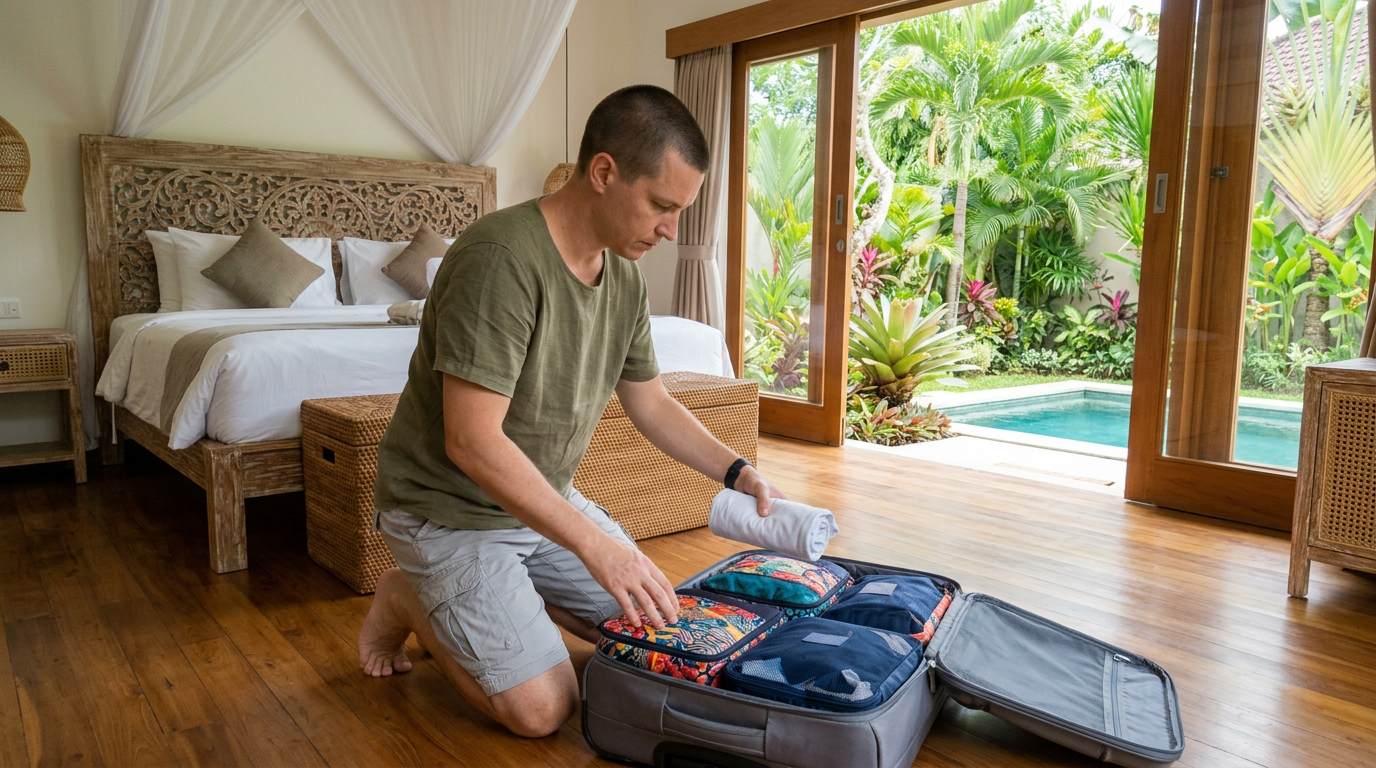
Lay garments flat and smooth out wrinkles before you begin. For shirts, fold sleeves inward and fold long items in half when needed, then roll tightly from the hem to the collar. A firm, compact roll holds its shape and fits into narrow gaps.
Place rolled items into thin packing cubes and close them fully to compress fabric. For bulky items such as towels or a packable jacket use a compression sack and expel air by tightening the straps. Avoid vacuum bags for delicate fabrics because excessive compression can damage structure and finishes.
- Organize by function Put tops in one cube and bottoms in another so you only unzip the necessary compartment on a given day, which reduces the temptation to repack and add weight.
- Use small items to fill gaps Tuck socks and underwear into shoes and the corners of packing cubes to stabilize contents and prevent wasted space.
- Compress selectively Reserve maximum compression for thick items that take up the most room such as beach towels, sweaters and travel blankets while keeping delicate garments loosely rolled to maintain their shape.
Practice rolling and packing at home to confirm fit and comfort. A single well-executed roll and a compact packing cube often frees enough space to remove one extra garment or a second pair of shoes which is an immediate and reliable way to travel lighter in Bali.
Travel light with intention and your trip will feel easier from the airport to the beach. If you want accommodations that help you pack lighter—think in-villa laundry, starter toiletries and local convenience—consider browsing https://www.balivillahub.com/en to find villa options that match a luggage-light travel style. Safe travels and enjoy Bali without the extra weight.