Safest Payment Methods for Bali Villa Bookings
Bali Villa Hub
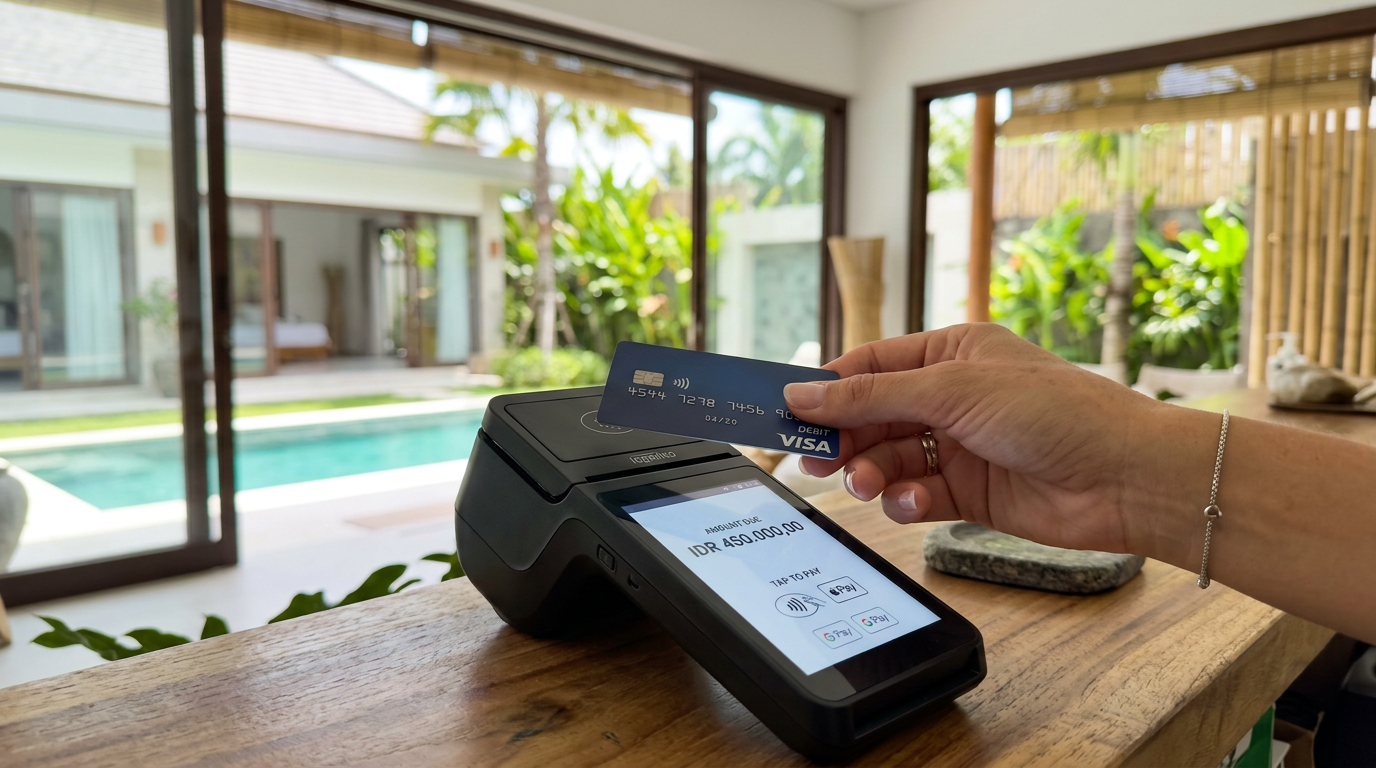
You just sent a message about your Bali villa dates, and then it hits you. "Please pay a deposit to confirm," the host says, and suddenly you're unsure if the payment method is safe. The worry is real: scams feel convincing, and extra costs can pop up when you least expect them.
Here's the part that matters most for Bali villa bookings. Payments usually come in two chunks: a deposit to lock things in, then a final balance later. That means a mistake costs more, and you also have more time for something to go wrong. On top of that, even when you pay from abroad, the transaction ultimately settles in Indonesian Rupiah (IDR), so FX and fees are not "background noise". They can change what you actually end up paying.
The good news is you can make this far less stressful. This article will help you choose the safest payment method by focusing on what "safety" really means: fraud risk, traceability, and whether fees or exchange-rate choices can surprise you. You'll also learn what to watch for with tourist-targeted scams and why QRIS and e-wallets tend to be better suited to on-island spending than large international deposit payments. Next, we'll define what "safest" means in clear, practical terms.
If you want a calmer booking process, start by checking your villa payment details and then review how traceability and records should work - explore available options on Balivillahub.com.
Safest is not about picking the "most popular" option. It's about minimizing the chance of losing money and maximizing what you can do if something goes wrong.
For Bali villa payments, that safety lens also needs to account for the way transactions ultimately settle in Indonesian Rupiah (IDR), plus the fact that you often pay a deposit first and then a later final balance.
Traceability and audit trail
Traceability means there's a clear record of who paid, when, and for what. For villa bookings, that matters because documentation can be the difference between a smooth resolution and a long, painful back-and-forth.
A common confusion is assuming any bank transfer screenshot is enough. In reality, the detail and accuracy of the record determine whether it helps in a dispute.
Consumer protection and chargebacks
Consumer protection refers to the ability to dispute a charge when fraud happens or services are not delivered as expected. Payment methods like card processing typically provide stronger dispute paths than methods that are hard to reverse.
People often think debit is "just as safe" as credit. The key is the dispute and recovery mechanism, not the plastic alone.
Reversibility vs irreversibility
Reversibility is whether funds can be stopped or reversed after payment. Direct transfers to the wrong place are usually far harder to unwind, which is why the deposit moment needs extra care.
It's tempting to treat all transfers as equal. But the level of protection depends on the payment rails, not just the fact that money left your account.
Dynamic Currency Conversion (DCC)
Dynamic Currency Conversion is when a card terminal offers to charge you in your home currency instead of IDR. While it sounds convenient, it can introduce unfavorable rates and extra hidden costs.
A frequent mix-up is thinking "home currency" always saves money. In practice, choosing IDR and letting the card issuer handle conversion is usually the safer default.
Scope: deposit vs final balance
The safer method can differ depending on which payment you're making. Deposits are higher-impact because they happen earlier, expose more money for longer, and are the point where scams often try to pressure you.
Some travelers apply the same logic to every payment. Yet the risk profile changes when you move from deposit to final balance closer to arrival.
With these criteria in mind, the next step is understanding why Bali villa deposits are especially risky, and how that changes what "safe" should mean for you.
Why Bali villa deposits are higher-risk
Scam pressure vs real payment protections
Deposits are exactly where scams try hardest to win. Fraudsters often rely on urgency and confusion, pushing you to pay quickly and move off proper channels. That contrasts with real protection mechanisms where disputes and records exist, especially when you pay through card-based processing rather than ad-hoc instructions.
A common pattern is a host insisting on "just send the deposit now" and sharing payment details that don't match the booking flow. When that happens, it feels like you're securing your dates, but you're actually stepping into a lower-protection payment path.
Irreversible transfers vs dispute-friendly options
Some people assume that any "bank transfer" is basically the same level of safety. In practice, direct transfers can be far more irreversible, meaning your ability to recover funds is limited once money lands in the wrong place. A safer payment method is one where there's an established dispute route if fraud occurs or the service doesn't match what you were promised.
This is why the deposit moment matters. You're exposing more money earlier, and scammers know it is harder for travelers to unwind an off-track transfer.
FX and DCC traps vs paying in IDR
Cost surprises are another reason deposits feel riskier than you'd expect. When a payment is offered in your home currency, you may run into Dynamic Currency Conversion (DCC), which can lead to unfavorable exchange rates. That can make a "simple" deposit suddenly cost more than you planned, even if the payment itself went through.
Choosing to be charged in IDR is a practical defense. It reduces the chance you get pulled into an unnecessary currency conversion step at the moment of payment.
Put it together and the cause-and-effect is clear: deposits expose more money for longer, scammers target urgency and confusion to push you into lower-protection payment paths, and FX choices can increase your cost instantly through mechanisms like DCC. Once you understand these risks, the next step is to see how payments actually flow between you and the villa.
How payments work between you and the villa
Scenario: You get a booking, then a payment request
Imagine you've picked a Bali villa you love, and the host emails an invoice. It asks for a deposit now, and it hints that the final balance comes later. This is the moment where the "how" matters, because payment safety depends on each step of the flow.
From here, you'll follow a simple rhythm: confirm details, pay the deposit, keep proof, then handle the final balance securely.
1. Step 1: Get booking confirmation and payment instructions
Start by reading the dates, amounts, and payment method instructions carefully. Make sure the deposit request matches what you agreed to, and confirm the same for the later final balance.
Where methods come in: card payments usually go through secure gateways, while bank transfers may require direct details. Your safety check is simple, verify the instructions for both payments before sending any money.
2. Step 2: Pay the deposit to secure your dates
When you pay the deposit, you're sending a larger chunk earlier than any other payment. Many villas accept card payments, and reputable platforms often route cards through secure processing paths.
For safety, treat direct transfers to individuals as higher risk due to irreversibility. If you use a card, the key operational point is to understand that Bali settles in Indonesian Rupiah, so your payment choice should avoid surprises.
3. Step 3: Wait for confirmation and save your records
After payment, don't just assume everything is fine. Look for written confirmation and keep proof of payment as records.
This is your traceability layer. If any issue appears later, having clear payment documentation makes disputes and follow-ups far easier.
4. Step 4: Pay the final balance closer to arrival
As your check-in date gets closer, you'll typically pay the remaining amount. This can still involve cards or other approved methods, but the principle stays the same: re-check what you're paying and how.
The safety check here is consistency. If the payment method or instructions change, slow down and confirm before you send the remaining funds.
5. Step 5: Choose IDR and handle DCC at the card
If you pay by card, you may be prompted to choose a charge currency. Dynamic Currency Conversion, or DCC, can appear at the terminal and may lead to unfavorable pricing.
Your rule is straightforward: choose to be charged in IDR to avoid DCC. QRIS and e-wallets can be great for on-island spending, but they're usually not the safest default for large deposit payments from abroad.
Once you know how the payment flow works, the next logical step is to spot the predictable traps people fall into during deposits and balances, so you can avoid them before they cost you.
Safest methods to use for booking
What's the safest way to pay for a Bali villa without losing sleep? The best answer depends on the safety criteria that matter most: traceability, real protection when things go wrong, and lower risk of irreversible loss. It also has to fit how Bali payments actually run, especially when you're paying a deposit from abroad.
With that in mind, here are the safest booking defaults, from best overall to practical second-best options.
Cards via secure payment pathways
If you're paying a deposit, start with card payments processed through secure or official payment pathways. This is usually the best match for deposits because it leaves a clear audit trail and typically offers stronger dispute options than sending funds directly to an individual.
Think of it like choosing a payment route that has built-in safeguards. If you're booking remotely, that matters even more because you can't rely on local recovery if something goes sideways.
Use cards safely by choosing IDR
Now the practical part: if you pay by card and the terminal offers a choice, choose to be charged in IDR to avoid Dynamic Currency Conversion (DCC). DCC can quietly steer you into unfavorable exchange rates and extra cost, even when the payment itself looks fine.
Some travelers also consider travel-focused cards that reduce foreign transaction surprises. If you're paying locally for small items, cards are still useful, but cash can fill gaps where terminals are less common.
Platform-mediated payments as a safety layer
If you're using a booking platform or a management channel that mediates payment, lean into that extra layer. When the platform handles the transaction flow, it often provides a structured process and dispute handling compared to ad-hoc instructions.
Use this as your "second safety layer" when the listing is higher risk or you want extra assurance on records and follow-up. Next, you'll be able to make smarter choices about when cash, transfers, and cards each fit best.
Want a safer booking flow built around traceability and clear payment steps? Talk with Balivillahub.com to align your payment method with how the deposit and final balance should work.
Cards vs transfers vs cash: where each fits
Some people assume transfers are just as safe as cards. The difference is protection and recovery. Cards tend to be safer for booking amounts because they come with stronger dispute options and a clearer path if something goes wrong. Transfers are generally more irreversible, so if funds go to the wrong place, recovery is much harder.
Cash feels "simple" but it has its own risks. It doesn't offer an easy audit trail, and large amounts are harder to protect. Cash is better for tips and small, day-to-day purchases rather than villa deposits where traceability matters most. The simple rule is cards for booking amounts, transfers only when you fully trust the setup, and cash for small needs.
With that in mind, QRIS and e-wallets are a different category of payment. They can be convenient on the island, but they are usually not the safest default for initial villa deposits.
QRIS is not the same as "safe for deposits"
Most people assume QRIS works like a universal "secure payment button" for everything. It really is a unified QR payment system, and many tourists can use it once set up locally. The safety problem is that it is usually not the best match for large, international villa deposit payments where you want strong traceability and dispute paths.
In other words, QRIS can be convenient on the island, but deposits are where you need the payment method to behave well if there's fraud or mismatch.
It's tempting to rely on e-wallets instantly
Here's the catch with e-wallets: they're often built around local setup and top-up routines. That can be smooth once you're already on Bali, but it's harder to treat as your safest deposit option from abroad. When access or setup is unclear, you risk delays and confusion at the exact moment you want a clean, documented transaction.
That's why experienced travelers generally reserve e-wallets for on-island spending rather than primary villa deposits.
QRIS and e-wallets shine for on-island spending
The practical truth is simple: QRIS and e-wallets are great for everyday purchases once your payment setup is ready. For villa deposits, you're better off defaulting to card payments through secure, official processing paths that prioritize an audit trail and protection.
Rule of thumb: use QRIS and e-wallets for local day-to-day payments, and use card or secure gateways for villa deposits where disputes and traceability matter most.
Now that you know what not to rely on, the next step is a step-by-step way to pay safely from booking to final balance.
How to pay safely step by step
1. Step 1: Verify the booking and payment request
Have you received a deposit request that feels slightly rushed? Before you pay anything, confirm the villa details, the dates, and that the payment instructions match the booking you actually made. If the message changes amounts or methods without explanation, pause and re-check.
The safety check is legitimacy. Look for clear, consistent instructions for both the deposit and the later final balance, so you're not guessing as you send money.
2. Step 2: Confirm deposit details in writing
Next, make sure the deposit amount and the exact payment method are stated clearly and in writing. Double-check the currency and whether you are paying via card or another channel.
This matters because scams often hide behind vague instructions or last-minute changes. Written clarity protects you by improving traceability if a dispute ever happens.
3. Step 3: Execute payment through a safe channel
When it's time to pay, use the safer payment route available for your situation. Card payments processed through secure or official pathways are usually the best fit for deposits, especially when you're booking from abroad.
If you're asked to use a high-risk alternative, treat it as a red flag. The safety goal is to avoid payment methods that are harder to reverse and harder to dispute.
4. Step 4: Choose IDR and avoid DCC on card
At the moment you're paying with a card, watch for a currency choice screen. If you see options, choose to be charged in IDR to avoid Dynamic Currency Conversion (DCC).
DCC can add hidden cost through unfavorable exchange rates. Also keep in mind that QRIS and e-wallets are usually better for on-island spending once you're set up.
5. Step 5: Save confirmations and monitor changes
After payment, save confirmation messages, receipts, and any invoice details. Then keep an eye on what changes before arrival, especially if the host updates payment instructions.
Recordkeeping matters because it creates an audit trail when you need it. Even with a good plan, people still fall into predictable traps.
Next, we'll tackle those traps directly and show how to avoid them before they cost you money.
What to watch out for (common mistakes)
Cash is the only safe option
Paying in cash feels safer because you don't see card details or transfer steps. But cash has weak traceability, and large amounts are harder to protect if anything gets lost or goes wrong.
When people use cash for deposits, they often lose the strongest proof trail and dispute options. The result can be a messy refund fight or even a booking that doesn't get honored.
Paying in home currency is always simpler
It's tempting to choose your home currency because it sounds "easier" and more familiar. The risk is Dynamic Currency Conversion (DCC), which can add unfavorable pricing through the payment terminal.
If you skip the IDR choice, you may pay more than expected. The consequence is simple, avoidable extra cost at the exact moment you're paying your deposit or balance.
Any payment link or bank details are equally safe
Just because a message includes banking details doesn't mean it's legitimate. Scammers often use off-channel requests that look official enough to get you to move fast.
When you follow the wrong instructions, your payment can go to the wrong place. Then recovery is hard because the transfer may be difficult to unwind.
Credit cards always work for everything
Credit cards are widely accepted in tourist areas, so it's easy to assume they solve every payment need. Still, card acceptance can vary between bigger places and private owners, and deposits may be handled differently than you expect.
If your card payment fails at the wrong time, you risk delays or being pressured into a less safe alternative. It's a common route to missed deposits and rushed decisions.
E-wallets are plug-and-play
People often think setting up an e-wallet on arrival will be effortless. In reality, setup and top-up can be tricky for international travelers, and the timing matters when you need to pay a deposit.
If your e-wallet plan breaks mid-transaction, the "backup" becomes whatever the host suggests next. That's how you end up in higher-risk payment decisions.
Telling your bank is unnecessary
Forgetting to notify your bank can trigger fraud checks. You might see the card decline right when you need it for your deposit or final payment.
When that happens, you lose time and may feel forced to switch to a less protected method. The safer mindset is to prevent blocks before they interrupt the booking flow.
Next up, we'll talk about a smarter layered backup mindset, so one payment snag doesn't derail your whole plan.
Smart backup strategy for peace of mind
Imagine you're booking a high-value Bali villa from abroad, and you need to send a deposit. You choose cards via secure, official processing paths, insist on being charged in IDR to avoid Dynamic Currency Conversion (DCC), and you save every confirmation and receipt. For day-to-day expenses, you keep cash mainly for tips and small buys, not the deposit.
Then something threatens the plan. Your card gets flagged because travel notice wasn't set, or the host tries to redirect you to an off-channel payment path. Because you built a layered backup, you notify your bank, refuse to move off-channel, and rely on the safer method stack so one failure doesn't derail the entire stay.
The expert takeaway is simple: safety isn't one trick. It's a system that holds up when the unexpected happens.
With that mindset, the final step is to pull everything together into one clear safest-payment plan.
"Safety is what you can prove and what you can reverse," and that's the mindset to bring to your Bali villa booking.
Define safety as traceability plus consumer protection plus reversibility, then default to card payments via secure or official processing paths for deposits. Choose to be charged in IDR to avoid Dynamic Currency Conversion (DCC), and keep cash mainly for small, day-to-day expenses and tips. Once your payment flow is set up correctly and your records are saved, you can shift your focus to arrival plans and enjoying the stay with real peace of mind.
Want help aligning your booking payments with the safest approach to traceability and secure deposit handling? The team at Balivillahub.com is ready to guide you through the right payment flow for your dates.