What are Bali's rainiest months?
Bali Villa Hub
3/7/2026
What are Bali's rainiest months?
Bali's weather swings between a pronounced wet season and a dry season, and knowing when the heaviest rain falls helps with planning activities, travel and packing. Below we explain when the wet season occurs, show typical monthly rainfall and peak months, describe how rain varies across the island, outline flood and travel risks, and finish with practical packing suggestions to stay comfortable during the rainy months.
When does Bali's wet season occur
Bali's wet season typically falls in the later part of the year through the early months of the next year. While exact dates vary each year, the period most visitors and locals refer to as the wet season runs consistently from November through March.
Typical timing and peak months
The wettest stretch usually begins with increased showers in November and becomes fully established by December. Rainfall intensifies in January and February when the island receives the highest frequency of heavy tropical downpours and extended cloudy periods. By March the intensity starts to ease and April often marks the transition back toward drier conditions. For planning purposes assume January and February are the months most likely to deliver sustained heavy rain.
How the wet season arrives and ends
The change into wet season comes gradually at first with intermittent storms and humid days. Once established it brings daily convectional rainfall with short, sharp bursts as well as longer rain events caused by monsoon patterns moving across the region.
Regional timing differences across the island
Timing can vary between coastal lowlands and the central highlands. Mountainous areas and higher elevations often see an earlier onset and more persistent rain compared with the southern peninsula which can remain drier for a little longer.
In short, plan for Bali's wet season from November through March with the peak in January and February and expect local variation by elevation and coastline. These months bring lush landscapes and fewer crowds but require flexibility for outdoor plans.
With that timing in mind, the next section breaks down the typical monthly rainfall amounts so you can see the seasonal contrast in numbers.
Monthly average rainfall and peak rain months
Bali's monthly rainfall varies sharply between the wet and dry seasons, so it helps to know typical amounts when planning. Most coastal areas see a clear increase from November through March while the driest months are concentrated between June and September.
Below are typical monthly averages and the months that usually deliver the heaviest rain. Values are rounded to reflect general coastal conditions rather than specific microclimates in the highlands.
- January records the highest monthly average rainfall at roughly 300 to 350 millimeters with frequent intense showers and occasional multi-day rain events.
- February follows closely with about 250 to 320 millimeters and remains one of the most consistently wet months on the calendar.
- December registers around 180 to 260 millimeters as the wet season becomes established and storms grow in frequency.
- March typically sees 150 to 220 millimeters as rainfall begins to ease but heavy showers can still occur especially early in the month.
- May to September form the dry core with monthly averages commonly between 15 and 70 millimeters depending on the month and location, making them the least rainy months.
Keep in mind that inland highland areas and windward slopes often receive higher totals than coastal zones, so local averages may be greater than the figures above. With these monthly patterns noted, the following section explains how totals shift across Bali's regions.
How rainfall varies across Bali's regions
Bali is compact yet climatically diverse, so rainfall totals change noticeably with elevation and coastline orientation. Knowing typical regional patterns helps set expectations for activities and travel. Below are common regional differences with representative monthly amounts during the wet season and the dry core.
Coastal lowlands and southern peninsula
The southern coast including Denpasar and the Bukit peninsula tends to be the driest coastal zone. During the wettest month of January expect about 150 to 250 millimeters along southern beaches, while the core dry months of July and August average 10 to 40 millimeters. The Bukit plateau receives slightly less rain than the eastern and northern shores.
Central highlands and volcanic slopes
Ubud, Bedugul and the slopes around Mount Agung and Mount Batur are the wettest parts of the island. In January monthly totals commonly reach 400 to 600 millimeters at higher elevations. These areas also experience more persistent drizzle and cloud cover which can extend the wet conditions beyond the coastal patterns.
North, east and Nusa islands
The north coast and eastern regencies show moderate wet season totals. In January expect roughly 250 to 350 millimeters on the windward north coast and 200 to 300 millimeters on the east coast. The nearby Nusa islands are typically a touch drier with January figures around 120 to 200 millimeters thanks to their exposure and lower elevations.
In practice these figures mean the island can be simultaneously lush and stormy inland while remaining reasonably pleasant on parts of the coast. When planning, choose locations and activities with these microclimate differences in mind and allow flexibility for heavy tropical downpours, especially in the central highlands.
The regional differences above influence the likelihood of flooding and travel disruptions, which we outline next.
Flood risk and travel disruptions during the rainy months
Flooding in Bali is most likely from November through March with peak risk in January and February. Low-lying urban districts such as Denpasar, Kuta, Seminyak, Canggu and parts of Sanur commonly experience street flooding after intense downpours with typical depths between 20 and 60 centimeters in drains and underpasses and occasional deeper inundation in poorly drained pockets. River valleys including the Ayung and Petanu near Ubud can overflow rapidly after sustained rain, creating flash floods that move fast and carry debris. Steep mountain roads around Bedugul, Bangli and the volcanic slopes are prone to landslides and fallen trees which can cut access to villages and popular trekking routes for several hours or days following heavy storms.
Travel disruptions can include prolonged traffic jams, temporary road closures, limited or suspended ferry and fast boat services to the Nusa islands during rough seas, and localized flight delays when visibility and surface conditions are poor. Scooter travel becomes particularly hazardous with slick roads and hidden potholes, so allow extra time, avoid night riding during heavy rain and choose vehicles with good ground clearance for transfers when possible. Check updated local forecasts and transport notices, confirm flexible bookings and have a contingency plan for alternate routes or extra nights. In severe events follow instructions from local authorities and never attempt to cross a flooded road or river on foot or by vehicle.
With safety considerations covered, the final section gives practical packing tips so rainy weather has minimal impact on your trip.
Packing and clothing essentials for Bali's rainy months
Rainy months in Bali require a thoughtful wardrobe that copes with sudden downpours and high humidity while staying comfortable in warm temperatures. Focus on fabrics that dry fast and breathe well. Bring a lightweight waterproof jacket with sealed seams and a hood that packs into its own pocket for easy storage when the sun returns.
Plan for layers and quick changes. Pack three to five quick dry shirts made from synthetic or merino blend fabric and one long sleeve shirt for cooler mornings in the highlands. Include one pair of quick dry trousers and one pair of convertible trousers or shorts for flexibility. Add a thin sweater or light fleece for evenings above 800 meters where temperatures drop.
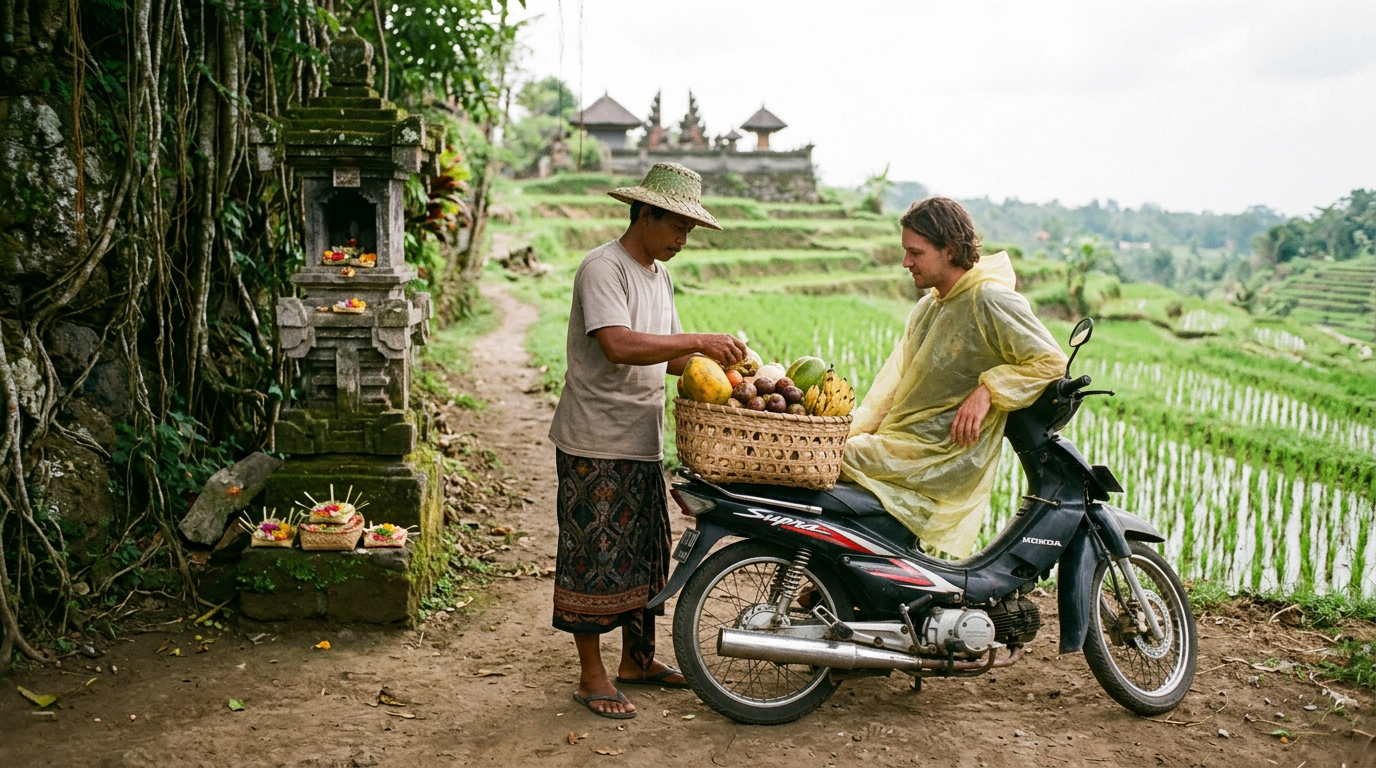
Footwear and protection matter more than usual. Take one pair of water-resistant trainers with good tread for walking on slick cobbles and muddy trails and one pair of grippy sandals for beaches and wet streets. Bring several pairs of moisture-wicking socks and a compact umbrella plus a packable poncho for scooter rides. Use a waterproof daypack cover or a small dry bag to protect electronics and travel documents and carry zip lock bags for phones and wallets when you need an extra layer of protection.
Practical extras will save time and stress. Pack a travel clothesline and a small bottle of laundry soap to wash items each evening. Include reef-safe mosquito repellent and a lightweight towel that dries quickly. Aim to travel light but prepared with these key pieces so sudden rains are an inconvenience rather than a trip stopper and you can enjoy Bali's lush season comfortably.
If you are arranging accommodation during the wet season, consider selecting a villa with flexible booking options and sheltered outdoor space. For convenient villa choices and local support, visit https://www.balivillahub.com/en to explore options and find a place that fits your wet-season needs.