What is considered rude in Bali?
Bali Villa Hub
3/12/2026
What is considered rude in Bali?
Visiting Bali is rewarding when you take a moment to understand local customs. What seems harmless to a visitor can unintentionally offend because many behaviors are rooted in spiritual beliefs and long-standing social norms. This guide clarifies common missteps and offers simple, practical advice to help you move through Bali with respect and ease.
Common etiquette mistakes to avoid in Bali
Small actions can have big impacts. Below are frequent mistakes visitors make, presented so you can avoid awkward moments and show consideration for local people and places.
- Ignoring temple dress and protocol Many temples expect modest clothing and a sarong or sash. Entering barefoot or with exposed shoulders and waist is often seen as disrespectful.
- Touching heads The head is regarded as sacred in Balinese culture. Do not touch another person’s head, including children, without explicit permission.
- Pointing with the index finger Pointing directly at people or sacred objects is rude. Use an open hand or a gentle nod to indicate direction instead.
- Public displays of affection and nudity Excessive PDA or removing shirts in public can embarrass locals. Swimwear is acceptable on the sand but wear a cover up when leaving the beach or entering village areas.
- Over bargaining and disregarding poverty Aggressive haggling for small items or dismissing humble offers can humiliate sellers. Offer a fair price and be thoughtful when giving to those who appear in need.
Being mindful improves interactions and preserves the warmth of local hospitality. To deepen your understanding of local spiritual life, read on for specific guidance about temples and ceremonies.
How to behave at temples and during ceremonies
Visiting a temple or attending a ceremony is a privilege. Following a few clear rules will keep you safe and show respect for local belief and practice.
Before You Enter the Temple
Dress modestly: cover shoulders and knees, and wear a sarong and sash when required. While many temples lend sarongs at the entrance, bringing a lightweight wrap is practical and appreciated.
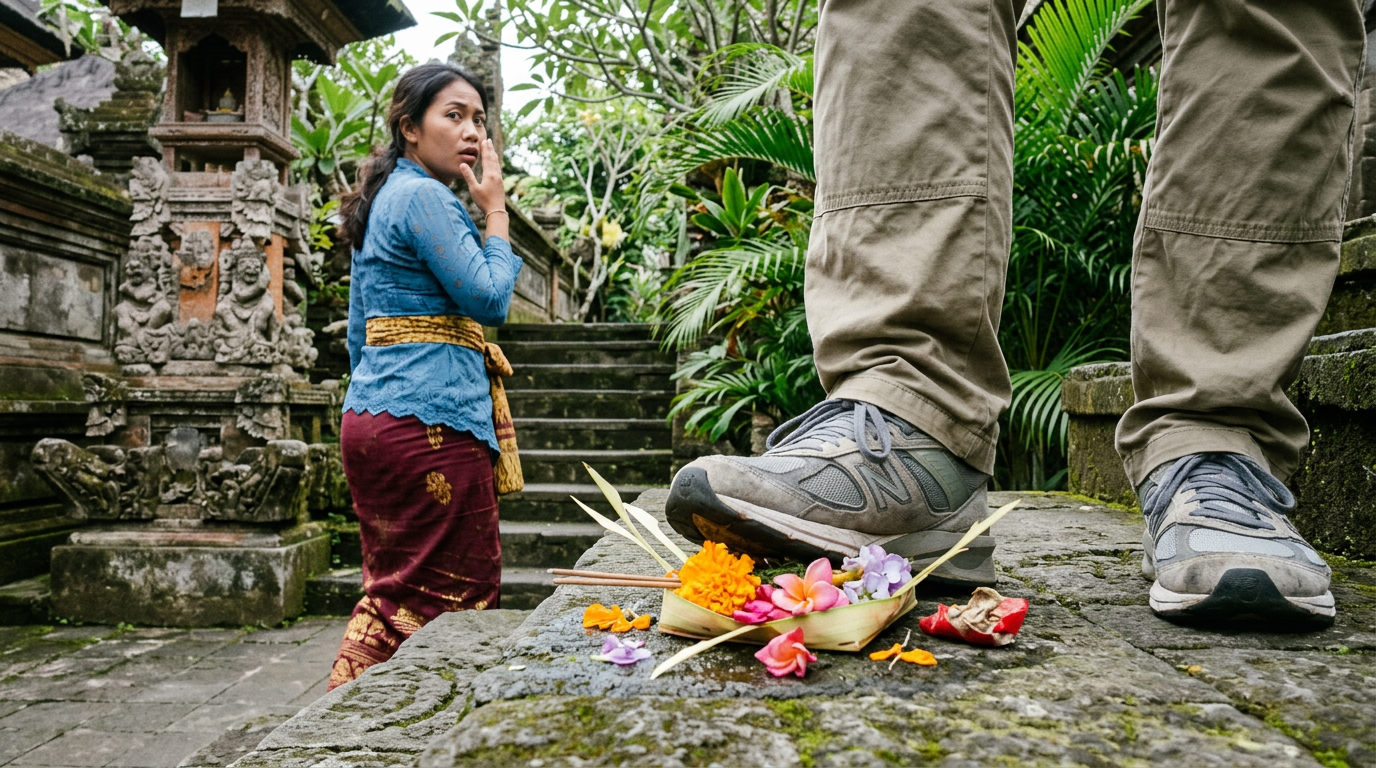
Remove shoes before stepping onto inner courtyards and avoid bringing large bags into sacred areas. Do not step over offerings or on raised thresholds where ceremonial items are placed.
Conduct Inside and During Rituals
Keep your voice low and move slowly. Stand back from worshippers and processions, and never position yourself between a person and the shrine they face.
Ask permission before photographing people and turn off flash. Refrain from climbing on temple structures or touching ritual objects, and never sit higher than a priest or elder during a ceremony.
When You Are Invited to a Ceremony
If you are invited, follow the lead of your hosts. Accept a seat offered and participate quietly rather than calling attention to yourself.
Small contributions to the temple fund are customary and welcome. Women should observe any local guidance about sitting or participating if they are menstruating and follow that guidance respectfully.
Observing these practices helps preserve the sanctity of temples and makes your visit more meaningful. With temple etiquette in mind, the next section explains nonverbal cues that can affect daily interactions.
Body language rules and gestures that offend
Nonverbal cues matter as much as words in Bali. Simple gestures that seem casual to visitors can be disrespectful because they touch on spiritual and social values.
Gestures to avoid
Pointing with the index finger at people or sacred objects is seen as rude. Instead, indicate direction with an open palm or a gentle nod to avoid singling someone out.
Avoid beckoning someone with the index finger held up. Use a relaxed hand with the palm down when calling a friend or signalling a taxi, and avoid aggressive or demanding motions.
The significance of head and feet
The head is considered the most sacred part of the body. Never touch another person on the head, including children, without permission because this invades personal and spiritual space.
Feet are the lowest and least pure part of the body. Refrain from showing the soles when sitting, do not point your feet at people or shrines, and avoid stepping over offerings or thresholds where ceremonial items are placed.
Facial expressions and eye contact
Prolonged staring or direct eye contact can come across as confrontational. Smile gently to ease interactions and keep a composed expression in public and during rituals.
Open displays of anger or impatience are socially frowned upon. If you feel upset, step away briefly to regain composure rather than raising your voice or making sharp gestures.
Mindful body language helps you blend in and show respect. Next, consider how clothing choices intersect with these nonverbal signals.
Appropriate dress and nudity expectations
Modesty signals respect and opens doors to friendlier interactions. For sacred sites and village areas make sure to cover shoulders and knees and wear clothing that is not see-through. Temples commonly require a sarong and sash; many will lend one at the entrance, but bringing a lightweight wrap is more convenient. In towns and at ritual sites men should wear a shirt, and women should avoid halter tops and extremely short shorts when planning to leave the beach area. Swimwear is accepted on the sand and at pools, but step into a cover up or shirt when walking through cafés, shops, or village streets.
Public nudity is unacceptable and can attract police attention or fines, so nude sunbathing or removing clothing in public places is never appropriate. Toplessness is generally discouraged even on popular tourist beaches, and discretion is wise inside private villas and on terraces visible to neighbors. If you need to change into swimwear, use changing rooms or a low-profile spot, and avoid photographing locals in swimwear without permission. Pack a sarong, long shorts, light trousers, and a few shirts or blouses for layering, and keep a small wrap in your day bag for impromptu temple visits and village walks. With clothing covered, the final practical topic is money and giving.
Money matters including bargaining and poverty etiquette
Handling money respectfully helps you connect with Balinese people and avoid awkward situations. Learn a few clear practices for bargaining, tipping, and responding to visible poverty to ensure your actions are fair and culturally sensitive.
Practical bargaining and payment tips
In markets, begin with a polite offer around half of the seller’s asking price and expect to settle nearer to seventy percent for small souvenirs. For services such as taxis or motorbike hires, agree a fixed price before you travel and pay with small bills when possible to ease exact change.
Keep ATM (automated teller machine) withdrawals and large cash transactions for secure locations, and carry a mix of denominations for offerings, market purchases, and tips. When giving at temples, place coins or small notes in donation boxes rather than handing cash directly to worshippers.
- Bargain with courtesy Smile and treat negotiation as a friendly exchange, not a confrontation, and be willing to walk away if the price does not feel fair.
- Tipping guidelines Small tips are appreciated; for cafés leave ten thousand to twenty thousand IDR (Indonesian Rupiah) for small orders, and for full-day guides consider one hundred thousand to two hundred thousand IDR depending on service quality.
- Dealing with children and requests Avoid giving money directly to children because it can encourage begging; instead give to a parent, local business, or community program when possible.
- Choose thoughtful giving If you want to help, contribute through your hotel, a reputable community initiative, or buy food and essentials from local shops to support vendors directly.
Simple choices about money reflect respect for local dignity and livelihoods. Being fair when you bargain and mindful when you give helps maintain goodwill and makes your visit more rewarding.
For thoughtful accommodation options that respect local communities and make it easy to follow local customs, consider browsing https://www.balivillahub.com/en to find villas and hosts who prioritize cultural sensitivity and guest comfort.
Overall, a little awareness goes a long way in Bali. Respectful behavior—whether in temples, through body language, in dress, or when handling money—deepens the quality of your interactions and helps preserve the island’s rich traditions for both visitors and residents. Enjoy your time with curiosity and care.