What is the biggest problem in Bali?
Bali Villa Hub
3/13/2026
What is the biggest problem in Bali?
Bali’s rise as a global destination has delivered visible prosperity, but that success has also created mounting, interconnected challenges. Beyond crowded beaches and busy streets lie pressures on the island’s natural systems, public services and social fabric. This article examines how those pressures show up, who gains and who loses, and what policy and community measures could ease the strain.
How overtourism is straining Bali’s environment and public services
Bali’s surge in visitors has been extraordinary and visible in everyday life. Crowded beaches and full hotels are the surface signs of a deeper problem: fragile ecosystems and essential services that cannot keep pace with fluctuating demand. The result is measurable stress on water, waste and public safety systems that local governments and communities must now manage.
Environmental damage and resource depletion
Tourism concentrates demand for freshwater and energy in coastal zones that were never designed for such density. Many resorts rely on groundwater extraction, which lowers aquifer levels and increases salinity in wells used by local farmers. Untreated or partially treated wastewater reaches reefs and beaches, causing algal blooms and accelerating coral decline.
Waste and pollution outpacing collection
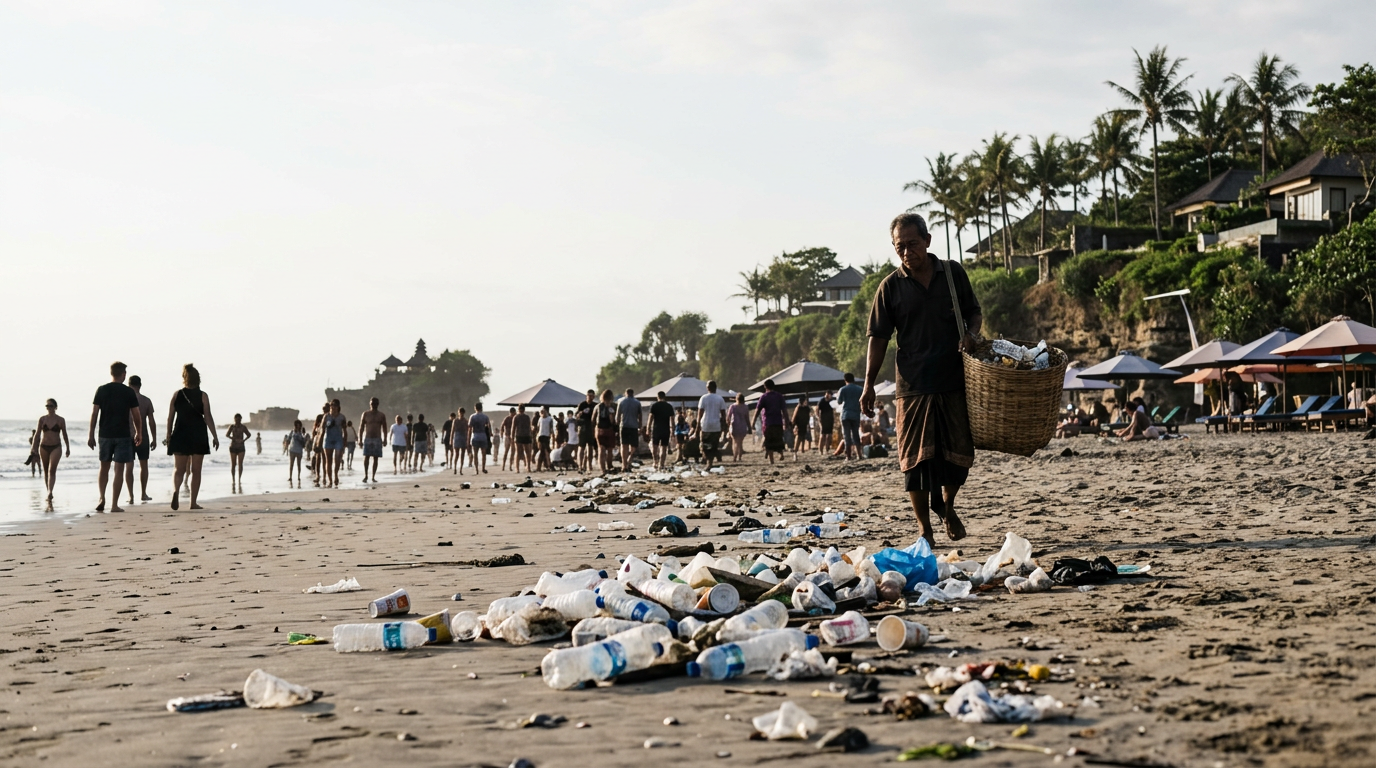
Restaurants, markets and daily tourist activities generate large volumes of plastic and organic waste that local collection systems struggle to handle. Overflowing bins and illegal dumping have become common near popular sites. Seasonal peaks create surges that landfill and recycling facilities were not built to absorb, leading to leachate risks and informal burning.
Public services and safety under strain
Road congestion slows emergency response times and inflates maintenance costs for transport networks. Health clinics and policing face spikes in demand during holiday periods, reducing service quality for residents. Public transport and sanitation infrastructure suffer from underinvestment as temporary visitor income masks long-term needs.
Addressing these pressures requires coordinated planning that aligns visitor capacity with environmental thresholds and public service limits. Practical measures include enforcing wastewater standards, improving waste logistics and scheduling visitor flows so infrastructure can operate within safe margins for both people and the natural systems they depend on.
These environmental and service pressures also expose economic weaknesses that shape who benefits from tourism and who is left vulnerable.
A fragile tourism economy who really benefits and who is left out
Bali’s dependence on visitor spending has created a fragile economic model that looks prosperous on the surface but conceals deep inequality. Popular districts attract investment and generate visible wealth, while many households remain tied to low-paid, unstable work and rising living costs. Understanding who captures the gains is essential to designing fairer outcomes.
Where the money goes
Accommodation and hospitality capture a large share of tourist spending, yet ownership is often dispersed among outside investors and absentee landlords. Online booking platforms and imported supply chains divert revenues before they reach local vendors. Even when tourist numbers rise sharply, local budgets see only marginal growth because much of the profit flows beyond the island.
Workers and small businesses left behind
Many service jobs are seasonal and informal, offering no sick leave or retirement benefits. Drivers, cleaners and street vendors face volatile demand and rising rents that erode real incomes. Traditional farmers and artisans rarely gain from mass tourism since their products are underpriced or bypassed by supply networks focused on scale and standardization.
Policies that can rebalance benefits
Practical measures include stricter short-term rental rules, mandatory transparent reporting of tourism taxes and ringfencing those funds for waste, water and affordable housing, and incentives for hiring local staff on stable contracts. Supporting cooperative marketing for village homestays and simpler access to small business credit helps keep more spending within communities.
Unless those shifts happen, Bali risks consolidating prosperity in a narrow slice of the economy while exposing most residents to cost shocks and declining public services. A deliberate policy mix that prioritizes local ownership and stable work can make tourism resilient and inclusive for years to come.
Where economic fragility meets infrastructure limits, waste and pollution become immediate, visible crises that affect both residents and visitors.
Waste, pollution and infrastructure breakdown as a looming crisis
Bali is running up against tangible limits in how much waste and pollution its infrastructure can absorb. Popular beaches, market districts and roadside drains show the visible effects while groundwater, coral reefs and neighbourhood services record the less visible damage. Left unchecked, these pressures will reduce quality of life for residents and the visitor experience that the island depends on.
Below are the principal failure points that require urgent attention from planners and operators across the island.
- Plastic and solid waste overload Most tourist areas generate large volumes of single-use plastic and food waste that collection services cannot keep up with during peak weeks. Overflowing bins and informal dumps create direct marine litter risks and attract disease vectors.
- Insufficient wastewater treatment Many hotels and restaurants discharge untreated or partially treated effluent to local drains and coastal zones, degrading reefs and contaminating aquifers used by farmers. Existing treatment plants operate below the scale needed for current visitor numbers.
- Stormwater and drainage clogging Litter and sediment block urban drains, leading to repeated flooding in low-lying neighbourhoods during heavy rain. Flood events damage roads and household property while increasing maintenance costs for local governments.
- Utility capacity shortfalls Peaks in visitor demand strain water supply and electricity grids, causing intermittent outages and pressure drops that affect both residents and businesses. Backup solutions are costly and often polluting.
- Gaps in waste logistics and enforcement Fragmented collection, scarce recycling markets and weak enforcement of dumping rules mean much waste never enters formal processing streams. This institutional gap compounds technical failures on the ground.
Practical steps include expanding treatment capacity in targeted corridors, introducing segregated collection at source and creating predictable finance for maintenance through dedicated tourism levies. Coordination between districts to match infrastructure upgrades with realistic visitor carrying capacities will prevent localized collapses from becoming island-wide crises.
Environmental strain and economic stress also influence social dynamics and cultural continuity across the island.
Rising crime, social tensions and erosion of local culture
As visitor numbers swell, certain patterns of crime have become more visible and more disruptive to daily life. Petty theft at crowded temples and beaches and an increase in motorbike theft have eroded a sense of safety for both residents and visitors. Fraudulent services and informal money-exchange schemes target tourists and complicate enforcement. Nightlife districts see occasional violent incidents linked to drugs and alcohol that strain local policing and emergency medical services. These problems are not isolated incidents but symptoms of an economy under pressure where transient profits create opportunities for opportunistic crime and reduce the capacity of institutions intended to protect communities.
Alongside security concerns, social tensions and cultural loss are intensifying. Rising property values and short-term rentals push families away from central villages while traditional practices are repackaged into staged performances for quick revenue. Sacred ceremonies suffer calendar compression to suit arrivals, and artisans face undercutting by mass-produced souvenirs. Younger generations often opt for unstable tourism work rather than maintain agricultural knowledge and craft skills, weakening intergenerational transmission of culture. Restoring balance requires firm regulation of rentals and nightlife, accessible housing policy for locals and community-led rules that protect ceremonial space. Equally important is clear visitor guidance and modest enforcement that reduces exploitative practices while safeguarding the living culture that makes the island unique.
Addressing social and cultural pressures depends on policy frameworks that are enforced and on local initiatives that keep communities central to decision making.
Policy choices and community-led solutions to manage tourism pressure
Managing tourism pressure requires a mix of clear policy and empowered local action. Policies set limits and create incentives while community initiatives translate rules into daily practice that protects livelihoods and place. Effective solutions focus on measurable targets and shared responsibility so change is durable and fair.
Coordinated governance and measurable targets
Regional planning must set visitor carrying capacities for beaches, temples and nature reserves and publish those limits so operators can plan. Fiscal tools should be simple and transparent for quick implementation. For example a per-night tourism levy can be ringfenced to fund wastewater upgrades, waste collection and affordable housing projects in high-pressure areas.
- Regulate short-term rentals with quotas and licensing Introduce a permit system that limits the number of private rentals per village and requires basic safety and wastewater compliance to operate legally.
- Enforce wastewater and solid waste standards Require all guesthouses above a set size to connect to treatment or install on-site systems within two years and create routes for segregated collection linked to recycling markets.
- Support community-based tourism enterprises Fund village cooperatives for homestays and craft markets so profits stay local and offer low-interest loans and business training to scale responsibly.
- Smooth visitor flows with pricing and scheduling Use off-peak discounts and permit-based access to popular temples and trails to reduce daily congestion and protect cultural events.
Policies work best when designed with village leaders, businesses and residents at the table and when compliance is paired with technical support and predictable finance. Small, clear rules that are enforced and paired with incentives for local stewardship create resilient tourism that protects both community life and the island experience visitors seek.
If you are planning a stay or looking for longer-term accommodation options that respect local communities, https://www.balivillahub.com/en provides a practical way to find vetted villas and local guidance that aligns with responsible travel choices.
Ultimately, Bali’s biggest problem is not a single issue but a constellation of environmental, economic and social strains tied to rapid tourism growth. Addressing them demands coordinated policy, sustainable infrastructure investment and community-led stewardship so the island’s natural and cultural assets endure for residents and visitors alike.