What is the cheapest way of transport in Bali?
Bali Villa Hub
3/14/2026
What is the cheapest way of transport in Bali?
Finding the most budget-friendly way to get around Bali depends on your itinerary, comfort level and how much luggage you carry. This guide walks through the lowest-cost options—from self-drive scooters to local minibuses—so you can match savings with safety and convenience on the island.
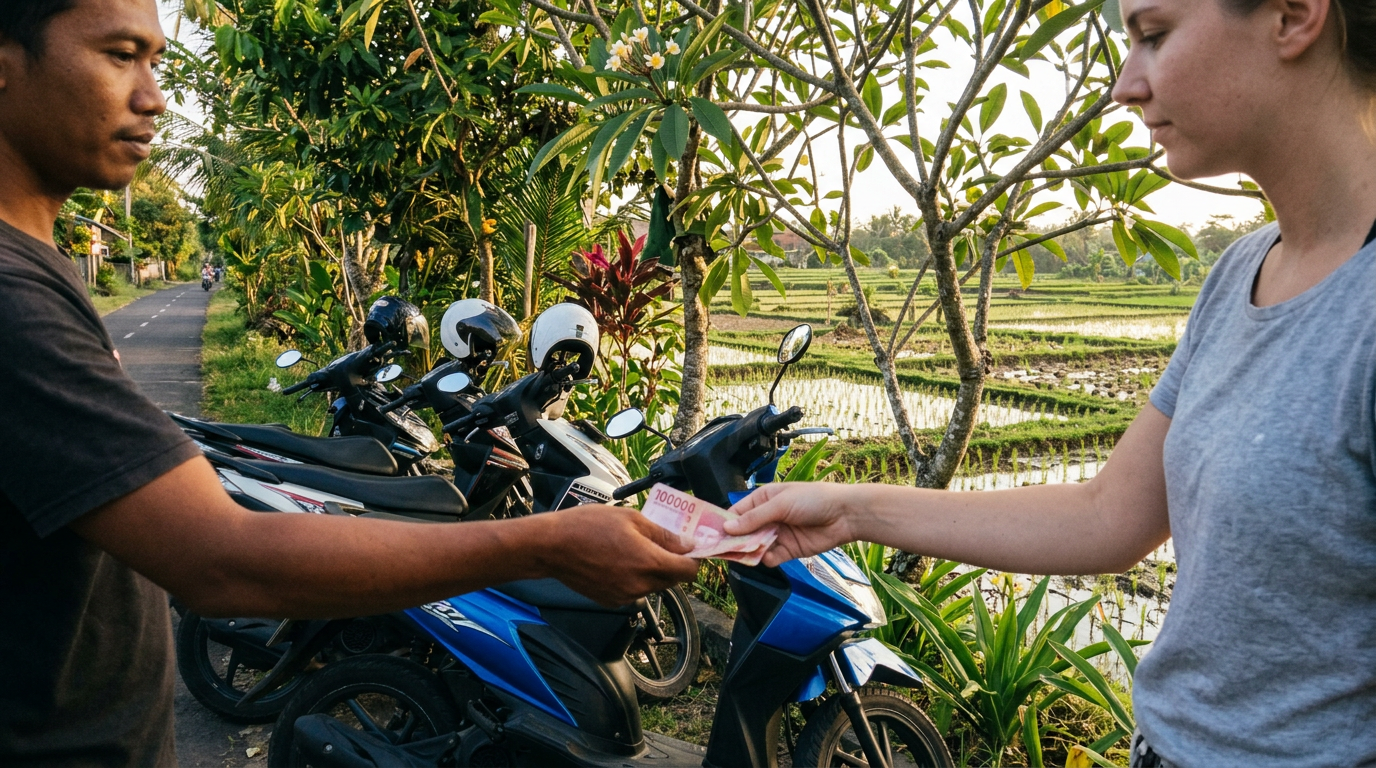
Renting a scooter or motorbike, the cheapest DIY transport
Renting a scooter is often the most economical way to move around Bali and gives you freedom to explore narrow lanes and quieter villages at your own pace. Typical rental rates are IDR (Indonesian Rupiah) 50,000 to 80,000 per day for a modern automatic scooter, about IDR 300,000 to 450,000 for a week, and IDR 800,000 to 1,500,000 for a month depending on model and condition. Expect to pay a small deposit or leave a passport copy, and negotiate a reasonable cash deposit when possible. Fuel is inexpensive compared with many other countries, with a full tank usually costing IDR 30,000 to 60,000 depending on scooter size and fuel prices. Before you ride, check brakes, lights, horn, mirrors and tyre tread; photograph any existing scratches and confirm the agreed fuel level and return time in writing or by message. For legal safety carry your national driving licence plus an international driving permit when required, and keep copies of the rental agreement on your phone. Helmets should be provided for rider and passenger; inspect fit and strap security and ask for a replacement if a helmet is cracked or loose. Be cautious when riding after dusk and on steep or wet rice-terrace roads where grips can be slippery. Small repairs are usually handled by local workshops at modest cost, but clarify who pays for breakdowns or minor damages before you sign. Renting from a trusted villa host or a well-kept shop often ensures better-maintained machines and clearer paperwork. For solo travellers on a budget a scooter offers unbeatable value, but balance the savings with a realistic assessment of your riding skills and comfort with busy traffic and varied road conditions.
If you prefer not to ride yourself, app-based drivers provide a low-effort alternative for short trips and can be worth considering for convenience and safety.
Ride-hailing apps like Gojek and Grab, affordable on-demand rides
Ride-hailing apps have transformed short trips in Bali into a fast and transparent option for budget-conscious travellers. These apps connect you with drivers for motorbike and car rides, showing an upfront fare estimate so you can compare cost against renting or taking a taxi.
Typical fares for motorbike rides range from IDR 10,000 to 40,000 for short hops inside towns and IDR 40,000 to 120,000 for longer inter-district trips. Car fares usually start around IDR 30,000 for short journeys and climb to IDR 150,000 or more for cross-island trips depending on distance and demand.
- How pricing works: Fares are calculated by distance and estimated time and will show a clear total before you confirm a ride so there are no surprise charges.
- Choosing vehicle type: Select a motorbike to save money and avoid traffic, or a car for luggage and comfort—car fares are commonly two to three times higher than bike fares for the same route.
- Booking and pickup tips: Use exact pickup pins and local landmarks to help drivers find you, and allow five to ten minutes for drivers to arrive in busy areas or during peak hours.
- Payment and receipts: Most apps accept cash or digital payments and provide an electronic receipt with driver details and the trip route for safety and expense tracking.
- Limitations and availability: Expect lower availability late at night in rural areas and higher surge pricing during holidays and bad weather, so plan accordingly.
For many visitors these apps offer a convenient balance between cost and comfort and are particularly useful for single travellers or short point-to-point journeys.
If you want the absolute lowest fares and a more local experience, traditional motorcycle taxis and minibuses are the next step down in price.
Local motorcycle taxis (ojek) and minibuses (bemo), ultra-budget local travel
For travellers on the tightest budgets, local ojeks and bemos provide the lowest-cost way to move around towns and between neighbouring villages. They are informal, plentiful and perfect for short hops where speed and price matter more than comfort.
Ojek motorcycle taxis
Ojek riders wait by markets, temple entrances and transport hubs and will usually accept cash only. Expect short village trips to start at IDR 5,000 to 15,000 and trips across town from IDR 20,000 to 40,000 depending on distance. Always agree a price before you mount and insist on a helmet for each passenger.
Bemo minibuses
Bemos run fixed local routes and stop frequently on request. Fares are extremely low with short trips commonly IDR 3,000 to 10,000 and longer inter-village runs IDR 10,000 to 30,000. They are basic vehicles with room for small luggage and are best used when you know the route or can point to a clear destination.
Haggling, safety and practical tips
Negotiate calmly and pay the driver only after arrival unless a small deposit is standard. Carry small notes and coins as drivers rarely have change. Check helmets for visible damage and decline any ride that feels unsafe. If you need a repeatable route, ask locals for the usual price so you do not overpay. Used wisely, ojeks and bemos save significant travel money and add a local flavour to your Bali trip; combine them with occasional app rides or rentals to cover longer or luggage-heavy journeys.
If your trip covers greater distances or you prefer scheduled services, public buses and shuttle transfers are the next economical option.
Public buses and shuttle services, low-cost longer distance options
When your journey is longer and saving money matters, public buses and shared shuttles are the most economical choice for travel between towns and to the airport. These services trade door-to-door speed for a much lower fare and work best if you plan routes in advance and travel light.
City and regional buses
City buses operate on fixed routes with frequent stops and very low fares. Short urban journeys commonly cost IDR 3,000 to 15,000 while longer regional trips can be IDR 10,000 to 30,000 depending on distance. Buses are reliable on major corridors but expect basic seating and variable air conditioning, so allow extra travel time during peak traffic.
Tourist shuttles and intercity transfers
Shared shuttle services link popular hubs such as the airport, Kuta, Seminyak, Ubud and Nusa Dua with direct or semi-direct trips. Typical fares range from IDR 40,000 to 150,000 for routes under 90 minutes and up to IDR 250,000 for longer island transfers. Shuttles often include luggage space and a fixed pickup point, so book early for peak days and confirm pickup instructions.
How to buy tickets and plan your trip
Buy tickets at terminals, ticket counters or from authorised agents and ask about luggage rules and cancellation policies. Carry exact change and a small printed note with your destination written in Indonesian to show drivers if needed. Check schedules in the morning since some rural routes run only a few times per day. For budget-conscious travellers, combining city buses for short hops and shuttles for longer legs delivers the best savings—confirm pickup points with your accommodation or BalivillaHub and factor in extra time for traffic when choosing this economical approach.
For very short local trips, walking or bicycling keeps costs at zero or near zero while letting you absorb local atmosphere up close.
Bicycle rentals and walking, zero-cost short-distance travel
Walking is the simplest zero-cost way to explore local neighbourhoods and is ideal for trips under one kilometre where you want to soak up atmosphere and stop frequently. A steady walk at a relaxed pace will cover one kilometre in about 12 to 15 minutes and most village centres and beach strips are within a 10 to 30 minute stroll from nearby villas. Wear comfortable shoes and sun protection and choose early morning or late afternoon to avoid the hottest hours. Keep valuables discreet, carry a small bottle of water and use clear landmarks when asking for directions. Avoid isolated routes after dark and check with your host about safe pedestrian paths and shortcuts.
For slightly longer short-distance journeys a bicycle is economical and efficient with typical rental rates ranging from IDR 30,000 to 70,000 per day for a standard city bike and weekly deals often from IDR 150,000 to 350,000 depending on condition. Electric bikes cost more and are charged per day. Always inspect brakes, tyres, chain, seat height, bell and lights and test ride a short loop before accepting the hire. Secure the bicycle with a sturdy lock when unattended and confirm who covers damage or theft. Many villa hosts and BalivillaHub listings provide complimentary or discounted bicycles to guests, which can remove the rental cost entirely while ensuring maintenance and clear return rules. Bicycles are best used on quieter streets and coastal paths and make trips of three kilometres possible in 10 to 20 minutes. When combined with walking they offer flexible zero or low-cost mobility for shopping, short sightseeing and beach runs while keeping your travel footprint light and your budget intact.
Summary: For the lowest day-to-day transport costs in Bali, renting a scooter or using local ojeks and bemos will usually save the most money; ride-hailing apps and public shuttles add convenience without a large price jump, and walking or cycling is perfect for very short trips. If you want help finding reliable scooter rentals, shuttle transfers or villas that include bikes, visit https://www.balivillahub.com/en to compare options and book with confidence.