What makes a hotel room a villa in Bali?
Bali Villa Hub
3/19/2026
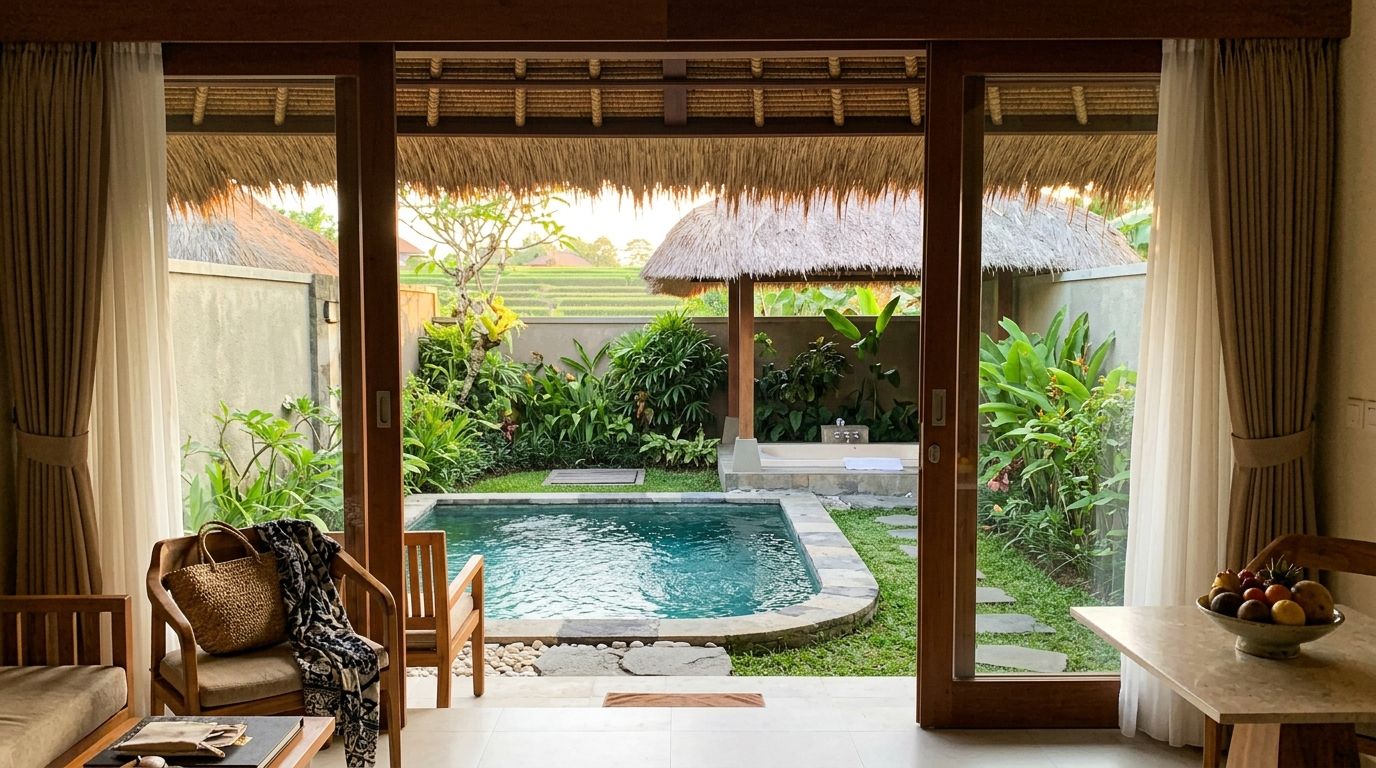
What makes a hotel room a villa in Bali?
Deciding between a hotel room and a villa in Bali shapes not only where you sleep but how you live during your trip. This guide explains the practical differences, the design and amenity features that define a Bali villa, how villas compare with resorts, why many small properties are marketed as villas, and how to choose the right villa by location and purpose. Read on to make an informed choice that fits your group, schedule, and expectations.
How a private villa differs from a hotel room in Bali
Choosing between a private villa and a hotel room in Bali is about more than size; it is a difference in daily rhythm and control. A villa offers exclusive use of an entire property, while a hotel room provides a single contained space within a larger operation. These distinctions affect privacy, cost structure, daily routines, and the overall sense of place.
Space privacy and layout
A private villa typically includes multiple bedrooms, dedicated living areas, a kitchen, garden space, and a private pool. That layout allows families or groups to spread out and set their own rhythm. A hotel room is compact and efficient, with shared corridors, elevators, and public areas that bring inevitable noise and foot traffic.
Service and amenities
Hotels offer standardized services such as front desk reception, daily housekeeping, and on-site restaurants and spas that operate on fixed schedules. Villas deliver tailored service with staff like a housekeeper, private chef, or villa manager available by arrangement. Villas may charge separately for bespoke services, while hotels often bundle many amenities into nightly rates.
Location access and experience
Villas are often tucked into rice terraces, clifftops, or secluded beaches, offering a stronger sense of local surroundings and outdoor living. Hotels concentrate in tourist hubs with immediate access to restaurants, bars, and concierge assistance for tours and transport. The villa experience leans toward immersion and quiet; the hotel experience emphasizes convenience and communal facilities.
In short, a villa trades standardized convenience for space, privacy, and customization, while a hotel trades individual control for predictable service and immediate access to facilities. With these differences in mind, next we look at the design and amenity features that typically define a Bali villa.
Key design and amenity features that define a Bali villa
A Bali villa is defined by a combination of architecture, landscape, and service that creates a private home away from home. Design choices and curated amenities work together to deliver privacy, comfort, and a distinct sense of place rooted in Balinese materials and climate‑sensitive living.
The most recognisable elements repeat across quality villas and set them apart from a standard hotel room. Below are the specific features guests and buyers should expect when they choose a true Bali villa.
- Private pool and outdoor living — Most villas include a private pool and sun terrace with a shaded sala for dining and lounging. Typical pool lengths range between six and twelve metres, suitable for families and small groups.
- Indoor‑outdoor flow — Sliding glass walls, high‑pitched roofs, and separate pavilions blur the line between interior and exterior, promoting natural cross ventilation and effortless alfresco dining.
- Local materials and craftsmanship — Teak joinery, carved wood panels, alang‑alang thatch, and hand‑finished lava stone create tactile warmth and durable finishes that suit a tropical climate.
- Staffing and in‑villa services — Staffed villas typically offer daily housekeeping, a villa manager, and optional private chef services, plus a fully equipped kitchen, laundry, and flexible service hours for longer stays.
- Privacy, security, and modern comforts — Tall tropical planting, high boundary walls, gated access, and in‑villa security ensure seclusion, while air conditioning, high‑speed internet, and smart entertainment systems meet contemporary expectations.
These elements combine to create a villa experience that emphasises space, privacy, and tailored living rather than standardized hotel convenience. Understanding these features helps when comparing villas with resorts and deciding what matters most for your trip.
Private villas versus resorts and how guest experiences differ
Private villas prioritise space, privacy, and control. Guests have exclusive use of a property with multiple bedrooms, living and dining areas, a private pool, and often a fully equipped kitchen. This layout suits families, groups, and travellers who value a home rhythm—meals shared at leisure, naps without disturbance, and schedules set by the household. Service is bespoke, with a villa manager, private chef, or housekeeping available by arrangement, which can make costs more transparent yet variable. Villas often sit in quieter, more local settings and lean on open‑air design to strengthen the sense of place.
Resorts focus on convenience, consistency, and access to a wide range of facilities in one location. Guests benefit from on‑site restaurants, bars, spas, and programmed activities without needing to arrange logistics. Staffed reception, concierge, and organised events create a predictable experience that appeals to first‑time visitors, solo travellers, and those who prefer not to plan details. Resorts also encourage social interaction through communal pools, lounges, and events. Ultimately, your choice depends on whether you prioritise privacy and tailored living or convenience and social amenities.
This distinction also helps explain why many small properties are marketed as villas in Bali.
Why many small properties are marketed as villas in Bali
Across Bali it is common to see compact bungalows and two‑bedroom homes presented as villas because the label attracts higher rates and broader guest interest. Owners and agents add a few strategic features that shift perception, such as a private plunge pool, a secluded garden, gated access, or professional styling and photography. Short‑term rental platforms and travel agents favour the word villa because travellers associate it with privacy, space, and an intimate experience rather than a single hotel room. Management companies support this shift by offering villa‑style services on demand—daily housekeeping, a local manager, and an optional private chef—so a small property can meet villa expectations without a large footprint. Market competition also encourages the trend: modest properties can command premium nightly prices when marketed as an entire home for couples, families, or small groups. Because many traditional compounds and renovated cottages already feature indoor‑outdoor flow and local materials, rebranding often requires limited physical change. That said, the term villa now covers a wide quality range, so guests should focus on concrete features—pool dimensions, staff availability, proximity to main roads, and exact sleeping arrangements—to ensure the advertised villa delivers the privacy, service, and amenities booked.
Having considered marketing and product differentiation, the next step is to choose a villa that suits your intended use and location preferences.
Choosing the right villa by location and intended use
Location defines the practical rhythm of any villa stay. Choose a site that supports how you intend to spend your days so travel time, daily logistics, and local atmosphere enhance the experience rather than complicate it. Consider who is travelling, the length of stay, and whether you need easy access to shops, dining, and medical services or prefer seclusion and landscape.
Match location to purpose
For family gatherings, prioritise short transfers to supermarkets, pharmacies, and calm beaches where children can swim. For surf trips, choose a villa within a short ride to reliable breaks and with secure storage for boards. For remote work, focus on villas that advertise reliable high‑speed internet and a dedicated workspace, and check phone reception if you plan daytime calls. For events or weddings, select properties with ample flat outdoor space, private parking, and clear vendor access.
- Beachside retreats — Ideal for sun and surf, these villas sit near Seminyak, Canggu, or Uluwatu and offer direct beach access or short walks to surf points. Expect lively evenings close to restaurants and a focus on indoor‑outdoor living with easy pool‑to‑sand transitions.
- Rice field and cultural stays — Found around Ubud and central villages, these properties prioritise tranquillity and local scenery. They are excellent for couples and cultural travellers but typically require longer transfers to Bali's main beaches and nightlife.
- Town and lifestyle hubs — Villas in Seminyak, Sanur, or central Canggu balance convenience and comfort with short drives to shops, restaurants, and family services. They suit travellers who want a private base that remains close to urban amenities.
Decide which trade‑offs you accept between seclusion and convenience, then shortlist villas that explicitly state pool size, staff levels, and travel times to ensure the chosen property supports your intended use from the first morning to departure.
Role of villas in Bali's tourism and the local economy
Villas are a cornerstone of Bali hospitality because they provide more than overnight stays: they shape visitor behaviour, spending patterns, and employment in ways that ripple through neighbourhoods. Understanding this role helps hosts and travellers make choices that benefit both guests and communities.
Economic benefits and direct employment
Each staffed villa typically employs local workers in roles such as housekeepers, cooks, gardeners, security, and drivers. Small estates often retain four to eight staff during peak periods, while larger properties can support a dozen workers. Wage income from villas is often steady year‑round and creates opportunities for skills development in hospitality and property maintenance.
Local supply chains and community spillover
Villas source goods and services from nearby vendors including produce markets, florists, carpenters, and laundry services. Guests book local tours, classes, and restaurants, which channels tourist spend into small businesses and independent operators. This distribution of revenue contrasts with some large developments where spending tends to remain inside corporate chains.
Regulation challenges and sustainable opportunities
Proper licensing, taxation, and waste management are essential for villas to contribute positively to the wider economy. When operators invest in water‑saving measures, solar power, and responsible sewage treatment, they reduce pressure on local infrastructure and lower long‑term operating costs. Training staff in sustainable practices creates a competitive edge while preserving the environment that draws visitors.
In summary, villas act as flexible engines of local employment and commerce when managed responsibly. Thoughtful investment in staff welfare, local supply chains, and environmental systems ensures villa tourism supports resilient communities and a high‑quality visitor experience. If you are planning a trip and want help comparing vetted villas, browse options or contact local specialists at https://www.balivillahub.com/en to find properties that match your needs and expectations.