What to Skip in Bali and Better Places to Visit Now
Bali Villa Hub
3/20/2026
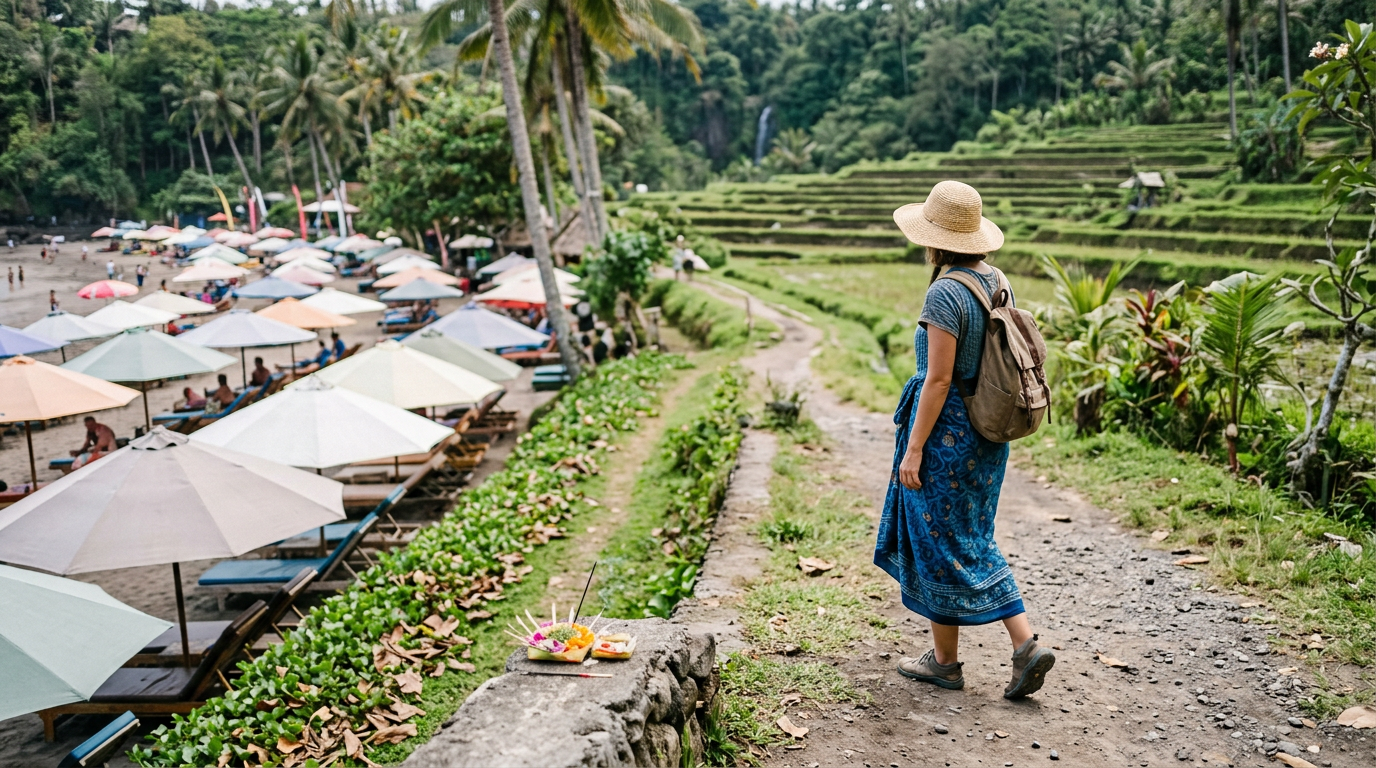
What to Skip in Bali and Better Places to Visit Now
Bali offers extraordinary sights, but many of its most photographed spots have become crowded, commercialised and less meaningful than they once were. This guide highlights popular attractions worth skipping and suggests quieter, more respectful alternatives that deliver richer experiences without contributing to overtourism. Read on to learn which places to avoid, why they fall short, and where to go instead for calm, context and connection.
Skip the Gates of Heaven photo stops and visit quieter temples instead
The iconic Gates of Heaven draw long lines and staged photos, leaving little space to appreciate Balinese ritual life or temple architecture. For a calmer, more respectful temple visit, skip the queue and seek smaller sacred sites where daily offerings and local practice remain visible.
Smaller temples allow time to observe local etiquette and to notice carved stonework and traditional compound layouts that are easy to miss in a crowd. Dress modestly, arrive outside peak photo hours and adopt a slower pace to savour the setting.
- Pura Luhur Batukaru is tucked into a cool, mossy forest on the slopes of Mount Batukaru and often receives only a handful of visitors. Its shady grounds and layered meru towers are best explored in mid morning when soft light filters through the trees.
- Pura Taman Ayun Mengwi sits within wide reflection pools and manicured gardens and feels regal without the throng. Visit after the morning rush to photograph pagodas mirrored in calm water and to watch priests tending offerings.
- Pura Beji Sangsit is renowned for delicate stone carvings and a craft-oriented aesthetic that rarely sees busloads of tourists. This temple rewards patient observation and quiet conversation with local caretakers.
- Village temples in Sidemen and around Ubud offer intimate glimpses of daily devotion and can be combined with rice field walks. These small compounds are ideal for visitors who want to learn from residents rather than pose for pictures.
Trading a single famous photo spot for several modest temples gives more context, reduces pressure on fragile sites and produces quieter, more meaningful photographs. If you prefer staying close to calmer temples, choose accommodation with short travel times so you can visit at off-peak hours and return quickly to a peaceful base.
Beyond temple crowds, other attractions built for staged images face similar issues, so the same principle of choosing authenticity applies as you plan the rest of your trip.
Avoid the Bali Swing and other staged photo traps; seek authentic viewpoints
Tourist swings and curated selfie platforms promise perfect pictures but rarely provide lasting memories. Rather than queuing for scripted poses and paying inflated fees, look for viewpoints where landscape and local life meet naturally and where your presence does not disrupt daily rhythms.
Why staged swings and platforms feel hollow
These attractions are designed for quick clicks and often involve long waits, scripted poses and additional charges for each photo. They concentrate foot traffic in fragile landscapes and encourage vendors to prioritise spectacle over local culture and craft.
Where to find authentic viewpoints in Bali
Start early and seek small headlands and roadside overlooks used by local fishers and worshippers. Sunrise at a quiet Sanur beach offers calm water and gentle light without the crowds. Drive back lanes around Tegalalang and Sidemen to discover roadside terraces and family-run warungs with natural terrace backdrops. In the north and central uplands, lookout points near Munduk and Jatiluwih provide wide views without selfie platforms dominating the scene.
How to photograph respectfully and creatively
Arrive at dawn or late afternoon to capture soft light and avoid peak crowds. Walk into the scene rather than relying on built props and ask permission before photographing people. Use a long lens to compress landscape layers or a small tripod for low-light shots instead of staging risky positions. Consider candid environmental portraits that show context rather than posed mid-air images.
Choosing uncurated viewpoints rewards patience with richer stories and fewer tourists in frame. As you leave staged attractions behind, apply this same attention to quieter landscapes and local life when you explore terraces and natural sites.
Don't spend time at overcrowded rice terraces; walk local paddies around Ubud
When a famous terrace becomes a photo stage, its mood and ecology change. Instead of queuing for a single panoramic shot, opt for several short paddy walks around Ubud where people still farm, birds sing and narrow paths preserve a sense of privacy.
Why the big terraces lose their charm
Sites that attract buses and vendors offer staged views rather than atmosphere. Crowds compress the experience into a few frames and can damage the fragile edges of rice banks. The result is heat, noise and little opportunity to learn about the subak irrigation and seasonal cycles that make Balinese rice growing unique.
Where to walk for quiet paddies near Ubud
Leave central Ubud before 8 am and follow lanes toward Sayan and Peliatan for shaded routes that loop through family fields. Explore the low-key paddies around Nyuh Kuning and Kedewatan for narrow footpaths and village life. For a longer route, combine a riverside descent with a terrace loop for two to three hours of easy walking.
How to walk respectfully and enjoy more
Wear sturdy shoes and carry a refillable water bottle. Keep to the footpaths and avoid stepping on bunds that retain paddy water. Ask permission before entering private plots; a small donation of ten thousand to twenty thousand rupiah is a polite gesture when a caretaker allows access. Photograph quietly and avoid encouraging crowds for posed shots.
Choosing local paddy walks rewards patience with fresher light, calmer photographs and conversations with farmers. Walk slowly and you will leave with a deeper understanding of the landscape and a quieter connection to Ubud. As you move from fields to encounters with wildlife, remember that ethical choices matter just as much as route selection.
Pass on commercial safari parks and zoos; choose ethical wildlife encounters
Large commercial safari parks and roadside zoos may promise close encounters but often place spectacle ahead of animal welfare. Rather than supporting venues that stage performances or forced interactions, seek experiences that prioritise rehabilitation, conservation and genuine observation.
How to recognise a truly ethical encounter
Look for facilities that operate transparently and publish rehabilitation and release records when appropriate. Staff should include qualified caretakers and veterinarians, animals should be kept in naturalistic enclosures with space to retreat and there should be no staged shows, cub petting or mandatory photo sessions requiring direct contact. Clear information about funding, permits and conservation outcomes is a strong indicator of integrity.
- Support rehabilitation centres with release records — Choose centres that publish how many animals they have rehabilitated and released, and that allow visitors only on guided educational tours rather than hands-on interaction.
- Book community-led wildlife walks — Small-group walks with local guides often reveal native birds, bats and primates in their habitat while channeling income directly to village conservation efforts and minimising disturbance.
- Opt for responsible marine encounters — Snorkel with operators who enforce no-feeding rules, maintain safe distances from turtles and coral, and run reef clean-ups as part of their programs.
Ask simple questions before you book and be willing to pay a fair price for ethical practice. Choosing encounters that protect animals and benefit local communities creates richer, more meaningful memories while helping ensure wildlife thrives for the future. With wildlife and landscapes in mind, your next step is to seek quieter natural sites for swimming and shore walks.
Skip the busiest waterfalls and beaches; discover lesser-known falls and coastal gems
Popular spots like Tegenungan and staged waterfall stops often mean crowds, vendors and limited space to enjoy the setting. Instead, visit smaller falls that reward a short walk and a calm atmosphere. Tibumana near Ubud is a single drop with a quiet swimming pool reachable by a short path through village rice paddies. Leke Leke is tucked into central Bali and offers layered cascades and narrow viewing points that rarely see tour buses. In the north, Munduk and Banyumala twin falls provide mossy forest shade and cooler air, while Nungnung delivers cathedral-like cliffs for those willing to descend the steps. For each site, arrive before 8 am, wear grippy shoes for muddy trails and carry a refillable water bottle so you can enjoy the place without rushing.
On the coast, skip the busiest strips and seek coves and working beaches where fishing life continues uninterrupted. Bias Tugel, sometimes called Virgin Beach near Padangbai, is a small white-sand cove ideal for a quiet swim. Amed and Tulamben along the east coast are calm for snorkeling and diving with far fewer loungers and a better chance to see coral without crowds. On the Bukit peninsula, Nyang Nyang beach is remote and dramatic if you can manage the descent, while Sanur remains pleasantly gentle for sunrise strolls. Check currents before entering the water, wear reef-safe sunscreen and support a local warung for lunch to help keep these places sustainable.
To make quieter sites easier to reach and to enjoy peaceful mornings close to temples, paddies and beaches, consider staying in a villa that reduces travel time between outings. For practical options and local recommendations, see https://www.balivillahub.com/en which lists properties positioned near many calmer attractions.
Choosing lesser-known falls, shores and cultural sites delivers quieter photos, fuller stories and a deeper sense of place. Travel slowly, ask respectful questions and prioritise experiences that protect both people and nature for generations to come.