When Bali's High Season Occurs Months With Biggest Crowds
Bali Villa Hub
3/19/2026
When Bali's High Season Occurs Months With Biggest Crowds
Bali draws visitors year-round, but certain windows consistently attract the largest crowds and the liveliest atmosphere. This article explains when those peak months occur, why they happen, how they affect costs and availability, and practical ways to travel smart during the busiest periods.
The exact months that make up Bali's peak season
Bali's busiest times are concentrated in two clear windows each year. For practical planning, think of mid-year and the end-of-year holiday period as the island's high season. These months bring the most visitors and the most pressure on flights, accommodation and tours.
July and August
July and August are the clearest high season months. They fall within Bali's dry season, so weather is reliably sunny and surf conditions suit many popular breaks. International school holidays in Europe and North America, plus winter breaks in Australia, drive large arrival numbers during these two months.
December and early January
The other peak window is the Christmas and New Year period. Demand spikes from roughly late December through the first week of January as families and couples travel for holidays and celebrations. Many hotels set minimum stays and rates climb substantially during this short but intense peak.
How specific weeks affect the monthly picture
Within those months the busiest weeks concentrate around public holidays, long weekends and the deepest school-break weeks. For example, weekends and any national holiday in July and August can push occupancy above average, while the final two weeks of December are far busier than early December. Timing by week matters as much as the month itself.
To understand why these months are so busy, it helps to look at the main drivers behind peak demand.
What drives the peak months weather holidays and surf
Bali's peak months are the result of several influences working together. Weather patterns set the stage for beach and outdoor activities, while global holiday timing and world-class surf conditions draw visitors in large numbers.
Below are the specific drivers that consistently create the highest demand on the island.
- Reliable dry weatherMay to September bring stable sunshine and lower humidity, encouraging beach stays and open-air events and making these months especially popular with international visitors.
- School and public holidaysEuropean and North American summer holidays in July and August, plus Christmas and New Year travel in late December and early January, produce sharp peaks in arrivals and hotel bookings.
- Seasonal surf peaksSwells from the Indian Ocean are strongest from May to September, creating world-class waves at west-facing breaks and drawing surfers and surf tourism companies.
- Trade wind patternsSouth-east trade winds during the dry months clean up reef and point breaks, improving conditions for both experienced surfers and surf schools.
- Flight schedules and package toursAirlines increase capacity and tour operators launch peak-season packages, which makes travel easier and more visible during those months, further concentrating demand.
These drivers work together to produce the busiest windows; next we examine how that increased demand affects prices, availability and the visitor experience on the ground.
How high season affects prices availability and crowds
High season in Bali creates direct and measurable changes across costs, booking options and visitor volumes. Expect higher prices on flights and accommodation, more limited choice for popular villas and activities, and noticeably fuller public spaces during peak windows. Understanding these patterns helps you plan more deliberately and avoid surprises.
Prices rise predictably in the busiest months. Hotel and villa nightly rates typically increase by 30–80 percent compared with shoulder months. During the Christmas and New Year stretch some properties double their rates for the final two weeks of December. Return flights from major gateways commonly cost 20–50 percent more and private transfers and guided experiences often carry seasonal surcharges. Many upscale villas add minimum stay rules of 5–7 nights for July, August and December, which further raises the overall cost of a short trip.
Availability tightens quickly. Popular boutique hotels and well-located villas frequently sell out several months in advance. Premium room categories and pool villas are the first to go, so last-minute availability is rare in peak periods. Make reservations three months ahead for July and August and four to six months ahead for the December–New Year period to secure specific properties and preferred weeks. Even restaurants and tour operators may require bookings well before arrival on busy dates.
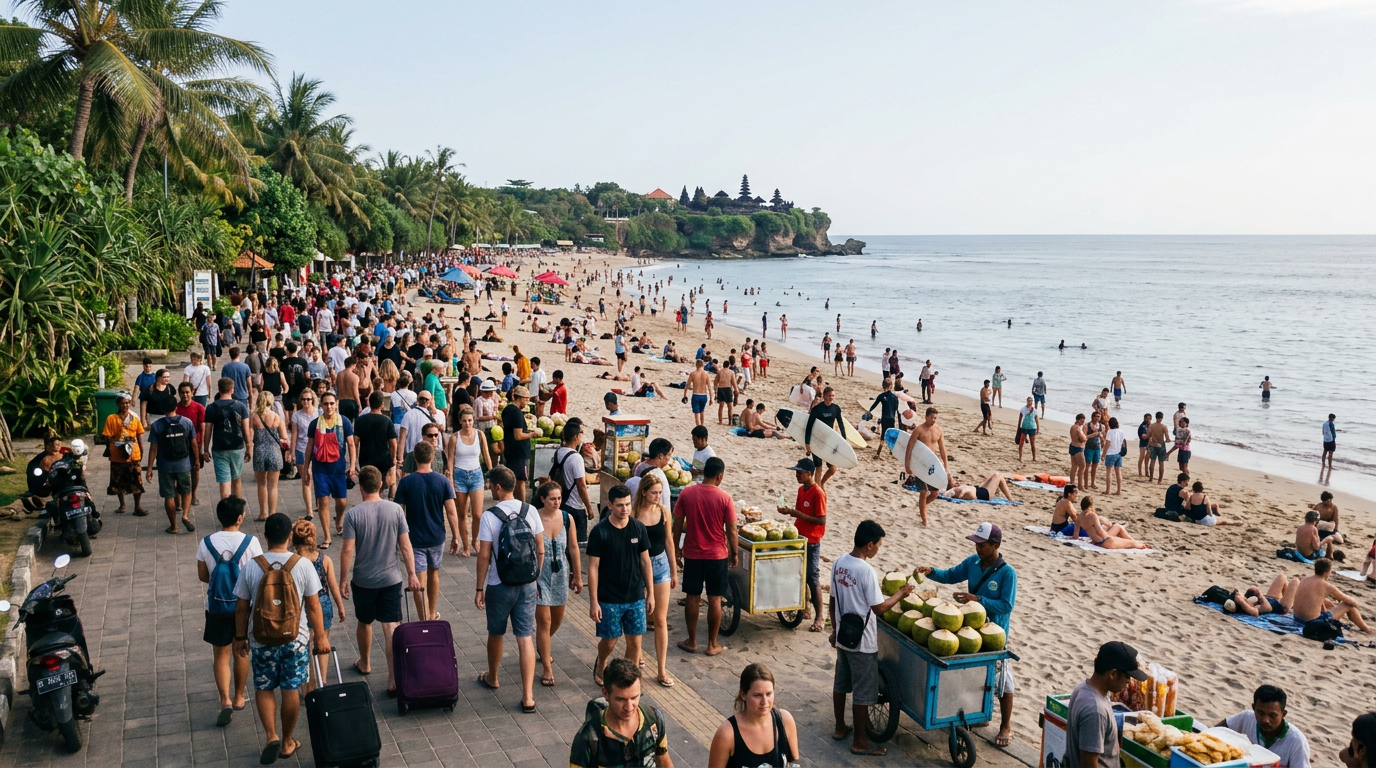
Crowds change the on-the-ground experience. Iconic beaches, temples and sunset points can feel 30–60 percent busier, and traffic times between popular hubs can increase by 20–40 percent. To reduce impact, choose midweek arrivals, travel early in the day, or stay in less-visited districts. If you must travel in peak months, book early, be flexible on exact dates and accept that higher cost comes with a livelier island atmosphere.
Given those impacts, the following practical tips will help you get the most from a peak-season visit.
Practical tips for traveling in Bali during peak months
Book early and be precise with dates to avoid disappointment. For July and August reserve accommodation at least three months in advance, and for the late December to early January period reserve four to six months ahead. Expect minimum stay requirements of five nights at many upscale villas during peak weeks and higher airfare prices on popular routes. Choose midweek stays when possible to reduce nightly rates and improve availability for restaurants and tours. Prebook airport transfers and day trips so you are not searching on arrival. Build an extra hour into journeys between southern hubs in the late afternoon because traffic can increase transfer times by up to forty percent during busy weeks.
Plan daily routines to beat the crowds and save time. Visit temples and major attractions at first light when humidity is lower and crowds are smaller. For sunset spots and popular beaches arrive at least one hour early to claim good viewpoints. Consider staying in quieter districts such as Ubud or Bali's east coast to escape the densest tourist clusters while remaining within easy reach of highlights. Carry cash for small purchases and street food, since some vendors accept card payments inconsistently during busy periods. Pack sunscreen, a reusable water bottle and a compact rain jacket for short tropical showers. When booking villas, look for reliable inventory and transparent rates to lock in choice properties and clear cancellation terms.
For a straightforward way to compare villas and check transparent rates, visit https://www.balivillahub.com/en—it can help secure the right property for your preferred dates without unnecessary hassle.
How peak timing varies across Bali regions and nearby islands
Peak months in Bali do not arrive uniformly across the island and nearby isles. While July and August and the late December to early January window register the highest overall visitor numbers, local demand shifts with geography and activity type. Coastal resorts concentrate crowds around the dry season and holiday weeks, while inland and island destinations follow slightly different rhythms.
Southern Bali and Bukit Peninsula
The southern coastal strip, including Kuta, Seminyak, Canggu and the Bukit Peninsula, sees its heaviest pressure during July, August and the Christmas–New Year period. Beach clubs, sunset venues and surf schools fill fast on weekends and during school holidays. Expect higher rates and limited villa availability in these areas, so book three to six months ahead for peak weeks.
Central Bali and the highlands
Ubud and the central highlands remain busy in peak months but also attract steady traffic in the shoulder months of April, May and September due to retreats, weddings and cultural events. Climatic comfort at higher elevation means visitors spread arrivals more evenly, so while weekends fill up quickly you may find more weekday availability than on the coast.
Nusa Islands and nearby isles
Nusa Penida, Lembongan and Ceningan follow the dry-season pattern with peak demand from May through September and a clear surge during late December. Their limited accommodation stock amplifies crowding when boat schedules increase capacity. Lombok and the Gilis see similar peaks, with July and August the most crowded months for diving and surf trips.
Plan by region, not just by month. If you aim to avoid the busiest moments, target midweek stays, choose less congested districts or book early through https://www.balivillahub.com/en to secure the right property for your preferred dates.