When should you not wear a thong in Bali?
Bali Villa Hub
3/21/2026
When should you not wear a thong in Bali?
The word “thong” can mean thin flip flop sandals or skimpy underwear, and understanding both meanings is key to dressing appropriately in Bali. This guide explains where thongs are inappropriate, when they are acceptable, and practical reasons to choose more supportive or modest alternatives. Read on to learn how small wardrobe choices can help you stay comfortable and show respect for local customs.
Temple visits and ceremonies where thongs are inappropriate
When visiting Balinese temples most visitors do not realize the word thong can mean two very different things. In this context both thong underwear and thong style flip flop footwear can be inappropriate for formal temple areas and sacred ceremonies. Knowing when to avoid either will make your visit more respectful and comfortable.
Footwear and temple entry
Flip flop sandals are common on the island but in many temples you will be asked to remove footwear before stepping into inner courtyards. Wearing flimsy thongs makes navigating stone steps and offerings awkward and risks exposing your feet when you kneel. For ceremonies it is better to wear simple closed sandals or neat slip-on shoes that you can easily take off at the entrance and store discreetly.
Undergarments and modesty expectations
Thongs as underwear are not suitable for temple visits. Many rituals require sitting, kneeling and wearing a sarong that wraps at the waist. Full-coverage undergarments avoid accidental exposure and demonstrate cultural sensitivity. Women commonly wear a sarong with a sash and may add a lightweight top that covers the shoulders. Men should choose full briefs or boxer-style underwear under sarongs for modesty.
Ceremony specific dress and exceptions
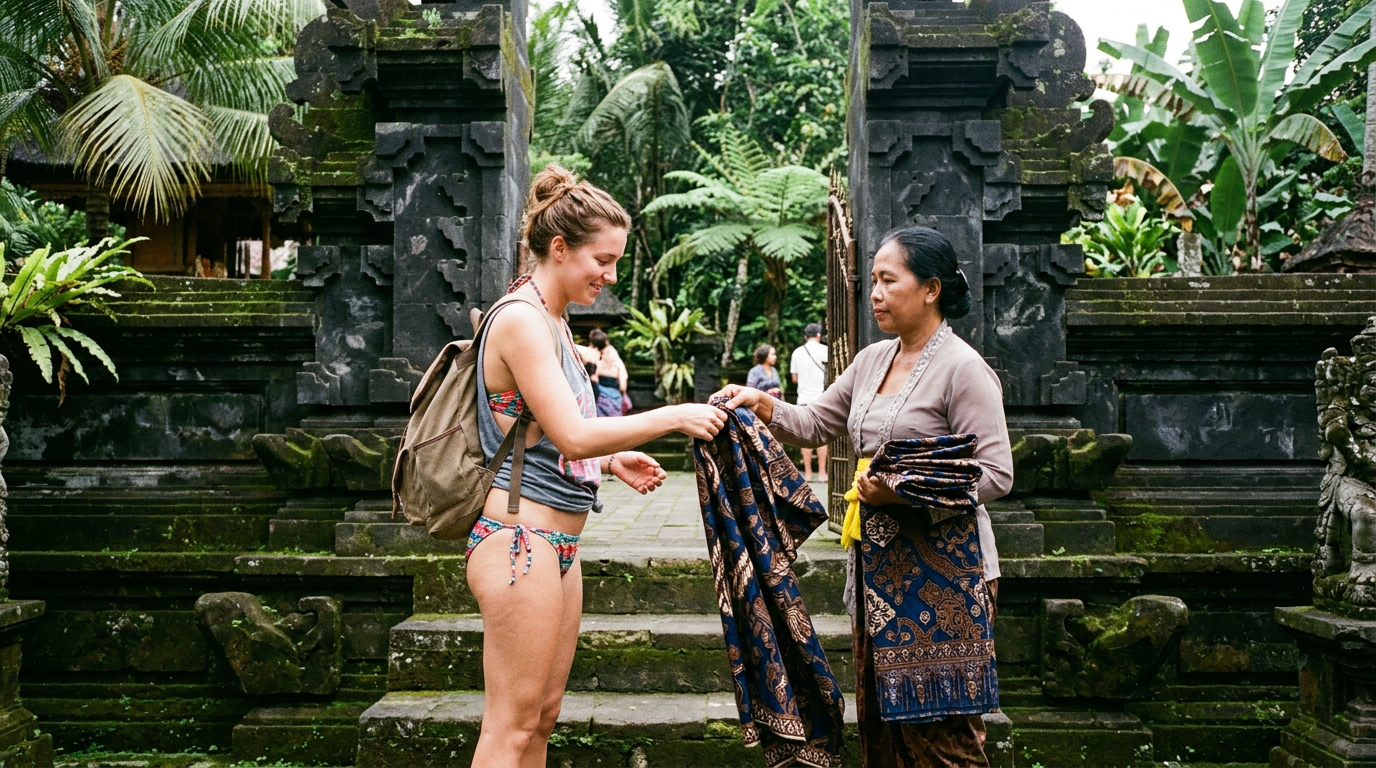
During major ceremonies such as temple anniversaries and cremation rites, participants wear traditional attire and expect visitors to follow dress rules. Thongs of either kind are out of place at these events. Many temples offer sarongs and sashes at the gate for visitors but do not supply appropriate footwear or undergarments. Follow signage and arahans from temple attendants to ensure you meet requirements.
When in doubt, cover knees and shoulders, avoid thong underwear and carry easy-to-remove shoes. A modest approach shows respect and keeps your focus on the experience rather than correcting a wardrobe mistake.
With temple etiquette in mind, consider how general cultural norms shape everyday dress as you move through villages and towns.
Cultural norms and modesty expectations for visitors
Modesty and respectful dress are important in Bali, and adapting your clothing shows consideration for local values. In temples and village settings locals wear outfits that cover shoulders and knees, so tourists are expected to follow the same standard. A thoughtful approach to what you wear will make interactions smoother and reduce the chance of causing offense.
Practical guidelines include covering shoulders with a lightweight top or scarf and choosing shorts or skirts that reach at least mid-thigh, though knee length is preferred in religious areas. Many temples provide sarongs and sashes but do not supply footwear or undergarments, so avoid thong-style underwear and flimsy flip flops when you plan to enter inner courtyards. Swimwear and very revealing clothing are appropriate at beaches and pool areas but should be replaced with more modest attire when moving into towns or local neighbourhoods.
Behaviour matters as much as clothing. Avoid prolonged public displays of affection and refrain from touching people's heads or pointing with your feet. Remove shoes when entering private homes and small shops if the host indicates this is expected. Use your right hand for giving and receiving where possible and follow the lead of locals during rituals to stay respectful and discreet.
Pack a sarong and a light shawl and keep a spare set of modest clothing in your day bag. If invited to a ceremony, ask your host what is suitable and mirror their attire. Choosing conservative clothing helps preserve the focus on the cultural experience and makes your visit both comfortable and respectful.
Next, consider how beach life fits into these rules and when thong sandals are acceptable.
When beachwear thongs are acceptable and when to avoid them
In Bali the word thong can mean both thin flip flop sandals and skimpy underwear, so clarity matters. This section focuses mainly on thong sandals used as beachwear while noting that thong underwear is never appropriate in public or at cultural sites.
Simple rule of thumb: follow the context of the place and time, and carry one modest backup outfit for moving off the sand. A small change of footwear or a lightweight cover-up will prevent awkward situations and show respect.
- Beaches and hotel pools are the natural place for thong sandals and light swim cover-ups; they are acceptable for sunbathing and walking short distances on sand.
- Private villas and resort gardens allow thongs in many areas but avoid them in formal dining rooms and during evening events where hotels expect smarter footwear.
- Casual seaside cafes and daytime warungs welcome thong sandals when paired with neat beachwear; swap to closed sandals if you plan to visit inland markets or ride motorbikes.
- Temples and ritual gatherings are not suitable for thong sandals or thong underwear; wear shoes that can be removed cleanly and choose full-coverage underwear under sarongs.
- Long walks, hiking and public transport are poor places for thong sandals because of limited support and hygiene concerns; choose supportive sandals or trainers for these activities.
Pack a compact pair of supportive sandals and a spare set of modest clothes in your day bag so you can switch quickly when required. This small preparation keeps you comfortable and helps you move respectfully between beach life and Bali cultural settings.
As you move around the island, public spaces present additional reasons to choose discreet, practical clothing.
Public transport, markets and guesthouses where discreet dress is safer
When navigating buses, shared vans and crowded markets, a discreet approach to dress reduces unwanted attention and makes daily tasks easier. Close quarters and frequent exchanges with vendors or drivers mean modest coverage protects personal privacy and prevents awkward moments. Practical clothes also help you move quickly between beach, town and accommodation without constant wardrobe adjustments.
Practical choices for public transport and markets
Choose tops that cover shoulders and collars that sit close to the neck to avoid accidental exposure when bending or carrying bags. Knee-length shorts, lightweight trousers or a sarong tied securely stay neat while you board and disembark.
Footwear matters for safety and hygiene. Opt for supportive sandals with a strap or low trainers rather than flimsy flip flops that can slip on wet steps and in crowds. Keep a small scarf or wrap in your bag to use as a cover-up when entering indoor markets or communal waiting areas.
- Buses and shared vans often have narrow aisles and sudden stops, so choose fitted clothing that won't ride up and shoes that stay on comfortably.
- Traditional markets involve close interactions with sellers and close inspection of goods, so modest attire helps you bargain and photograph respectfully.
- Guesthouses and homestays are personal spaces where hosts appreciate neat modesty in common areas and when moving between private rooms and shared facilities.
Carry one modest backup outfit and a compact wrap in your day bag so you can adapt quickly. A low-key approach keeps you comfortable, respects local sensibilities and allows you to enjoy Bali without fuss over clothing choices.
Finally, keep practical safety and hygiene concerns in mind when deciding whether to wear thongs at all.
Safety, hygiene and practical reasons to skip thongs in Bali
In Bali thongs can mean both flip flop sandals and skimpy underwear and each carries clear safety and hygiene drawbacks in everyday situations. Flip flop sandals offer almost no arch support and can easily slip on wet surfaces, increasing the chance of ankle sprains when walking on uneven paths or when mounting motorbikes. They also leave feet exposed to broken glass, coral and rusty nails which can cause painful cuts and infection. Humidity and sand trapped between skin and straps create abrasion and fungal growth, so washing and thoroughly drying feet every day is important. Thong-style underwear in a humid climate often leads to chafing and for some people increases the likelihood of irritation or urinary tract infections after long days of heat and activity. Choosing garments that protect skin and stay securely in place reduces these risks markedly.
For practical travel packing, bring one pair of supportive sandals with a heel strap and one pair of closed shoes for any trekking or long transfers. Carry a compact pair of quick-dry socks, antiseptic wipes and a spare set of full-coverage underwear to change into after beach or sweaty excursions. When riding scooters wear shoes that cover toes and when moving through markets or guesthouses prefer modest, neat clothing that does not shift or expose skin. These small adjustments protect your health, reduce wardrobe mishaps and let you focus on enjoying Bali rather than managing preventable injuries and discomfort.
If you are arranging accommodation, consider staying somewhere that balances beach access with respectful communal spaces—https://www.balivillahub.com/en offers a range of villas where you can relax comfortably while remaining close to cultural sites. Pack supportive sandals and full-coverage underwear and you will be prepared for both island life and cultural settings.