Which Bali Villa Areas Are Best for Remote Work
Bali Villa Hub
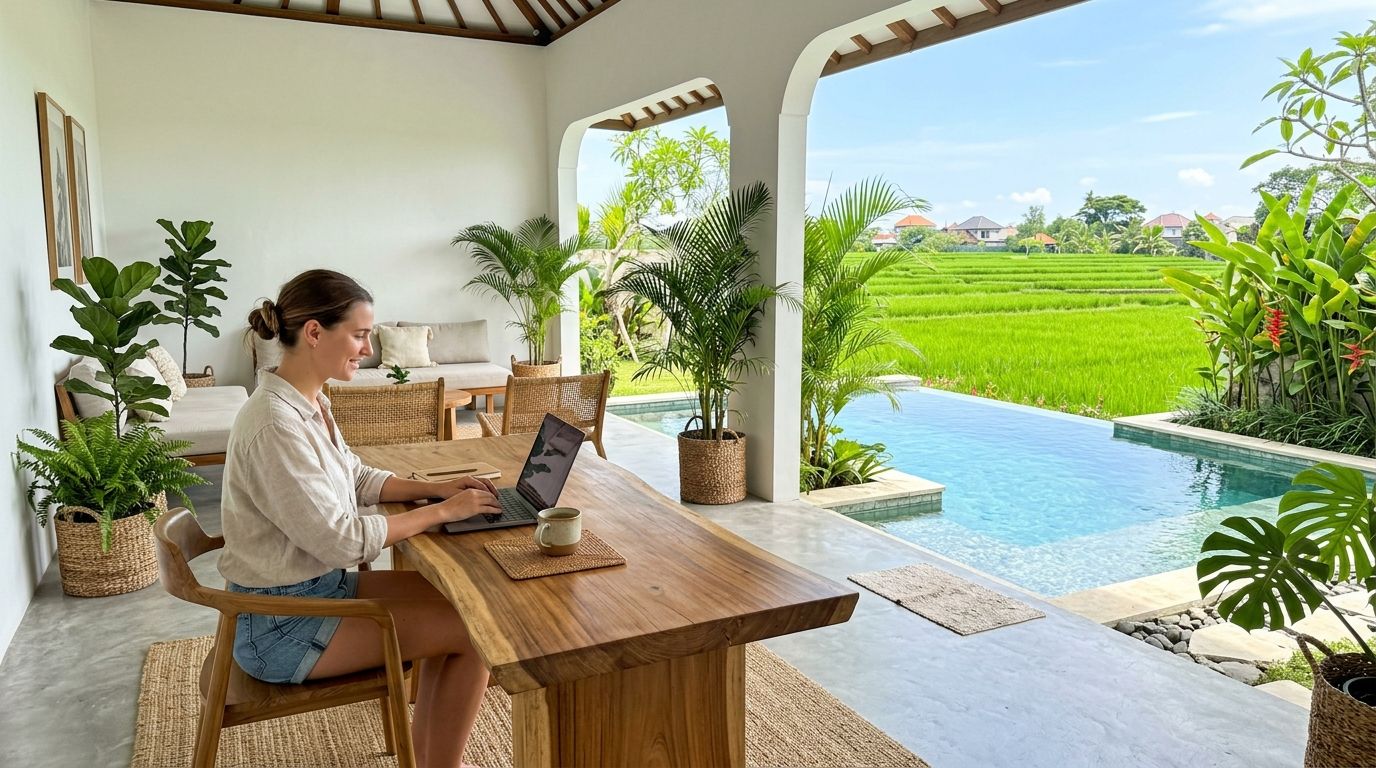
Picture this. You land in Bali, you’re excited, and you finally get to live the dream. Then your first “quick call” turns into stress because the Wi-Fi feels shaky, the mornings are louder than you expected, or you realize you’re not sure which villa area will actually support your work rhythm.
That is the real problem. It’s not “where is Bali best?” It’s “which Bali villa area best supports remote-work reality for my specific work style?” Because a villa can be beautiful and still fail you if the internet is unreliable, the space doesn’t help you focus, or you’re too far from the coworking and community that keep work from feeling isolated.
In this article, you’ll use a simple decision lens: internet reliability (and a backup mindset), a focus-friendly environment, and access to coworking and community while you live in a private villa. You’ll also see how different hubs in Bali fit different personalities, whether you’re drawn to Canggu’s energy, Ubud’s calm, Seminyak’s polish, Sanur’s steadier pace, or Uluwatu’s surf-life schedule.
Once you understand what location changes in your day, choosing gets easier fast. Next, we’ll break down why villa location matters so much for remote work.
If you want a faster, more practical way to match an area and villa to your remote-work needs, explore more on Balivillahub.com
Why Bali villa location matters for remote work
Internet reliability
Internet is the deal-breaker. In real remote work, it means stable connection during calls, fast enough uploads, and the absence of frequent dropouts that force you to reschedule. The right Bali villa area usually gives you better access to infrastructure, but the final result still depends on the specific villa and its setup.
A common confusion is assuming “popular areas” automatically mean your Wi-Fi will be perfect. Treat internet quality like a non-negotiable you verify per property, then plan redundancy so one issue does not stop your day.
Focus-friendly environment
Your location shapes your noise and stress levels. Traffic levels, nearby construction, crowd energy, and even how close you are to busy roads can turn “deep work time” into constant interruptions. Power stability also matters, because a sudden outage can derail long tasks and meetings.
Don’t confuse “close to everything” with “good for focus.” Sometimes the most productive choice is being near amenities, but tucked far enough from the loud parts.
Dedicated workspace
A villa area can influence whether you can realistically set up a dedicated workspace. This is more than having a desk. It’s about having a quiet spot with usable lighting, enough room for a proper laptop setup, and an environment where you can separate work mode from rest mode.
It’s easy to miss this when you fall in love with the aesthetics. If the area’s layout and typical surroundings make it hard to create a calm work zone, productivity will suffer even if the villa looks great online.
Community + backup
Even in a private villa, you still need backup for your workday. Coworking spaces and work-friendly cafes help when villa internet acts up, when you need a change of scenery, or when isolation starts to drag your motivation. Areas with strong nomad presence make it easier to find those options quickly.
One nuance: community is not only social. It also functions like a safety net. If you’re in an area where coworking and reliable work spots are reachable, your “plan B” becomes practical, not theoretical.
Work-life integration
Bali’s lifestyle is part of the productivity system. In some areas, your day naturally supports a rhythm of work blocks, recovery, and social breaks. The remote work model here is work-life integration, meaning your environment affects focus, energy, and how consistently you can stick to deadlines.
Be careful not to assume every vibe will work for you. If your chosen area pushes constant activity or long commutes, you may end up spending more effort managing the day than doing the work itself.
When you understand what really matters, you can apply it quickly and avoid guesswork. Next, we’ll turn these non-negotiables into a clear checklist so you can validate a villa before you commit.
Check 1: Ask for internet proof
Before you book, request real proof of internet speed, not just promises. A screenshot-style speed test is the kind of evidence that helps you plan your workday with confidence.
If the Wi-Fi is only “probably fine,” treat that as a risk. Your productivity depends on consistency, especially for calls and uploads.
Check 2: Plan internet redundancy
Have a backup connection ready. The rule of thumb is simple: redundancy matters more than hope, so you can switch quickly if villa internet drops.
Ask how you’ll supplement connectivity, usually via a local SIM or eSIM, or a hotspot.
Check 3: Confirm a focus-friendly setup
Test the environment you’ll work in. Location changes your noise level and stress, so check whether the villa feels quiet enough for deep focus when traffic and crowds are active.
Also pay attention to power stability. Even occasional outages can ruin meetings if you do not plan for it.
Check 4: Make the workspace truly dedicated
Look beyond “there’s a desk.” A dedicated workspace means a workable desk area, comfortable seating, and a space that supports separation between work and rest.
This is where area choice shows up, because your surroundings affect how easy it is to keep that boundary.
Check 5: Validate backup power thinking
Ask about power arrangements and what happens during instability. The practical goal is minimizing disruption, so you can keep your work flowing even when Bali gets unpredictable.
If the villa can support your setup during outages, that is a strong sign you chose well.
Next, you’ll use these non-negotiables to decide which Bali area matches your lifestyle priorities, then we’ll move into the best-fit picks by neighborhood.
How to choose the right area in Bali
Step 1: Pick your lifestyle and vibe first
What kind of days do you want to repeat every week? Decide whether you’re drawn to social energy, calm nature, upscale convenience, a quieter pace, or surf-life flow. This choice sets your baseline, because the area vibe influences your motivation and how you pace work.
For example, if you need momentum and easy networking, you’ll likely enjoy the more active feel of Canggu. If you want calmer mornings for deep focus, Ubud often feels more natural.
Step 2: Match workspace needs to what the area enables
Now translate your work style into space requirements. Think about desk comfort, lighting, and how quiet you can realistically be when traffic and crowds are around. This is where area choice matters, because some neighborhoods make it harder to create a stable work zone inside a villa.
If you’re sensitive to noise, you should treat “close to everything” as a warning sign. Choose a villa setup that still supports a dedicated workspace, even if the area itself is busy.
Step 3: Validate connectivity with proof and backup
Before you commit, check internet quality in a practical way. Request internet speed proof, then confirm what backup looks like. The rule is simple: redundancy is king, because villa Wi-Fi can vary and disruptions can happen.
If your work includes frequent video calls, do not rely on a single connection. Ask how you’ll supplement connectivity using a local SIM or eSIM, or a hotspot, so one problem does not derail your schedule.
Step 4: Confirm logistics like coworking and commutes
Remote work is still daily travel. Decide whether you’ll use coworking spaces and work-friendly cafes as support, and make sure they’re reachable without wasting your prime work hours. Transport realities matter most for keeping your routine consistent.
If you plan to scooter to your backup work spots, test how that commute would feel for you in real life. Choose an area where coworking and cafes are close enough to be a true fallback, not an extra hassle.
Once you follow this workflow, comparison becomes much easier. Next, we’ll speed it up with a scoring method, so you can rank areas quickly based on what you decided.
Internet confidence
Score this based on how sure you feel after getting internet proof. Ask for a speed test screenshot and confirm what backup looks like, because reliable work depends on stability, not vibes.
If your plan is “the Wi-Fi should be fine,” lower the score. The rule is clear: internet is the non-negotiable, and redundancy keeps you running.
Workspace and quiet
Here, you’re judging whether you can create real focus time. Look for evidence of a dedicated workspace, plus a setting that won’t drown you in noise from traffic, crowds, or nearby construction.
The pitfall is scoring by photos alone. A beautiful villa won’t help if your setup is constantly disrupted.
Access to coworking
Score how easy it is to switch from villa mode to a work-ready environment. Areas with nearby coworking and work-friendly cafes make it faster to handle glitches and keep momentum.
A common mistake is assuming you’ll always work only from home. A practical fallback is part of doing remote work well.
Community and networking
This category measures how likely you are to stay socially connected without forcing it. Community helps motivation and reduces isolation, especially when your day needs a reset between tasks.
Don’t overvalue “busy” alone. Privacy still matters, so aim for community that supports your rhythm, not one that hijacks it.
Cost and value
Finally, score how much you get for your monthly spend. Long-term rentals can offer strong value, especially when you include the cost of utilities, maintenance expectations, and the practical ability to work reliably.
The pitfall is chasing the cheapest option that compromises internet or quiet. Cost matters, but it should never override focus and connectivity.
With the scoring in place, it’s easier to rank areas by best-fit. Next, we’ll move into the main recommendations by neighborhood and explain why each one works for different remote-work styles.
Want to sanity-check your shortlist against a real remote-work checklist? Tim Balivillahub.com siap membantu Anda menyusun strategi yang tepat - hubungi kami untuk konsultasi gratis.
Imagine you have the same job, the same laptop, and the same deadlines, but you pick a different Bali base every month. In one area, your day feels smooth. In another, traffic stress or inconsistent connectivity turns small tasks into time sinks. That is why these Bali villa areas work best for different remote-work styles.
Canggu for community and daily momentum
If you like meeting people while you work, Canggu is often the easiest fit. It’s known as a digital nomad hub, with lots of coworking spaces and work-friendly cafes nearby, so your social and professional life stay close together.
The tradeoff is noise and congestion risk. Expect busier streets and a more active atmosphere, so your villa choice needs to protect your quiet hours. Also, do not assume internet is identical across villas, even in the same neighborhood. Verify the setup and plan for backup.
Ubud for calm focus and wellness rhythms
If your best work happens when you can hear yourself think, Ubud tends to support that. The area leans into nature, wellness, and creativity, which makes it feel easier to build a steady routine around deep work blocks.
The main contrast is distance from the ocean and fewer late-night distractions. You may spend more time planning your “workday scenery” around local cafes or coworking options, and you still need to verify internet per villa. In Ubud, calm is a feature, but you should confirm connectivity where it counts.
Seminyak for polish and client-facing schedules
If your remote job includes client calls or you prefer a more polished day-to-day setup, Seminyak can feel like a strong match. It’s more upscale and central, with dining and service options that make professional routines simpler.
The tradeoff is higher prices and a more tourist-intense environment. Your villa needs to be genuinely comfortable and quiet enough for focus, because the area buzz can spill into your energy. Use coworking and cafes strategically, but don’t rely on them to fix a villa that isn’t work-friendly.
Sanur for steadier, quieter routines
If you want a calmer coastal base with a more even pace, Sanur is often a good fit. It’s generally quieter than the island’s busiest hubs and has easy access toward Denpasar, which helps keep errands and daily movement less stressful.
Compared with higher-energy areas, you may find fewer obvious digital nomad cues. That means you should check coworking access in practice and verify villa internet quality. If you thrive on routine, the steadier environment can be the advantage you’re looking for.
Uluwatu for surf-life workdays with structure
If your ideal day mixes ocean time with work, Uluwatu can be a great personality match. It’s known for surf-life energy and laid-back luxury, so your schedule naturally fits scenic breaks and recovery time between tasks.
The tradeoff is that you need extra connectivity planning. In an area like this, it’s smart to confirm internet reliability for your specific villa and keep a backup plan ready. Also, your routine should minimize commute friction, so lifestyle choices don’t accidentally eat your working hours.
With the best-fit profiles clear, it’s easier to spot what goes wrong when assumptions slip. Next, we’ll move into the common mistakes that derail a Bali remote-work setup.
Example routine that makes Canggu work
Imagine this: you wake up, you have calls at 9, and you want lunch plans that feel social but not chaotic.
That’s where Canggu shines for many remote workers. The digital nomad energy is built around coworking and work-friendly cafes, so you can network without losing your workday structure.
Now the tradeoff. Canggu can bring traffic and a noisier environment, especially when you’re trying to focus at the wrong time of day. To make it work, choose a villa with a quiet setup, use coworking as your focus anchor, and never generalize internet quality. Verify the connection per villa and plan redundancy with a backup option.
When you want the same structure but with a calmer pace, Ubud is the next natural fit.
Picture your morning in Ubud: the air feels cooler, your villa is quieter than the louder hubs, and you can already picture the day settling into a simple rhythm.
This is what “calm focus” looks like day-to-day. You get fewer distractions, more nature in your line of sight, and a lifestyle that makes it easier to stay in work mode before you drift into wellness routines.
Because Ubud leans into wellness and creativity, recovery becomes part of your schedule. That matters for remote work, since steady focus depends on feeling good enough to keep going.
One tradeoff is distance from the ocean. You’ll want to plan your go-to cafe or coworking routine in advance, and confirm internet reliability per villa so your calm mornings do not turn into avoidable connectivity stress.
That steady pacing is great, but if you want something more polished and convenience-driven, Seminyak is the next comparison to make.
“Seminyak is where you can look professional without trying too hard.”
Pros
Seminyak fits remote workers who want polish and convenience. The area is packed with upscale dining, cafes, and shopping, which makes client-facing days feel smoother and more put-together.
For a typical routine, you can do a morning work block at a quiet villa, then meet a client for lunch nearby, and finish emails in the evening while everything is still close.
Cons
The tradeoff is higher prices and more tourist intensity. In a lively environment, you have to protect your work boundaries, or the energy of the area can spill into your focus time.
Even in Seminyak, your villa should still include a quiet, ergonomic workspace, not just a nice-looking room. And if you plan to use coworking, treat it as a tool, not your only backup.
When you want something calmer after that polish, the next step is a quieter coastal base in Sanur.
Deadlines feel harder when your base is chaos. If you’re tired of fighting the island’s busiest energy, Sanur can be the steadier option.
What Sanur gives you
Sanur offers a quieter coastal pace that supports steady productivity. The environment feels less intense than the busier hubs, so it’s easier to protect your focus hours.
You also get easier access toward Denpasar, which helps everyday logistics feel smoother. Add a more family-friendly vibe, and remote work starts to feel more routine and less reactive.
What you may miss
You might notice fewer “digital nomad signals” compared to places like Canggu. That doesn’t mean it’s worse, but it does mean you should be more intentional about planning your coworking and cafe options.
Before you book, verify villa internet quality and check what coworking availability actually looks like in the area. Even a calm base needs practical backups so a connectivity issue does not derail your week.
With that steady rhythm in mind, the next lifestyle option is Uluwatu, where surf time is the backdrop and planning around connectivity becomes extra important.
Imagine this: you want surf breaks in the morning, a real work block in the afternoon, and zero surprises when your client is on a call.
In Uluwatu, that works best when you make smart choices in order. First, you verify the villa’s internet and set a redundancy plan, so calls stay stable even if the connection dips.
Then you protect focus time. You schedule deep-work blocks at the villa, and you use nearby cafes as a change-of-scenery option for lighter tasks.
Finally, you reduce transportation friction. You pick a villa location that keeps your routine simple, because surf-life can tempt distraction if you do not stay structured, and connectivity must be confirmed and backed up before you relax.
With the “best-fit” lifestyle clear, the next section will help you avoid the classic failures that undo a good plan.
You’re not actually dealing with bad luck if your Wi-Fi fails
Most people treat slow internet as “just Bali.” The accurate view is that internet quality varies by villa and setup, even in the same popular area.
If you rely on guesswork, video calls fail and deadlines slip. Fix it by verifying internet per villa and keeping a backup plan ready.
That cheap Bali idea breaks the moment you need reliable work
People assume Bali is always cheap, so they book the lowest monthly rate. Reality is that luxury villas and high-demand neighborhoods can quickly become expensive.
If you under-budget, you end up compromising on quiet space or upgrades you actually need. The result is frustration, not savings.
A villa photo can look perfect and still ruin focus
You might book based on looks, assuming remote work is just “being at home.” The accurate issue is whether you truly get a dedicated workspace and quiet surroundings.
When the desk is uncomfortable or noise is constant, productivity drops fast. It’s not the view that matters most, it’s the work setup.
If you skip visa planning, you can get stuck at the worst time
Some travelers treat remote work in Bali like an informal extension of vacation. The accurate understanding is that visa requirements still matter, especially for longer stays and rules around working.
Ignoring this can create legal risk and stressful travel interruptions. And that chaos destroys your work schedule.
Thinking transport is “easy on an island” is where time leaks happen
Many people underestimate how daily commutes affect focus. Scooter comfort, traffic, and commute length can quietly eat your best hours.
If you plan your backups too far away, a simple change of scenery becomes a time-consuming mission. Plan location for low-friction mobility.
Just because it’s listed doesn’t mean it’s ready to perform
Online photos can hide maintenance issues, wear, or setup problems that matter when you live and work there. The correct mindset is to treat listings as a starting point, not the final truth.
If you arrive and discover problems, you lose time fixing them. That time can cost a week of momentum.
Now that the common failures are clear, the fastest way to protect your setup is a practical pre-booking checklist. Next, we’ll lay it out step by step.
“A long stay should feel easier, not riskier.”
Check 1: Ask for internet speed proof
Request internet speed proof before you pay. A speed test screenshot helps you judge if the connection supports calls and uploads.
If you skip this, you discover the problem after arrival, and your workday becomes damage control.
Check 2: Confirm redundancy and backup options
Ask what happens if the villa Wi-Fi drops. Plan a backup using a local SIM, eSIM, or a hotspot, so downtime is short.
If you rely on one connection, one outage can break your deadlines.
Check 3: Review power stability and backup power
Clarify power reliability and any backup setup. This matters because even brief outages can derail meetings and long tasks.
If the answers are vague, treat it as a focus risk, not a minor inconvenience.
Check 4: Validate the workspace usability
Inspect the desk, chair comfort, lighting, and whether the area is actually workable for long hours. This is the difference between “a place to sit” and a dedicated workspace.
If the setup is uncomfortable, focus will fade fast.
Check 5: Assess quietness and noise sources
Ask how noisy the neighborhood gets at typical working times. Traffic, nearby activity, and distance from busy roads can shape your daily concentration.
If you ignore noise, you may end up working from cafes just to get peace.
Check 6: Clarify utilities and long-stay terms
Confirm what’s included, including utilities and any cleaning or maintenance routines. In long stays, small extras can become big monthly costs.
If utilities are unclear, your budget and schedule can both get messy.
Check 7: Read the contract and maintenance responsibilities
Go through deposit, cancellation terms, and who handles repairs. Pay attention to what maintenance responsibilities mean if something breaks.
If you sign without clarity, you might be stuck paying for issues you expected the owner to fix.
Check 8: Plan transport access and scooter comfort
Think about real commutes to coworking and work-friendly cafes. Consider whether you can scooter comfortably and whether traffic will be tolerable for your routine.
If transport friction is high, “quick work sessions” stop being quick.
Check 9: Include visa awareness in your long-stay planning
Understand visa constraints that apply to an extended stay. Plan around deadlines so travel disruptions do not collide with your work calendar.
If you rely on assumptions, you risk legal trouble and sudden schedule changes.
Before you lock it in, confirm every detail per villa, not by area reputation. Next, we’ll help you succeed immediately after arrival with the first week workflow.
Next steps for a smooth remote-work month in Bali
1. Arrive and test your setup
When you land, your first job is to test your work tools. Run a Wi-Fi speed check and note any issues right away.
Do small fixes early, so your first week stays calm instead of reactive. Treat this like setup time, not “extra work.”
2. Set redundancy and optimize your workspace
Next, set up redundancy before life gets busy. Confirm your backup plan using a local SIM, eSIM, or a hotspot, and decide how you’ll switch if Wi-Fi drops.
At the same time, optimize the workspace with good desk flow and lighting. A few ergonomic tweaks help you stay focused longer.
3. Build a routine that protects your energy
Now schedule your rhythm. Use work blocks in the villa, then add coworking spaces or cafes for variety and lighter tasks.
Include recovery time so wellness is not an afterthought. Your output stays steadier when you plan rest, not just work.
4. Stay social without derailing work
Social life is part of Bali, so plan it. Choose a couple community moments each week, then keep the rest of your day protected.
Set boundaries early, like keeping work hours firm even when the vibe is tempting. This is how you avoid burnout.
5. Adopt expert habits for long stays
Experienced remote workers manage health proactively, not randomly. Hydrate, protect against mosquitoes, and be ready to adjust if your body needs a slower day.
Build relationships with locals and use contingency for disruptions. Think “adequate versus well,” because the well setup includes flexibility and backup when Bali runs off-script.
Once you follow these steps, the month gets easier fast. Next, we’ll wrap up by summarizing the fit-based approach so you can choose with confidence.
Your best Bali villa area is the one that fits your work style
Fit beats hype every time. After comparing options, the decision comes down to four essentials: internet, focus-friendly space, access to community and coworking, and lifestyle alignment with how you actually work.
That’s why Canggu, Ubud, Seminyak, Sanur, and Uluwatu each “wins” for different personalities. Once you match the area to your workflow, the month gets easier fast.
Ready to make your Bali villa decision with less guesswork? Tim Balivillahub.com siap bantu Anda menyusun shortlist yang paling sesuai untuk remote work.