Who Is the Current Prince of Bali and What Is His Role
Bali Villa Hub
3/24/2026
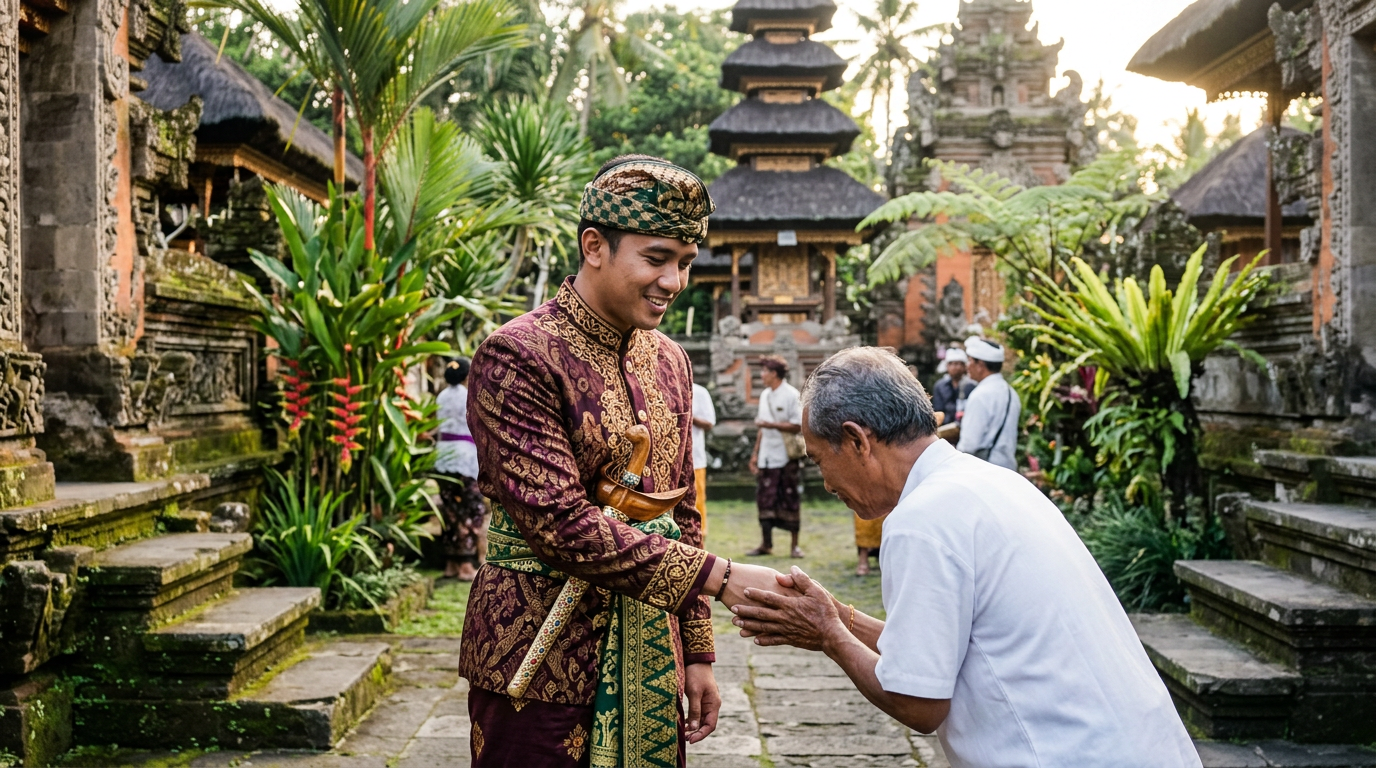
Who Is the Current Prince of Bali and What Is His Role
Bali's royal lineages remain a visible thread in the island's cultural fabric, linking ancient sovereignty to contemporary ceremonial life. This article outlines the principal monarchic houses, traces their cultural and political roles, and highlights notable figures who embody how palace traditions continue to shape community identity today.
List of monarchs of Bali
Bali retains a rich tapestry of royal lineages that shaped the island from early kingdoms to the present ceremonial houses. The overview below groups monarchs by period and by the principal courts that exercised local authority, offering a concise guide for readers who wish to trace Bali's royal history.
- Ancient queens and kings of Bali — These early rulers appear in inscriptions and oral tradition; they established temples and irrigation systems that endure and set the patterns of sacred kingship later courts followed.
- Queens and Kings of Bali after 1343 — Following major political shifts in the fourteenth century, centralized rule fragmented into competing principalities whose chronicles show strong Hindu influence blended with local adaptation.
- Rajas of Sukawati and Ubud — The Sukawati and Ubud courts became renowned for patronage of the arts and for ritual leadership; their members remain visible in local ceremonies and cultural preservation.
- Rajas of Denpasar in Badung — Denpasar rulers governed an area that evolved into a modern urban center while retaining palace traditions; their families continue as custodians of ceremonial life and community identity.
- Rajas of Karangasem and Buleleng — These eastern and northern courts oversaw strategic coastal zones and left distinctive architectural legacies, illustrating trade connections and diplomacy with neighboring islands.
Together, these entries give a compact map of Bali's royal landscape. Each named group can be explored further by court and by notable rulers within the line; the next section focuses on the Sukawati and Ubud houses to illustrate how palace patronage shaped Balinese arts and ritual life.
Rajas of Sukawati and Ubud
The Sukawati and Ubud courts represent two of Bali's most visible royal houses. Both palaces served as seats of local authority and as cultural hubs that shaped dance, painting, music, and ritual practice. The following subsections outline their origins, their role as patrons of the arts, and their continuing ceremonial duties in contemporary Bali.
Historical Origins
The Sukawati line traces authority to a central Balinese court that governed agrarian communities and maintained temple networks. Ubud developed as a branch court that rose in prominence through strategic marriages, land stewardship, and ritual leadership. Palace records and oral histories reveal a pattern of regional governance in which each raja balanced local custom with obligations to neighboring rulers.
Artistic Patronage and Cultural Leadership
Both courts became synonymous with artistic innovation. Sukawati and Ubud houses actively patronized painters, sculptors, and dance troupes that developed styles later recognized as defining Balinese visual and performing arts. Palace pavilions hosted performances tied to the sacred calendar, allowing traditional forms to adapt while remaining rooted in ritual purpose. This patronage helped Ubud grow into an international center for artists and scholars without losing its ritual core.
Contemporary Role and Succession
Today rajas from these lines carry chiefly ceremonial duties. Titles such as Tjokorda remain in use, and family members participate in temple management, funeral rites, and cultural diplomacy. Modern figures combine stewardship of family estates with roles in cultural preservation and tourism management. Succession follows customary lineage rules and often includes public cremation ceremonies that reaffirm community ties.
These court traditions set the stage for individuals who represent the living continuity of palace life; the next section looks at a prominent modern titleholder from Ubud who exemplifies this balance of ceremonial duty and cultural stewardship.
Tjokorda Ngurah Wim Sukawati
Tjokorda Ngurah Wim Sukawati is a prominent member of the Ubud royal family who embodies both traditional authority and contemporary cultural stewardship. As a titleholder he is recognized locally for preserving palace customs and for representing the Sukawati line at temple festivals and public ceremonies, linking the living traditions of Ubud to a wider appreciation of Balinese art and ritual.
His formation combined customary instruction in ritual protocols with formal schooling that prepared him to engage with modern civic life. He is known for hosting and supporting arts initiatives that sustain classical dance, painting, and gamelan practice. Through measured leadership he has helped palace artisans maintain studios and support apprentices while upholding ceremonial integrity.
Family responsibilities remain central to his public work. Succession in the Sukawati and Ubud lines follows customary rules that emphasize lineage, ritual knowledge, and communal recognition. Within the palace compound he supervises heirloom objects, temple offerings, and ancestral shrines while advising on property and cultural projects that affect extended family welfare.
Major rites such as royal cremation ceremonies illustrate his role as custodian of tradition: he coordinates processions, permissions, and ritual teams to ensure rites follow local protocol and community expectations. By balancing ceremonial duty with cultural preservation he plays a quiet but decisive role in keeping Ubud palace life relevant to residents and visitors alike. This example connects the living palace to broader historical figures who engaged national politics, described in the next section.
Tjokorda Gde Raka Soekawati
Tjokorda Gde Raka Soekawati was a distinguished Balinese prince and political figure who bridged palace responsibilities with the nation building of mid twentieth century Indonesia. Born into a Ubud royal household, he carried a title that signified custodianship of palace ritual and cultural stewardship. He gained wider prominence when he accepted leadership of the State of East Indonesia and served as its head of state from 1946 to 1950 during the federal arrangements following World War Two. In that role he presided over delicate negotiations among regional rulers, Dutch authorities, and emerging republican leaders, seeking to protect local autonomy while navigating rapid political change. His background combined customary ritual training with knowledge of colonial administration, enabling him to act as an interlocutor between village communities, palace elites, and national politicians.
Beyond politics he remained committed to preserving Balinese arts and temple customs, supporting traditional dance, painting, and musical ensembles and using palace occasions to sustain apprenticeship systems for younger artists. His public style—calm, measured, and consensus oriented—helped him maintain respect across different factions during turbulent times. After the dissolution of the federal structure he continued to be regarded as an elder statesman who represented the continuity of Balinese palace culture within a modern republic. His legacy is visible in palace ceremonies, the continued use of the Tjokorda title, and in historical studies that examine how regional monarchs adjusted to new forms of national governance.
Turning from central Bali to the southern urban center, the next section examines the Denpasar line and how palace tradition adapted as the city grew.
Rajas of Denpasar in Badung
The rajas of Denpasar in Badung represent a distinct palace tradition that shaped southern Bali from precolonial times to the modern era. These rulers administered coastal settlements and rice terraces while serving as intermediaries between village communities and external powers. Their compounds remain focal points for ceremonial life even as Denpasar developed into an administrative and commercial center.
Origins and political role
Denpasar's royal line emerged from local chieftaincies that consolidated control over trade routes and irrigation systems. Under Dutch influence many palace authorities retained customary rights but lost direct political power. With Indonesian independence, administrative functions passed to elected institutions while palace figures shifted toward advisory and representational duties within Badung governance.
Cultural custodianship and temple leadership
Rajas continue to act as custodians of ritual practice and material heritage. Their responsibilities include overseeing temple calendars, supervising major cremation rites, and maintaining heirloom objects used in sacred ceremonies. Palace pavilions host offerings and performances that anchor community identity and ensure continuity of specialized crafts such as gamelan and woodcarving.
Succession customs and contemporary influence
Succession follows adat norms that combine lineage seniority, ritual knowledge, and communal recognition. Contemporary titleholders balance palace obligations with roles in cultural tourism, education, and dispute mediation. While urban expansion presents challenges around land and property, the rajas often serve as respected mediators who preserve customary protocols within a rapidly changing city context.
Although formal political authority has evolved, the rajas of Denpasar in Badung remain essential to Bali's living tradition: their ceremonial presence sustains temple life, palace arts, and communal memory in a city where modernity and ritual coexist. If you are planning to visit Bali and would like to experience palace ceremonies or learn more about local culture, consider exploring villa and travel resources at https://www.balivillahub.com/en to help plan a respectful and well-informed stay.
In sum, the sequence from ancient sovereigns to modern ceremonial princes shows continuity of tradition even as political power changed. Palace titles and rituals persist as active elements of community life, and notable individuals—past and present—illustrate how ceremonial leadership continues to transmit cultural identity across generations.